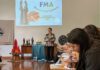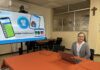

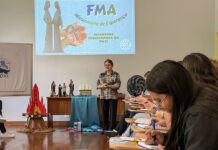
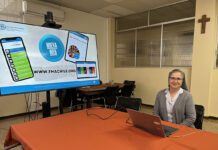
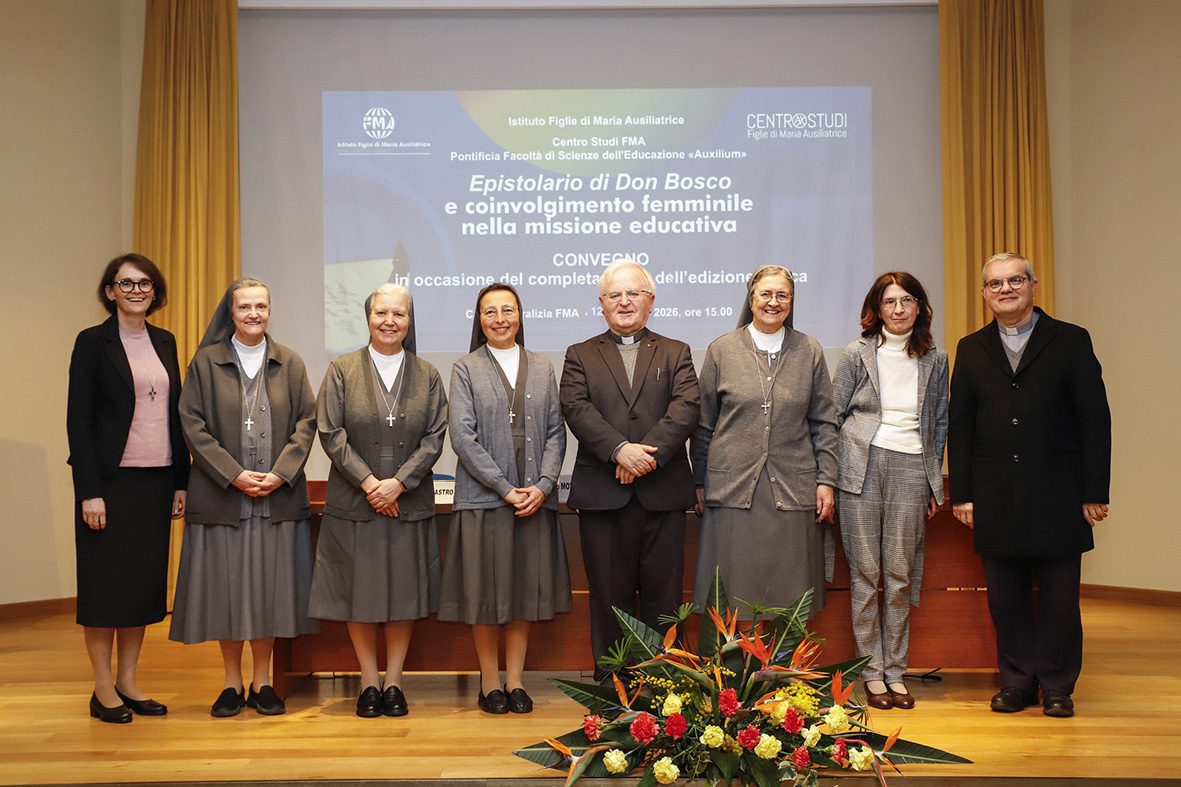
Rome (Italy). On 12 February 2026 the Conference “Don Bosco’s Letters and Women’s Involvement in the Educational Mission” was held in the Generalate in Rome. The Conference was promoted by the Institute of the Daughters of Mary Help of Christians and the FMA Study Center of the Pontifical Faculty of Educational Sciences “Auxilium” to mark the completion of the critical edition of Don Bosco’s Letters.
The General Secretary of the FMA Institute, Sister Maria Luisa Nicastro, introduced the proceedings and welcomed those present, including the Superior, Mother Chiara Cazzuola, and the General Councilors of the Institute; Sister Jessica Salvaña, Superior of the Preprovince of Mary Mother of the Church (RMC); and the FMA of the Communities, the Novices of the International Novitiate of Mary Help of Christians of Castelgandolfo, Mary Help of Christians Community of the Generalate, several Salesians of Don Bosco, and members of the Association of Salesian History Scholars (ACSSA).
In her opening remarks, Mother Chiara Cazzuola highlighted Don Bosco’s unique ability to establish, through his Letters, friendships and active collaboration with women—his greatest benefactors—at a time when they had no voice. “Open to collaboration with many women animated by a profound Christian spirit, Don Bosco realized that charity takes on a feminine face, capable of transforming families, society, and the Church. Their work becomes essential for the salvation and formation of young men and women, particularly those from the working classes.” It was with this same trust that he and Mary Domenica Mazzarello founded the FMA Institute, “which lives the Salesian charism in a feminine way and is conceived by him as complementary to the Salesian Society.” Mother Cazzuola concluded by thanking Father Francesco Motto, “who for years edited Don Bosco’s Epistolary with skill and filial love,” the “Auxilium” Faculty, which conceived and organized this high-quality conference, and those who studied the various aspects of the Epistolary in depth.
Fr. Pierluigi Cameroni, SDB, Postulator General of the Salesian Congregation, then spoke for Fr. Silvio Roggia, SDB, General Councilor for Formation, who was unable to attend but nevertheless wished to recall “a letter not written by Don Bosco, but about Don Bosco,” penned by one of the women who played a fundamental role in Don Bosco’s life and mission in Turin: Giulietta Colbert, the Marchioness of Barolo. In the letter written to Theologian Borel on 18 May 1846, the Marchioness expressed her concern for Don Bosco’s health and the need for him to take some time off from Turin. Fr. Silvio Roggia calls this letter “a note” within a symphony of interventions “that tells us how the presence of feminine genius played a fundamental role in shaping the personality, mission, and even the sanctity of Saint John Bosco. This enabled him, in turn, to bring a charismatic gift of great value and fruitfulness, from which many congregations and groups were born, and—first and foremost—the Congregation itself, the living monument that you are to Mary Help of Christians.”
Sister Maria Luisa then introduced the first two speakers. “Don Bosco had this single desire, to educate young people, to lead them to salvation, to bring them to Heaven. And he immediately realized that it was impossible to do this without women, without THE woman who had accompanied him from the earliest years of his life: the Virgin Mary. How is Mary present in Don Bosco’s Letters? Then we will also try to understand the space he reserved for women, in particular, the Salesian Cooperators.”
The Virgin Mary’s influence on Don Bosco as an educator is the theme explored by Sister Piera Ruffinatto, Dean of the “Auxilium” Faculty, starting with the Letters to young people included in the Epistolary, “a primary and irreplaceable source for understanding his pedagogy and spirituality. The Epistolary, in fact, illuminates Don Bosco’s pedagogy from various perspectives,” Sister Piera explained, introducing her study, which examined the letters from the twenty-year period between 1860 and 1879. This was “the most fruitful period in which Don Bosco, confronting the political and social challenges of the time, developed and consolidated the Preventive System, which became the heart of his pedagogy and defined the Salesian educational model, with a strong focus on the integral formation of the young.”
Her presentation shows how Marian devotion is an integral and dynamic part of his educational approach. “Through a paternal, affectionate, and profoundly spiritual style of communication, Don Bosco conveys to his young people the certainty that Mary is a caring mother, a safe refuge, and an intercessor. (…) In this context, Don Bosco’s Marian pedagogy is a comprehensive pedagogy, capable of integrating affection, spirituality, and moral formation, and of leading young people to become ‘good Christians and upright citizens,’ with their gaze turned to heaven and their hearts rooted in life. Mary, mother and teacher, is the companion of every young person on the journey toward the fullness of life and holiness.”
Sister Maria Luisa then introduced Professor Eloisa De Felice, a Salesian Cooperator from the Auxilium Center, who explored the topic “Don Bosco and the Lay Cooperators,”a particularly significant one in the context of the 150th anniversary of the founding of the Association of Salesian Cooperators (1876-2026). The Professor examined letters from 1876—from the recognition of the SSCC—until Don Bosco’s death, placing Don Bosco’s choice within the historical, religious, and social context, “The new branch of the family arose from the need, felt by its Founder, to involve lay people in its many activities, who could support the two consecrated branches in the initiatives undertaken.” Don Bosco addressed the cooperators above all “to encourage their role as educators for the children entrusted to them in their charitable works.” The speaker finally focused on the precious role of the cooperators in assisting cholera patients during the epidemic that broke out between 1884 and 1886. Don Bosco invited them to entrust themselves especially to Mary Help of Christians to effectively carry out their charitable work.
After the break, the proceedings resumed with a presentation by Sister Grazia Loparco, Professor of Church History at the Auxilium Faculty and coordinator of the FMA Study Center, on “The Daughters of Mary Help of Christians in the Letters of Don Bosco.” Her detailed and passionate presentation revealed how the founder dedicated effort and resources to promoting the development of the FMA and consolidating their position with diocesan authority, moving prudently with the Holy See while simultaneously modeling the innovation of his approach compared to other contemporary female congregations. Sister Grazia concluded by thanking Father Francesco Motto for having provided, through his insightful work, “critical editions of texts, reliable, and open to multiple approaches of study, including for the FMA.”
In the final afternoon presentation, Sister Eliane Petri, FMA, Professor at the Auxilium Faculty and Coordinator of the FMA Institute’s Spirituality Course, presented Don Bosco’s correspondence with religious women from various Congregations. This study examined approximately 90 letters addressed to non-FMA religious women, mostly from 1865 to 1887, the difficult years of Italian unification, marked by tensions between the State and the Church. “These letters reveal the Saint’s ability to establish meaningful relationships beyond the confines of his own religious family, building networks of collaboration and mutual support during a period of intense hostility toward religious institutions and the concomitant expansion of Salesian work.”
After illustrating – through sample letters – various elements of this “spirituality in action,” embodied in everyday life and operational, she concluded by observing that the correspondence “testifies to Don Bosco’s ability to establish meaningful relationships based on mutual respect, the sharing of spiritual values, and apostolic cooperation.”
Father Francesco Motto, SDB, editor of the Critical Edition of Don Bosco’s Letters, could not fail to speak. He enthusiastically retraced this true undertaking, not only editorial, which he had pursued over the course of 40 years. Recalling some aspects explored at the conference, he highlighted in particular Don Bosco’s relationship with Mary—”a relationship that generates a style, a way of educating, governing, and carrying out mission”—and the “structural” presence of the FMA in the Letters, which “is not measured by how many letters you are cited in, but by the coherence of a shared educational and charismatic vision.”
“Each of the approximately 4,682 published letters, is like a piece of a mosaic. Each contributes to a particular aspect of Don Bosco as a man, educator, priest, father and teacher, founder, formator, missionary, and saint. Each letter is a living cell that gives human depth and historical substance to a personality who has profoundly impacted the Church and society, and who will continue to do so through those who wish to share his passion for young people.”
Toward the end of his work, the scholar gave way to his “Salesian son,” who had witnessed a growing sense of gratitude and almost confidential affection over the years. “I felt like I wasn’t working on him, but with him. It wasn’t just transcribing and annotating; it was a silent dialogue with a loved one… And in the end, I was left with a sense of shared paternity.
“My personal journey through Don Bosco’s letters, which has lasted forty years, ends here. But his voice—and the responsibility of making it resonate—continues in your hands, dear Sisters, in the hands of the Salesians, in the hands of every member of the Salesian Family,” is Fr. Motto’s final message.
The conference inspired in those present, and those who followed via live streaming, the desire to revisit the presentations and, above all, the Letters of Don Bosco contained in the ten volumes of this wonderful work.
Photos: Flickr FMA