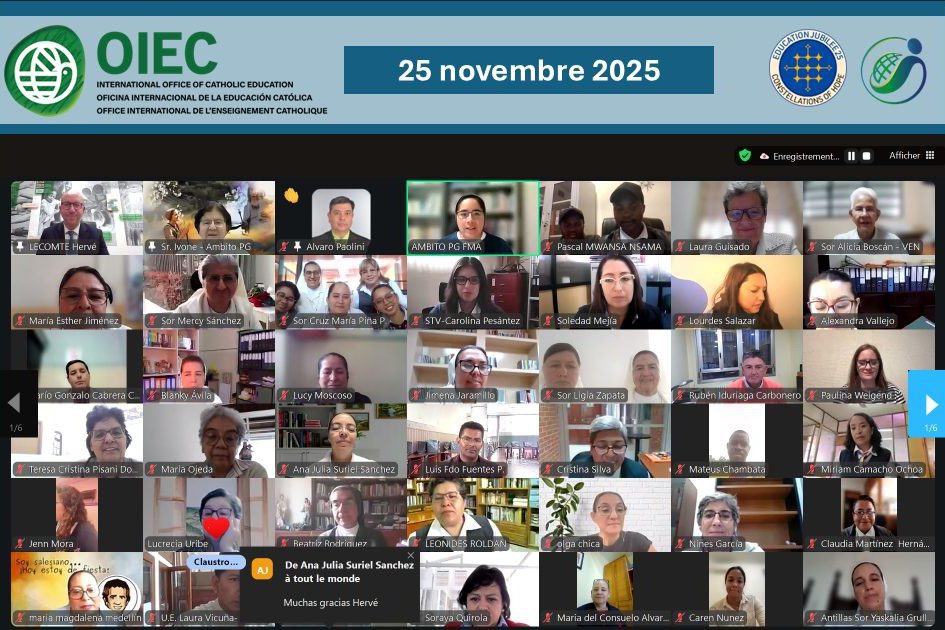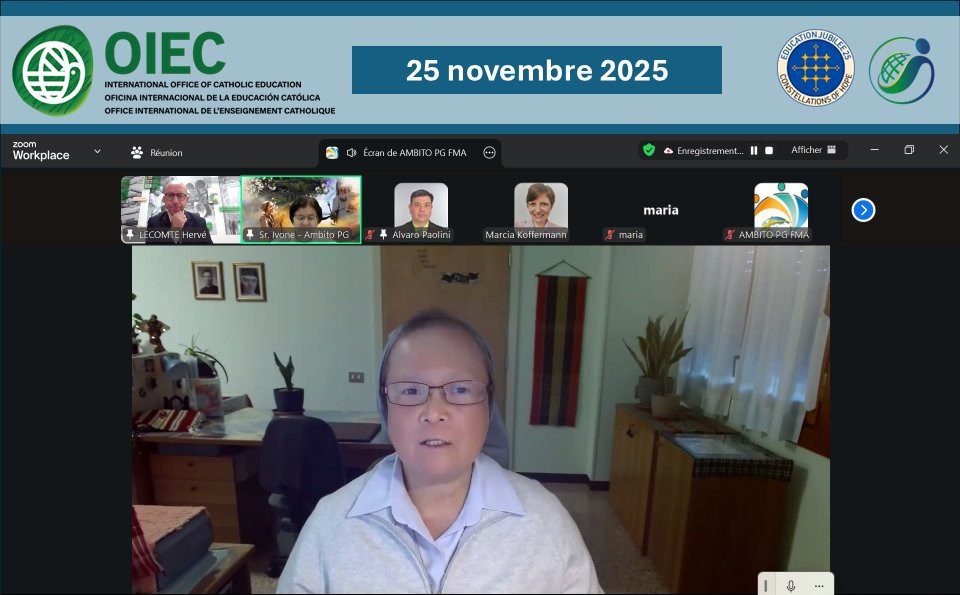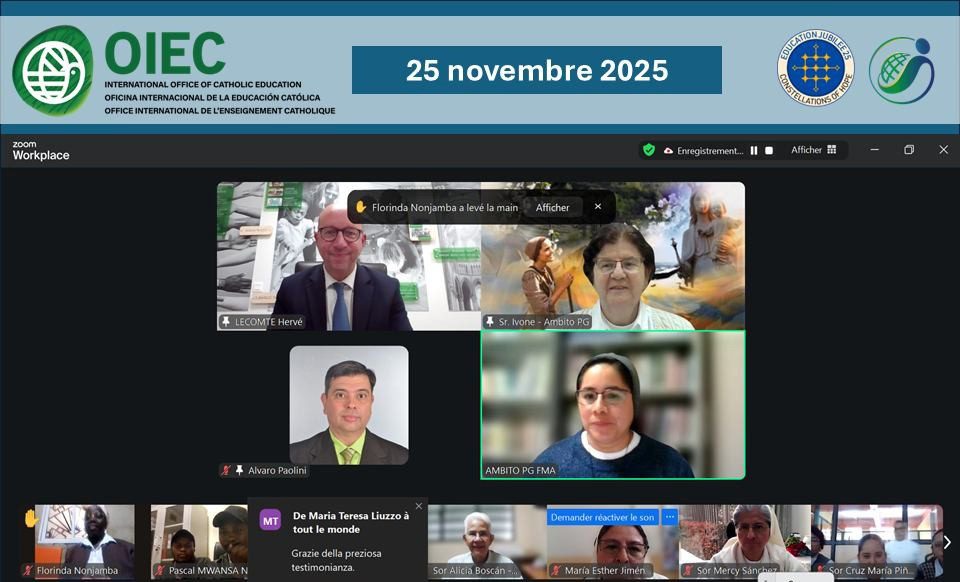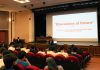

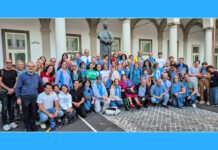

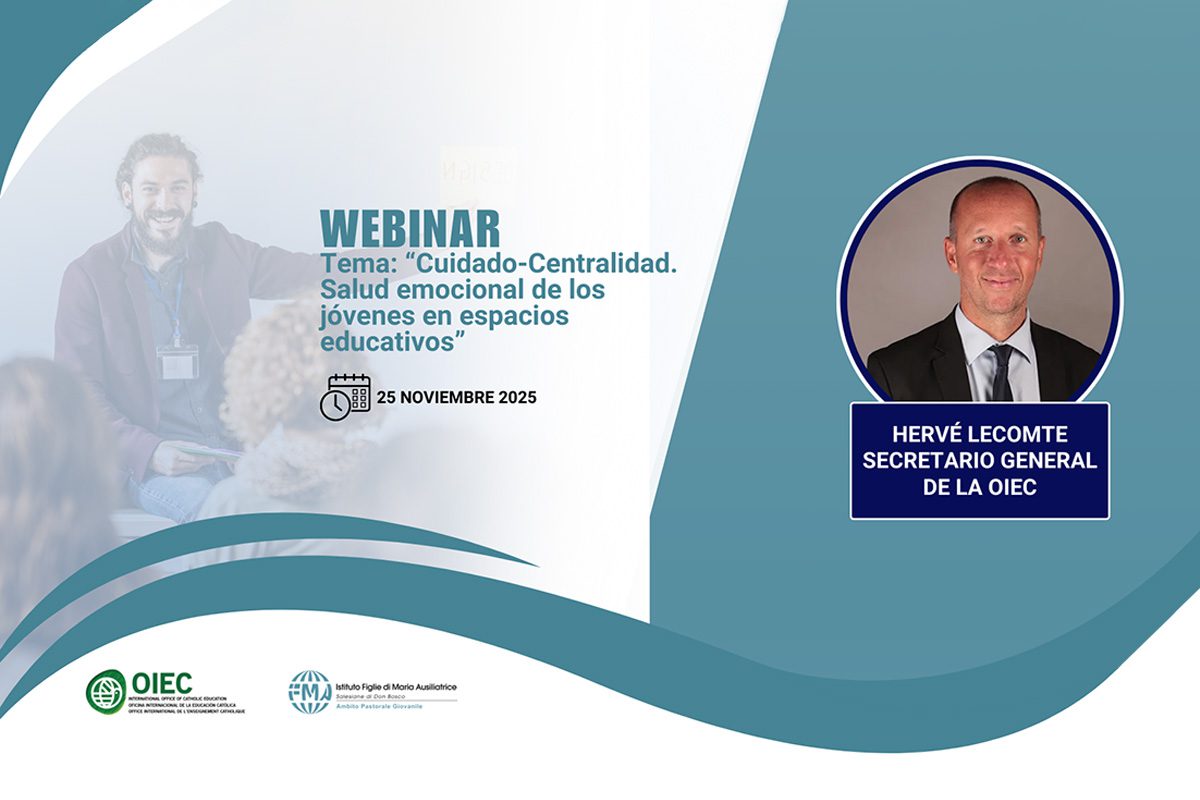
Rome (Italy). On 25 November 2025, the Youth Ministry Area of the Institute of the Daughters of Mary Help of Christians organized a webinar on the topic: “Care-Centrality. Emotional health of young people in educational spaces,” in which approximately 350 people participated.
The Secretary General of the International Office of Catholic Education (OIEC), Hervé Lecomte, shared some reflections on the topic with members of the Educating Communities of Provinces and Institutes of Higher Studies (ISS-FMA), the University Pastoral and University Residences of the FMA, and other guests, who welcomed with great interest the proposal to rethink the comprehensive care of young people in light of Don Bosco’s Preventive System and Mother Mazzarello’s spirituality.
The meeting began with the invocation of the Holy Spirit, followed by the message of the General Councilor for Youth Ministry, Sister Runita Borja, who recalled, “Since the beginning of our Institute and the Salesian Charism, we have always had a holistic understanding of education. In fact, for us, educational life passes through this trinomial: reason – religion – lovingkindness. Today’s webinar focuses on the importance of emotional health, a very strong and real topic in our time.”
During her presentation, Hervé Lecomte emphasized the importance of listening to young people authentically, recognizing their fears, uncertainties, and hopes. She emphasized that the Salesian school is called to be a space of welcome, meaning, and belonging, where every student can feel valued and emotionally supported. It was a meeting characterized by dialogue and listening.
“Catholic education today has the mission of forming resilient hearts, capable of living with hope. This is only possible when emotional care is an integral part of the educational process,” she affirmed.
The Secretary-General also cited the publication, “Emotional health of young people in the school environment” by OIEC, a guide to better understand the challenges of emotional health at school, to accompany young people in their frailties, to prevent situations of psychological distress, and to promote welcoming and safe school environments. This book is part of a comprehensive educational approach, attentive to the whole person-mind, body, heart, and relationships and faithful to the values of the Global Pact for Education. (link to download)
The event was also an opportunity to share experiences, identify common challenges, and strengthen collaboration between ministry and education, seeking concrete ways to promote the mental and spiritual health of young people.
In Salesian presences, this care translates into attention to relationships and a sensitive perspective on the integral growth of young people. The youth phase, particularly adolescence, is characterized by profound questions about identity, belonging, and the meaning of life, and often by insecurities and fears that require listening and accompaniment.
The present time is full of challenges. The phenomena that influence young people are complex and require from us an educational response that combines hope, empathy, and presence. Being Salesian educators today means walking alongside adolescents and young people, helping them discover their potential and take care of their frailties, with particular attention to emotional and spiritual health.
Taking care of young people means affirming the value of life and promoting its fullness, with a deep commitment to human dignity and the formation of “good Christians and honest citizens”.
In the current context, marked by loneliness, conflict, and inequality, the educational mission of the Church is therefore to “draw new maps of hope”, according to the appeal with which Pope Leo XIV ends his Apostolic Letter. “I ask the Pastors, the consecrated, the laity, the heads of institutions, teachers, and students to be servants of the educational world, choreographers of hope, tireless researchers of wisdom, credible architects of expressions of beauty.”
The meeting concluded with a call for the ongoing formation of educators in this field and the creation of humanizing educational environments, where every young person feels called to live with joy, trust, and faith.