







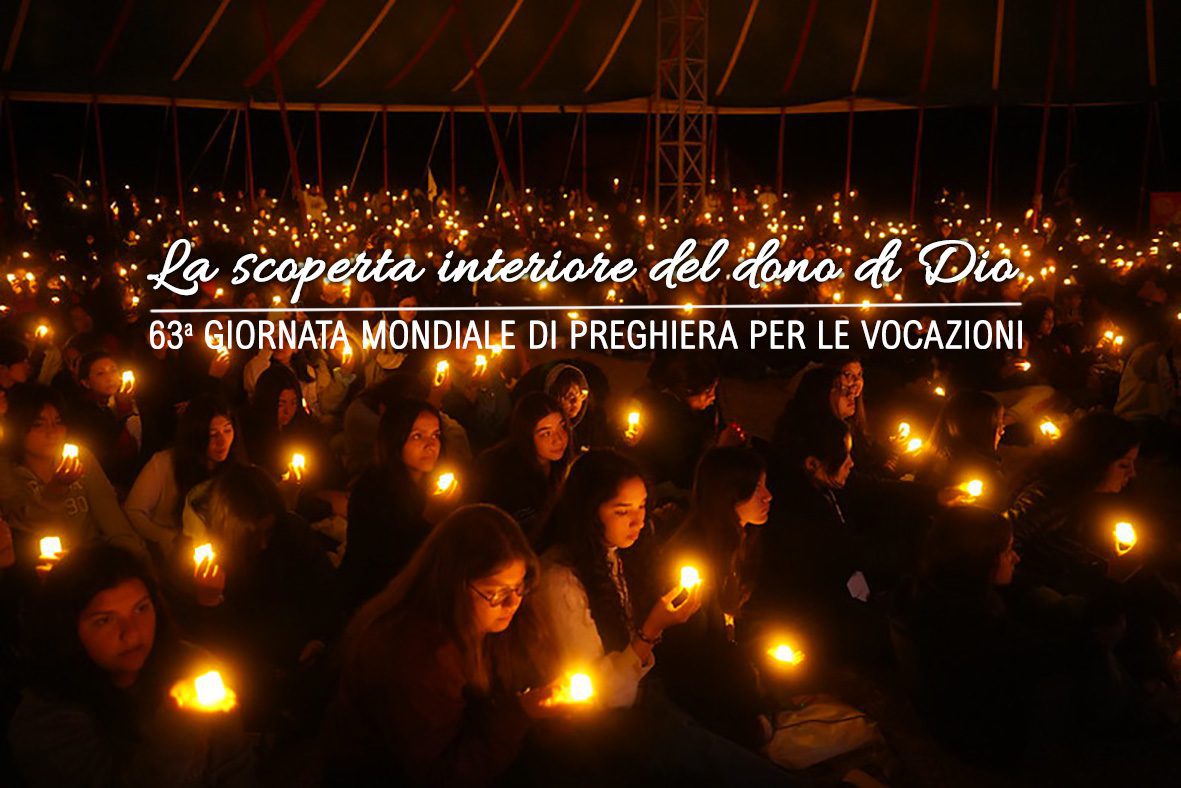
Rome (Italy). On 26 April 2026, on the Fourth Sunday of Easter, known as “Good Shepherd Sunday,” the Church celebrates the World Day of Prayer for Vocations. In his Message for this 63rd observance, Pope Leo XIV has chosen “The Interior Discovery of God’s Gift” as his theme, sharing some reflections on the interior dimension of vocation, “understood as the discovery of God’s gratuitous gift blossoming deep within the heart of each one of us.”
Metaphorically traversing the path of “a truly beautiful life, which the Shepherd points out to us,” he completes four stages: The Way of Beauty, Mutual Knowledge, Trust, and Maturation.
The Message highlights the importance of asceticism in contemplation, an asceticism that enables the individual to pause, listen, pray, and welcome God’s gaze upon themselves, to the point of placing their trust in the Shepherd “who captivates: whoever looks upon Him discovers that life is truly beautiful if one follows Him.” One of the traits that distinguishes the Saints is precisely “the luminous spiritual beauty that radiates from those who live in Christ. Thus, the Christian vocation is revealed in all its depth: to partake in His life, to share in His mission, and to shine with His very own beauty.”
Citing the example of Saint Augustine, a master of interiority, Pope Leo speaks of the importance of “cultivating one’s interior life as a space for relationship with Jesus, as a path to experiencing the beauty and goodness of God in one’s own life,” and of vocation as a gift that “is never an imposition or a pre-established framework to which one simply adheres, but a project of love and happiness.”
From the cultivation of interiority, “it is urgent to make a fresh start in vocational ministry and in the ever-renewed commitment to evangelization,” says the Holy Father, who invites everyone – families, parishes, religious communities, bishops, priests, deacons, catechists, educators, and lay faithful – “to commit themselves ever more deeply to creating favorable environments in which this gift may be welcomed, nurtured, safeguarded, and accompanied so that it may bear abundant fruit.”
Since vocation is a unique and personal call, it begins with the personal experience of God’s love; that God who knows and deeply loves each individual, and who has for everyone a unique path of holiness and service. This knowledge is reciprocal; therefore, “we are invited to know God through prayer, listening to the Word, the Sacraments, the life of the Church, and self-giving to our brothers and sisters.”
The young Samuel, who knew how to listen and learned to recognize the voice of the Lord with the help of Eli (cf. 1 Sam 3:1–10) and Saint Augustine, according to whom “Truth dwells in the inner man” reminds us of the importance of “pausing and creating spaces of inner silence in order to listen to the voice of Jesus Christ.”
Hence the appeal of Leo XIV: “Dear young people, listen to this voice! Listen to the voice of the Lord, who invites you to live a full, fulfilled life, putting your talents to good use (cf. Mt 25:14–30) and nailing your limitations and weaknesses to the glorious Cross of Christ. Pause, therefore, in Eucharistic adoration; meditate assiduously on the Word of God so that you may live it out every day; and participate actively and fully in the sacramental and ecclesial life. In this way, you will come to know the Lord and, in the intimacy proper to friendship, you will discover how to give of yourselves: whether on the path of marriage, the priesthood, or the permanent diaconate, or in the consecrated life, be it religious or secular. For every vocation is an immense gift to the Church and to those who embrace it with joy.”
It is from this knowledge that trust in the Lord is born, and one discovers each day that life is “a continuous trusting in and entrusting oneself to the Lord, even when His plans upend our own.” Like Saint Joseph, “an icon of total trust in God’s design”, and as the Jubilee of Hope has taught, “we must cultivate a firm and steadfast trust in God’s promises, never yielding to despair.”
Vocation, therefore, is not a goal attained once and for all. Indeed, it is “a dynamic process of maturation, fostered by intimacy with the Lord: being with Jesus, allowing the Holy Spirit to act in one’s heart and in the situations of life, and reinterpreting everything in the light of the gift received.” On this continuous journey of maturation, the Pope emphasizes, “how precious it is to have a sound spiritual guide to accompany the discovery and development of our vocation!” one who offers guidance in discernment and verification in the light of the Holy Spirit.
General Chapter XXIV of the FMA Institute has adopted the vocational dimension as the first priority choice for the six-year period.
“Let us together rekindle and bear witness to the beauty of the Salesian vocation, placing ourselves in a state of ongoing formation for a renewed vocational impetus.” Attending to the nurturing of one’s own vocation thus becomes an effort to ensure that young people may “discover the mystery of God’s presence in their lives and to value their baptismal call” (Const. 69) and “discern God’s plan for them in their lives and to accept this as their mission” (Const. 72).
The Institute’s Youth Ministry Sector has adopted “Together to Promote a Culture of Vocations” as one of the key focal points of its animation for the current six-year term. In this spirit, the annual observance of the World Day of Prayer for Vocations serves as a significant occasion to reinforce this commitment.
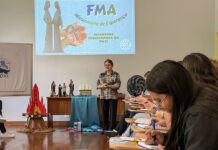
This year, the Youth Ministry Sector has prepared four worksheets in five languages, corresponding to the four parts of the Message. Each worksheet offers simple suggestions:
- A brief reflection on a theme
- Group sharing
- Taking action
- Prayer
“We embrace the invitation to let ourselves be captivated by the ‘Beautiful Shepherd’, Jesus, and in Him, let us continue the journey of discovering that life is truly beautiful if we follow Him.” This is the wish of Sister Runita Galve Borja, Councilor for Youth Ministry.






This is a thoughtful and uplifting reflection that beautifully highlights the significance of praying for vocations in the life of the Church. It offers a clear and inspiring call to discernment, service, and generosity in responding to God’s invitation. Warm and meaningful, it encourages a renewed awareness of vocation as a shared responsibility and a living expression of faith.