

Malabo (Equatorial Guinea). From 21 to 23 April 2026, in the last stage of his 3rd apostolic journey, after having visited Algeria, Cameroon and Angola, Pope Leo XIV reached Equatorial Guinea.
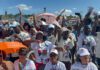
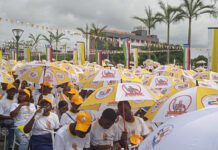
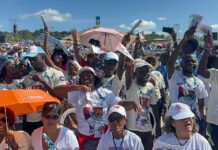
On 21 April, he arrived at Malabo International Airport, on the northern coast of Bioko Island, where he was welcomed with full honors by President Teodoro Obiang Nguema Mbasogo. He then proceeded to the Presidential Palace, flanked by two lines of vibrantly colorful crowds amidst a whirlwind of music, flags, and yellow caps.
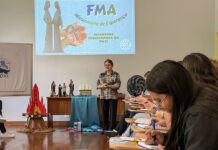
“I read in some articles that the people of Equatorial Guinea had decided that they did not want to be inferior to their fellow Cameroonians and Angolans. And so, it was! The people prepared themselves spiritually and concretely to welcome their Shepherd and the joy and vibrancy of these days is the result of a tremendous effort on the part of both State and Church,” testifies Sister Giusy Becchero, a missionary in Equatorial Guinea, Saint Mary Domenica Mazzarello Province (AEC).
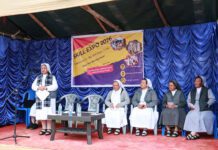
The two communities of the Daughters of Mary Help of Christians in Malabo—Blessed Eusebia Palomino and Mary Help of Christians participated in the city’s events alongside the people, while the young people and various groups participated with the parishes.
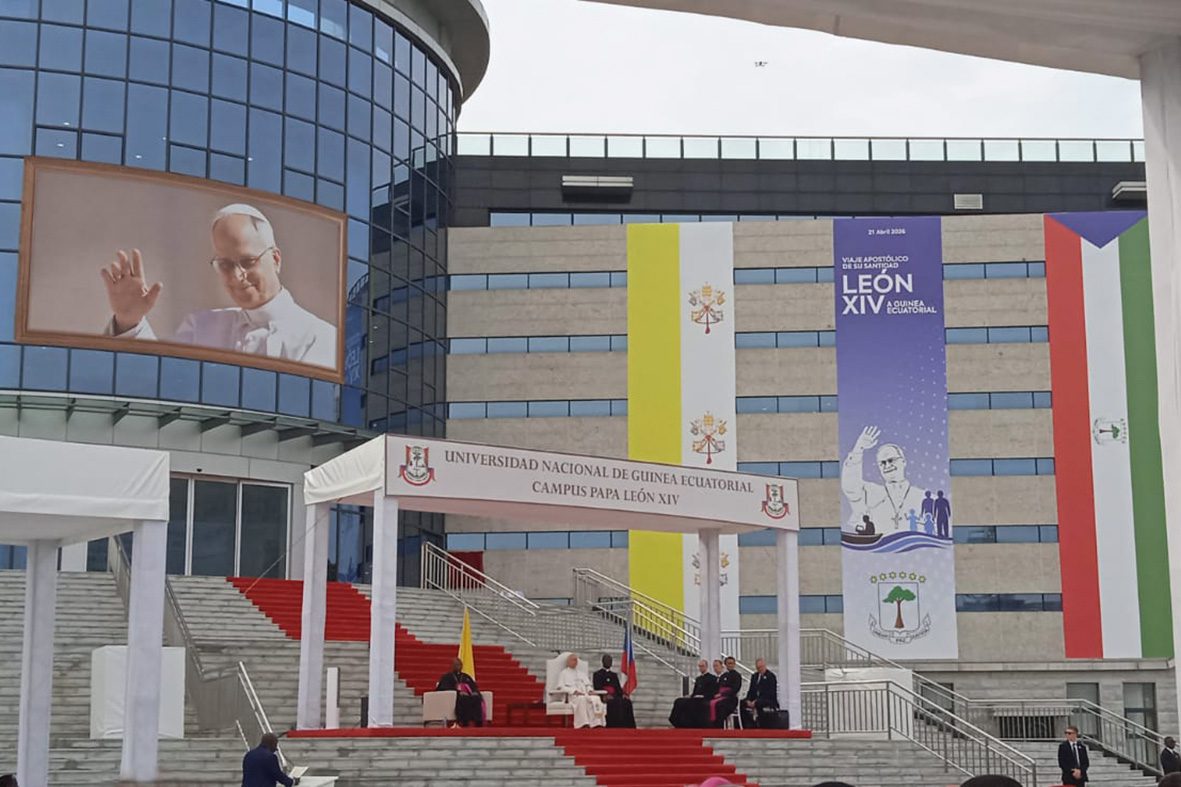
In Malabo, Pope Leo XIV visited the new campus of the National University, which is to be renamed in his honor, a gesture viewed as a good omen for the Country’s educational development. “This moment holds a significance that extends far beyond the material boundaries of this place and its buildings,” the Pope said, addressing the Rector, the authorities, and all those present. “Today, a space also opens up for hope, for encounter, and for progress. Indeed, every authentic educational endeavor is called to grow not merely as a structure, but as a living organism.”
On this occasion, the Holy Father employed the ceiba, the national tree, with its sturdy trunk and spreading branches as a metaphor, endowing it with profound evocative power: “A tree strikes deep roots, rises patiently and powerfully toward the heavens, and holds within itself a fruitfulness that does not exist for its own sake. (…) Dear brothers and sisters, here, within the precincts of this institution, the ceiba of Equatorial Guinea is called to bear fruits of solidarity-based progress, of a knowledge that ennobles and fosters the integral development of the human being. It is called to offer fruits of intellect and integrity, of competence and wisdom, of excellence and service. (…) …then the ceiba will continue to stand tall as an eloquent symbol, rooted in the very best of this land, uplifted by the nobility of knowledge, and abundant in fruits capable of bringing honor to Equatorial Guinea and enriching the entire human family.”
This was followed by a visit to the staff and patients of the Jean Pierre Olie Psychiatric Hospital. In the heart of Equatorial Guinea, where mental health has long struggled against stigma and oblivion, this clinic, situated in the Sampaka district, stands as a beacon of hope and a center of excellence. “And a hospital, especially one with a Christian inspiration, is precisely this: a place where the individual is welcomed just as they are, respected in their fragility, yet with the aim of helping them to recover, within a holistic vision. To this end, the spiritual dimension is essential,” emphasized the Pope, whose visit cast a spotlight on this vital institution dedicated to healing the mind, the heart, and human dignity.
On 22 April, during the Holy Mass celebrated at the Basilica Cathedral of the Immaculate Conception in Mongomo, Leo XIV joined the faithful in thanking the Lord “for the 170 years of evangelization in these lands of Equatorial Guinea. This is a propitious occasion to call to mind all the good that the Lord has accomplished. At the same time, I wish to express my gratitude to the many men and women missionaries, diocesan priests, catechists, and lay faithful who have dedicated their lives to the service of the Gospel.” He further exhorted everyone to feel personally involved in the work of evangelization: “Do not be afraid to proclaim and bear witness to the Gospel! Be the builders of a future of hope, peace, and reconciliation, continuing the work that the missionaries began 170 years ago.”
Another strong moment was the visit to the prison of Bata, defined as unforgettable by the Holy Father himself upon his return, at the General Audience of 29 April: “The prisoners sang at the top of their lungs a hymn of thanksgiving to God and to the Pope, asking to pray ‘for their sins and their freedom.’ I had never seen anything like it. And then they prayed the ‘Our Father’ with me, in the pouring rain. A genuine sign of the Kingdom of God!”
Still in the rain, the large gathering with young people and families began at the stadium in Bata, an event he described as “a celebration of Christian joy, featuring touching testimonies from young people who have found in the Gospel the path to free and responsible growth.” Pope Leo addressed them in these words: “Dear young people, dear families, peace be with you! His Excellency has described Equatorial Guinea as a ‘young country, full of energy, of questions, and of a zest for life’ and, at the same time, eager to make Christ its very light. This echoes the motto of this journey, ‘Christ, Light of Equatorial Guinea: Toward a Future of Hope’—and finds its confirmation in the presence of all of you here! The most radiant light here is that of your eyes, your faces, your smiles, your songs, and your dances, in which everything serves as a testimony that Christ is joy, meaning, inspiration, and beauty for our lives.”
Then, in his homily at the stadium in Malabo, reflecting on the encounter between the Deacon Philip and the Ethiopian eunuch, he highlighted how the Word of God transforms the oppressed into protagonists of salvation, and exhorted the Church of Equatorial Guinea, “to continue, with joy, the mission of the first disciples of Jesus. As you read the Gospel together, be passionate heralds of it, just as the Deacon Philip was. As you celebrate the Eucharist together, bear witness through your lives to the faith that saves, so that the Word of God may become good bread for all!”
The statue of the Madonna present on the stage was that of Our Lady of Bisila, which depicts the Virgin with indigenous features, the patroness of the island of Bioko and a salvific figure for the local people, venerated even before the arrival of the missionaries. At the conclusion of the liturgy, the Pope paid homage to the Virgin with a silent prayer.
The media reported that 30,000 faithful were present at this Mass; and, despite the torrential rain, the FMA recount that they, “witnessed this ecclesial event with faith and joy, and experienced many moving moments that touched our hearts: the arrival of the Pope, the hymns, the welcome extended by our President, the singing in the various languages of this land, the carefully prepared liturgy, and the joy expressed with shouts of ‘Long live the Pope!’”
Pope Leo XIV concluded his apostolic journey by expressing his gratitude:
“I depart from Africa with an inestimable treasure of faith, hope, and charity. It is a great treasure, composed of stories, faces, and testimonies, both joyful and marked by suffering that greatly enrich my life and my ministry as Successor of Peter. As in the early centuries of the Church, Africa is called today to make a decisive contribution to the holiness and missionary character of the Christian people. May this be obtained through the intercession of the Virgin Mary, to whom I wholeheartedly entrust all of you, your families, your communities, your Nation, and all the peoples of Africa.”