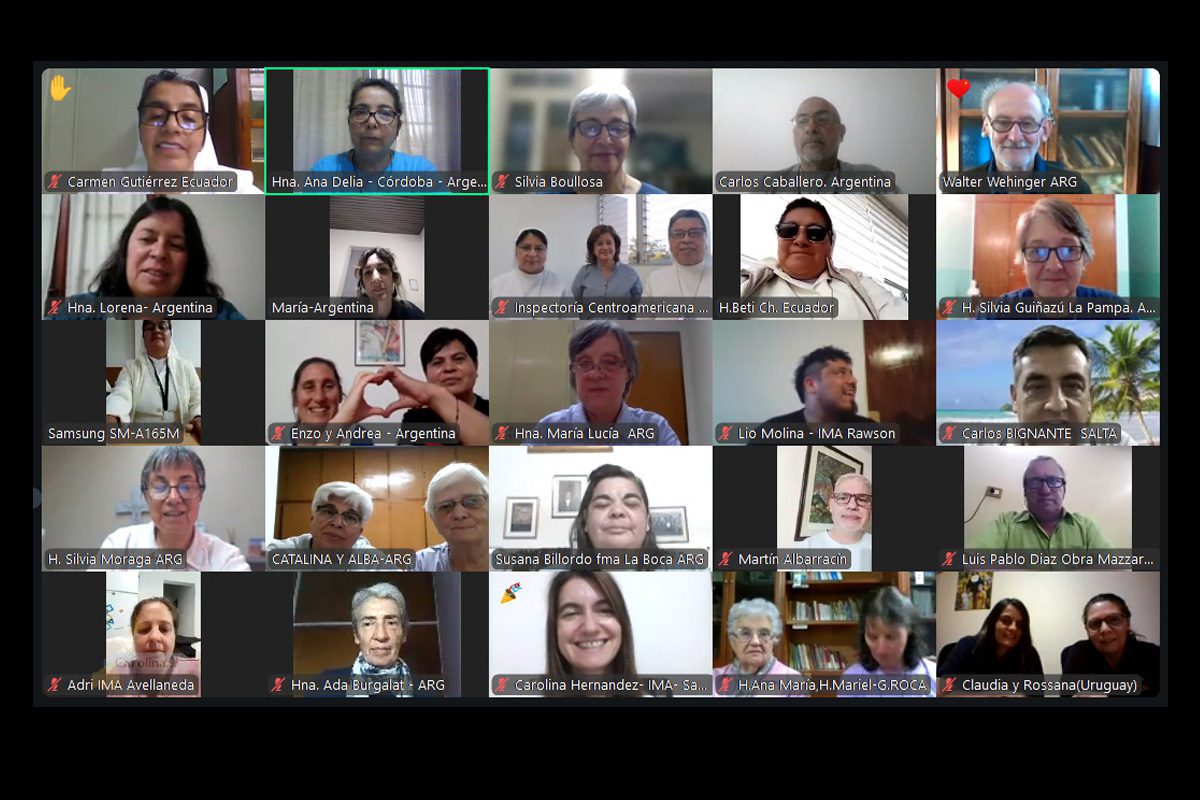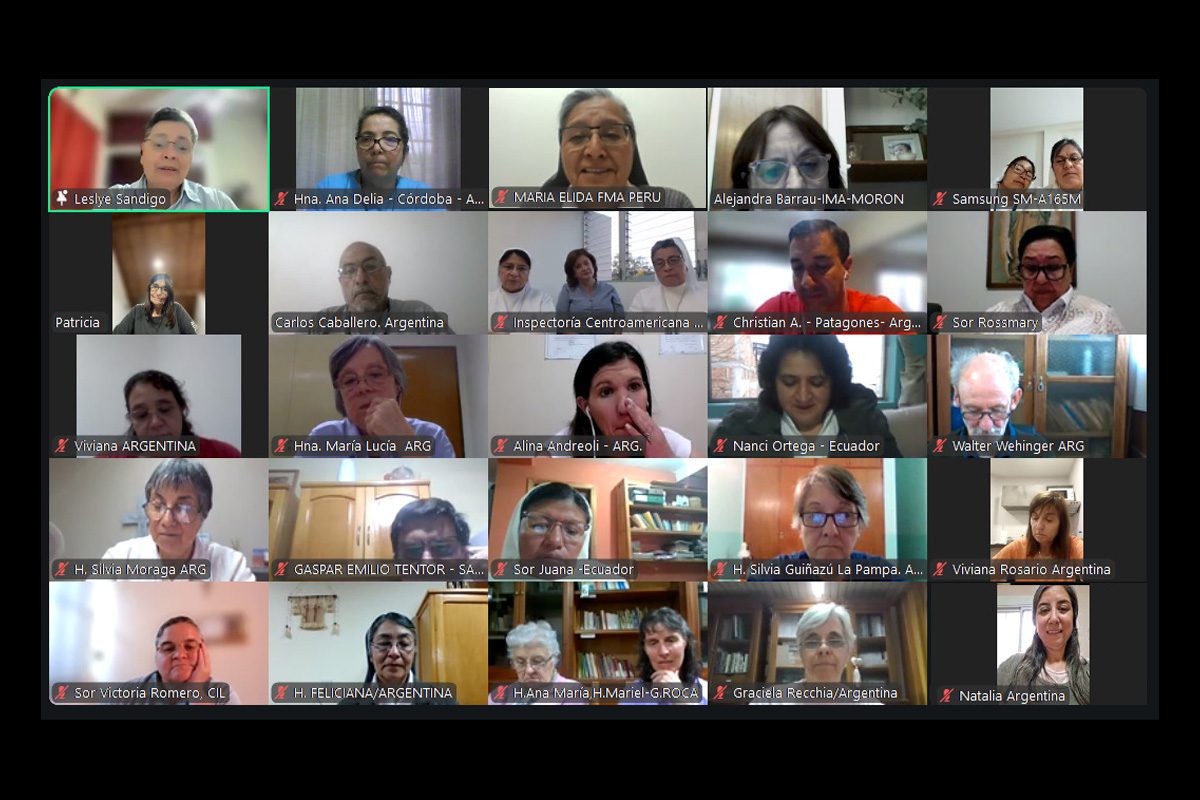

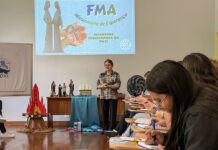
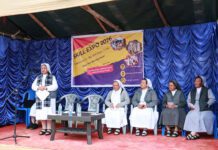
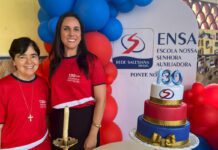
Córdoba (Argentina). On 20 November 2025, with an online celebration and the awarding of diplomas, the first “Diploma course in Project Mindset and Integral Ecology closed. Paths for the Sustainable Development of Communities”, conceived and promoted by the Laura Vicuña Province (ARG). Also present at the online link were the Provincial, Sister Silvia Boullosa, and Sister Leslie Sándigo, General Councilor for the Salesian Family, on a canonical visit to the ARG Province.
This is a university diploma with academic certification, aimed at FMAs, lay people with experience in community leadership, local administrative teams, legal representatives, representatives of local and province organizations, and educators committed to the Salesian mission. The formation proposal is certified by the Salesian University of Bahía Blanca (UNISAL) and is coordinated by the Development Office of the ARG Province.
Conducted virtually from Argentina, the course began in March 2025 and attracted more than 100 participants from numerous provinces in various Countries, not only from Argentina, but also from Uruguay, Chile, Paraguay, Peru, Colombia, Ecuador, Angola, El Salvador, Honduras, and Guatemala.
The initiative responds to the call of General Chapter XXIV to promote a change of mentality and paradigms, to be more incisive and effective in the educational mission, in fidelity to the Charism and with a view to the sustainability of the works. In the current context of transformation and global challenges, the FMA Institute is indeed faced with the need to renew its approach to respond to the needs of young people and society.
Objectives of the Diploma are:
- Understand the fundamental concepts of design mindset and integral ecology according to the Encyclical Laudato Si’.
- Recognize the call to be protagonists of the transformation process as proactive agents of change.
- Explore the intersection of initiative design and the promotion of environmental care, social justice, and human development.
- Reflect on the function of projects as tools for social and environmental transformation.
- Develop practical skills for planning, executing, and evaluating projects from an integral approach, with a view to the sustainability of works and communities.
The training program is structured into modules ranging from theoretical foundations to practical application, including topics such as critical analysis of the technocratic and economic paradigm, the principles of the design mindset, the design of sustainable initiatives, and the integration of the ethics of care into the economy, among others. Each module included fortnightly synchronous virtual sessions, interactive virtual sessions, self-directed learning, individual mentoring, and learning communities.
This academic proposal, both in its content and in the community learning experience, aims to distance itself from the social patterns marked by individualism and capitalist economies. Its contents, inspired mainly by Pope Francis’ Encyclical Laudato Si’, have offered concrete tools for thinking, planning, and implementing initiatives that promote human and sustainable development at the environmental level, generating positive transformations in communities.
Rather than adopting a mindset centered on what is lacking, we therefore invite to think according to a logic guided by development, developing projects based on new growth opportunities, with the awareness that ecological, social, cultural, and ecclesial conversion is urgent and necessary.
A project is the process that can turn a dream into reality. The question every community might ask is, “What is the dream my community wants to achieve?”
Don Bosco and Mother Mazzarello had the ability to dream big. Their desire to form “good Christians and honest citizens” has always taken them further, instilling in young people the courage to pursue their dreams through projects that transform their reality. In this direction, each community questions the dreams that animate the lives of the people it walks with, with the certainty that in that common desire God’s dream for His people manifests itself.
The Diploma therefore invites us to approach and deepen other possible models, forms, and economies to build a different world, based on new paradigms, following the opportunity, as committed citizens, to make it possible, to become agents of change, collaborating in more just and sustainable development, attentive to the cry of the poor, young people, and the Earth.
“Social problems are responded to with community networks, not with the mere sum of individual goods. ‘The needs of this work will be so immense that the possibilities of individual initiatives and the cooperation of individuals, individually formed, will not be able to respond to them. A union of forces and a unity of contributions will be necessary’ (Romano Guardini). The ecological conversion required to create a dynamism of lasting change is also a community conversion” (LS 219).