


Philippines. From 9 to 13 March 2026, the 4th World Meeting of the Institutions of Higher Education of the Daughters of Mary Help of Christians (ISS-FMA) took place at the Mornese Spirituality Center in Pansol, Calamba, Laguna (Philippines). This initiative was promoted by the Institute’s Sector for Youth Ministry, in collaboration with the Central Commission of the ISS-FMA and the “Saint Mary Mazzarello” FMA Province (FIL) of the Philippines and Papua New Guinea, with financial support from the Provinces of the CIAO Conference.
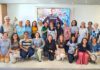
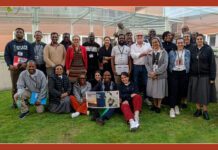
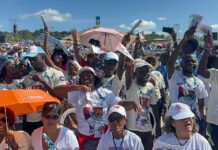
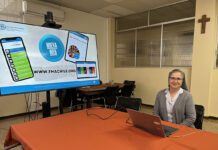
The meeting was attended by 82 people, 68 in person and 14 online (due to flight cancellations caused by recent conflicts), including administrators, faculty members, and university students representing 20 Higher Education Institutions, 13 Provinces, and 10 countries across four continents.
The theme chosen for this edition, “Youth Empowerment to Drive Social Change”, builds upon the journey begun with the previous global gatherings held in Brazil (2012), Spain (2014), and Colombia (2019).
The meeting served as an important opportunity for dialogue, reflection, and exchange among the university Institutions within the ISS-FMA network, with the aim of strengthening educational collaboration and fostering the active role of young people in building a more just, solidarity-based, and sustainable society.
An Opening Marked by Ecclesial Communion
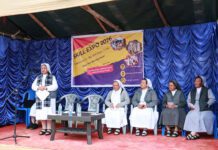
The proceedings opened with a Eucharistic Celebration presided over by the Apostolic Nuncio to the Philippines, Msgr. Charles John Brown, followed by a welcome address from Sister Teresita Padron, Province of the FIL Province. During the inaugural session, the official logo and anthem for the gathering were also unveiled, the creative work of young people from India and Sister Cecilia Alfaro of the PER Province.
Several institutional messages marked the beginning of the meeting. The Superior General of the Institute of the Daughters of Mary Help of Christians, Mother Chiara Cazzuola, encouraged the Salesian university Institutions to form young people capable of viewing reality with hope and of courageously bearing witness to the reasons for their faith.
Cardinale José Tolentino de Mendonça, the Prefect of the Dicastery for Culture and Education emphasized how international gatherings of this kind foster a shared vision of the educational mission and open up new perspectives for the future. Bishop Marcelino Antonio Malabanan Maralit of the Diocese of San Pablo in the Philippines also recalled that young people, as Pope Francis has affirmed, are not merely the future of the Church, but its living and active present. Hervé Lecomte, Secretary General of the OIEC, highlighted that youth empowerment is a central challenge for Catholic education and can contribute to global change by mobilizing millions of students, educators, and families worldwide.
In her address, Sister Runita Borja, General Councilor for Youth Ministry, highlighted the importance of the FMA’s educational mission, called to present the authentic values of the Gospel to young people, to foster their inner resources, and to accompany them with confidence on their journey of growth.
Education, Research and Social Responsibility
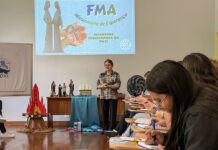
The meeting program alternated between lectures, research presentations, a roundtable discussion, and testimonies from young people, followed by the presentation and planning of six key priorities for the coming years, thereby offering a forum for dialogue regarding the major challenges that university education is currently called upon to address.
Among the key presentations, Father Rany Geraldino explored the theme of social transformation in the spirit of synodality, while Sister Ivone Goulart Lopes, the representative for the ISS-FMA, presented the reality of the ISS-FMA as transformative educational networks, capable of connecting memory, presence, mission, and prophecy in the construction of a more just and sustainable world.
Several contributions addressed key themes in contemporary education: the challenges of youth education (George Thadathil, SDB), youth leadership in social change (Chelsea Annelle N. Catli, De La Salle University, Philippines), and the relationship between Salesian Charism and social responsibility in universities and ISS-FMA institutions (Fr. Dindo Vitug, SDB, and Sr. Piera Ruffinatto, FMA, Dean of the Pontifical Faculty of Educational Sciences “Auxilium”).
A panel on human rights and youth empowerment featured presentations by Sister Sarah Bawagan Garcia, FMA (IIMA–VIDES, Geneva), Maria D’Onofrio (IIMA Human Rights Office), and Helen Griffiths (Office of the UN High Commissioner for Human Rights), all committed to promoting the active participation of young people, including in the international sphere.
Sharing Research
The participating Institutions presented research conducted during the 2024–2025 biennium (Auxilium Rome; CES Don Bosco – Madrid, Spain; Auxilium College Autonomous, Vellore, India; ISECENSA–Brazil; ISAMM–Lubumbashi, DRC; and Manila, Philippines), addressing highly topical themes: mental health and socio-emotional education, the meaning of life, the impact of technology on learning processes, sustainability and integral ecology, human rights, migration, and the world of work. This research served to highlight educational experiences and best practices implemented across various regions of the world, underscoring the richness and diversity of the ISS-FMA presence within the field of higher education.
The voice of the young
One of the most significant moments of the gathering was a roundtable discussion featuring young representatives from four continents, who shared the challenges and hopes of the new generations across diverse cultural and social contexts. Alongside this dialogue, several young people presented personal testimonies of empowerment and of their educational journeys within Salesian institutions, recounting how the education they received contributed to the development of their identity, their leadership skills, and their social engagement.
A Look at the Future
The meeting concluded with a moment of shared discernment, during which participants reflected on the future prospects of the ISS-FMA network. The validity of the 2023–2027 Strategic Plan was reaffirmed, while simultaneously acknowledging the need to integrate new priorities linked to global transformations in higher education in alignment with the upcoming GC XXV. Among the themes that emerged most prominently were digital transformation and artificial intelligence, internationalization, inclusion, institutional sustainability, and the well-being of the academic community.
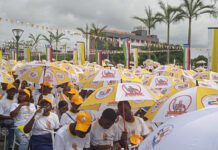
There was no shortage of moments of fellowship and cultural exchange among the participants, such as the tour of Manila, which concluded with a performance of traditional Filipino dances and the final “Night of Thanksgiving,” featuring a lively cultural showcase representing all the participating Countries.
The 4th World Meeting thus concluded with a renewed commitment from the ISS-FMA to strengthen collaboration among institutions, promote research, and foster the active engagement of young people, so that they may become authentic agents of change in society and in the Church.
Photos: Flickr ISS-FMA