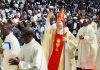


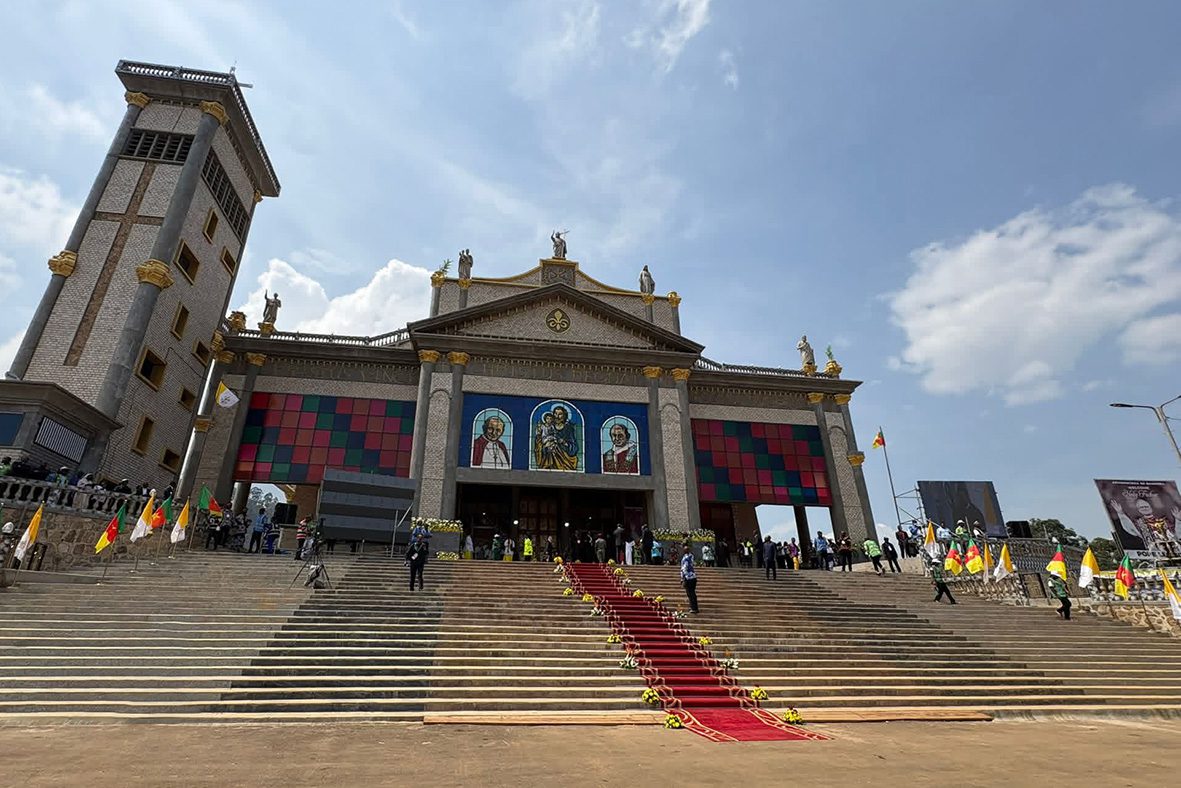
Yaoundé (Cameroon). From 15 to 18 April 2026, Pope Leo XIV visited Cameroon, the second phase of his third apostolic journey to Algeria, Cameroon, Angola, and Equatorial Guinea, marking his first visit to African soil since his election. (Program)
Upon his arrival at Yaoundé-Nsimalen Airport on the afternoon of 15 April, the Holy Father was welcomed by the Cameroonian Prime Minister, Joseph Dion Ngute, and by the Apostolic Nuncio, Archbishop José Avelino Bettencourt, by the Bishops of the Episcopal Conference of Cameroon, by other Bishops, and by the People of God.
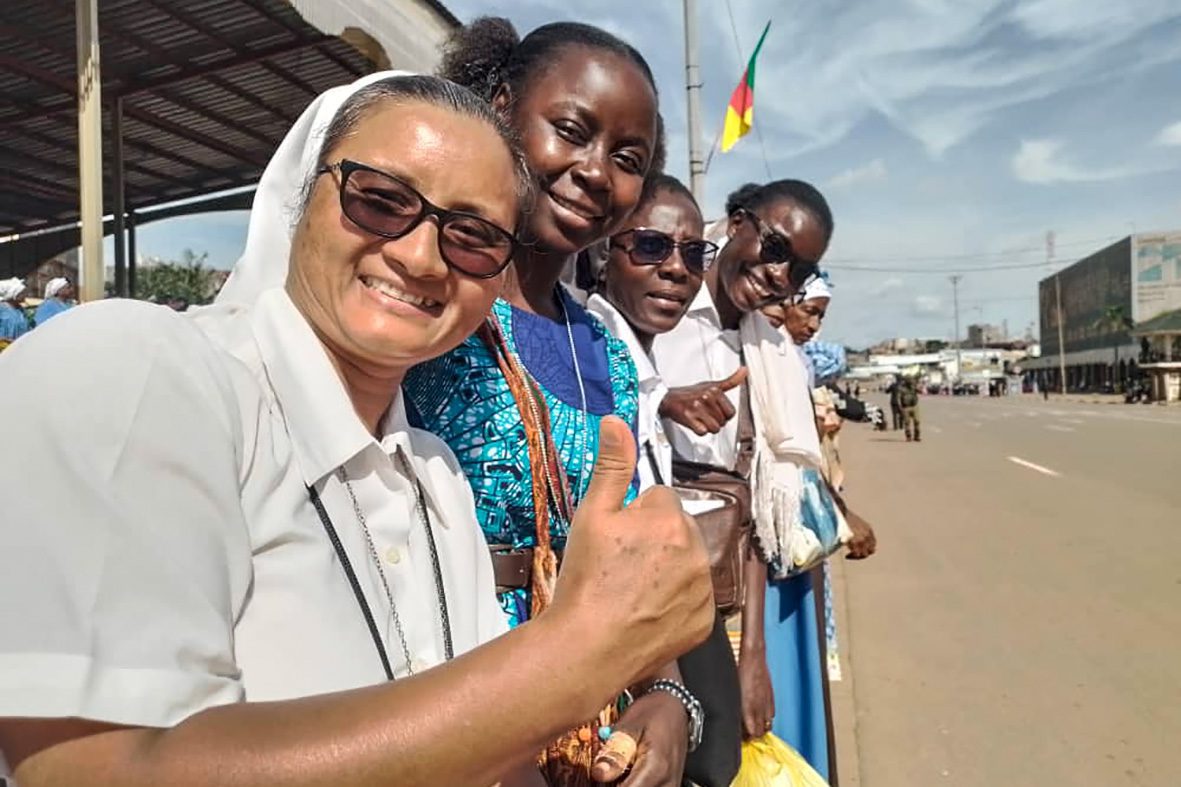
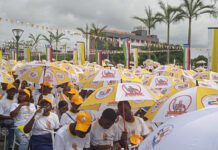
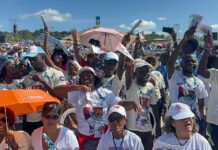
Christians and non-Christians alike thronged the route to cheer and welcome him along a 21-kilometer stretch. The joy of all was palpable. This crowd will accompany the Pope in his every movement and at every meeting. His itinerary in Cameroon included various encounters: with President Paul Biya, Civil Authorities and members of the Diplomatic Corps, the Episcopal Conference, orphans, the sick, children, young people, and university students and faculties.
“I come among you as a shepherd and as a servant of dialogue, fraternity, and peace. My visit expresses the affection of the Successor of Peter for all Cameroonians, as well as the desire to encourage everyone to continue with enthusiasm and perseverance in building the common good. (…) Furthermore, I wish to express the resolve to strengthen the bonds of cooperation between the Holy See and the Republic of Cameroon, founded upon mutual respect, the dignity of every human person, and religious freedom,” were the first words he spoke at the Presidential Palace in Yaoundé. (Discourse)
Wherever he has traveled, the Holy Father addressed the Country’s most pressing issues, from the diversity of its culture to the problems of violence and corruption. He called upon civil authorities to attend to the needs of the youth, to exercise power with a spirit of self-sacrifice, and to ensure that no one is excluded in the distribution of resources. He urged them to address the population’s grievances in order to avert the frustration that ultimately leads to violence. “Indeed, we are living in a time when resignation is rampant, and a sense of powerlessness threatens to stifle the renewal that people feel so deeply within themselves. What a hunger and thirst for justice! What a thirst for participation, for vision, for courageous choices, and for peace! It is my fervent desire to reach the hearts of all, especially the young, who are called to give shape, including a political shape, to a more just world,” he said, addressing the Authorities at the Presidential Palace.
One of the themes most frequently addressed by Pope Leo is that of Peace. In a country where political tension is palpable, and amidst the internal conflict in Bamenda (which the Pope visited) and its surrounding areas, he encouraged the pursuit of peace and urged people not to fall into the trap of war, but rather “to reject the logic of violence and war in order to embrace a peace founded on love and justice. A peace that is disarmed, that is, not based on fear, threats, or weaponry and disarming, in that it is capable of resolving conflicts, opening hearts, and fostering trust, empathy, and hope. Peace cannot be reduced to a mere slogan; it must be embodied in a way of life, both personal and institutional, that repudiates every form of violence. (…) This cry is intended as an appeal to the will to contribute to an authentic peace, prioritizing it above any partisan interest.”
Another theme he addressed in Cameroon was the nature of governance: “To govern is to love one’s own Country, but also neighboring Countries. The commandment, love your neighbor as yourself, applies in international relations as well! To govern means truly listening to citizens, and respecting their intelligence and their capacity to contribute to building lasting solutions to problems.” He also called for a change in approach, in which civil society is regarded as a vital force for national cohesion: “Associations, women’s and youth organizations, trade unions, humanitarian NGOs, and traditional and religious leaders all play an irreplaceable role in weaving the fabric of social peace.”
Young people, moreover, were at the center of his discourses: “Dear young people, it is above all to you that I address this invitation, for you are the beloved children of the land of Africa!” In the homily delivered during the Holy Mass at the Japoma Stadium in Douala on 17 April, he urged young people not to give in to discouragement, but rather to become protagonists of their own future by placing themselves at the service of society. “As brothers and sisters of Jesus, multiply your talents with the faith, tenacity, and friendship that inspire you. Be the first to become the faces and hands that bring the Bread of Life to your neighbor, a food of wisdom and of deliverance from all that fails to nourish us, but instead confuses our good desires and robs us of our dignity. (…)Do not yield to mistrust and discouragement; reject every form of abuse and violence, which offer the illusion of easy gain but harden the heart and render it insensitive. Do not forget that your people are even richer than this land itself, for their true treasure lies in their values: faith, family, hospitality, and work. Be, therefore, the protagonists of the future, following the vocation that God bestows upon each of you, without allowing yourselves to be bought off by temptations that squander your energies and contribute nothing to the progress of society.”
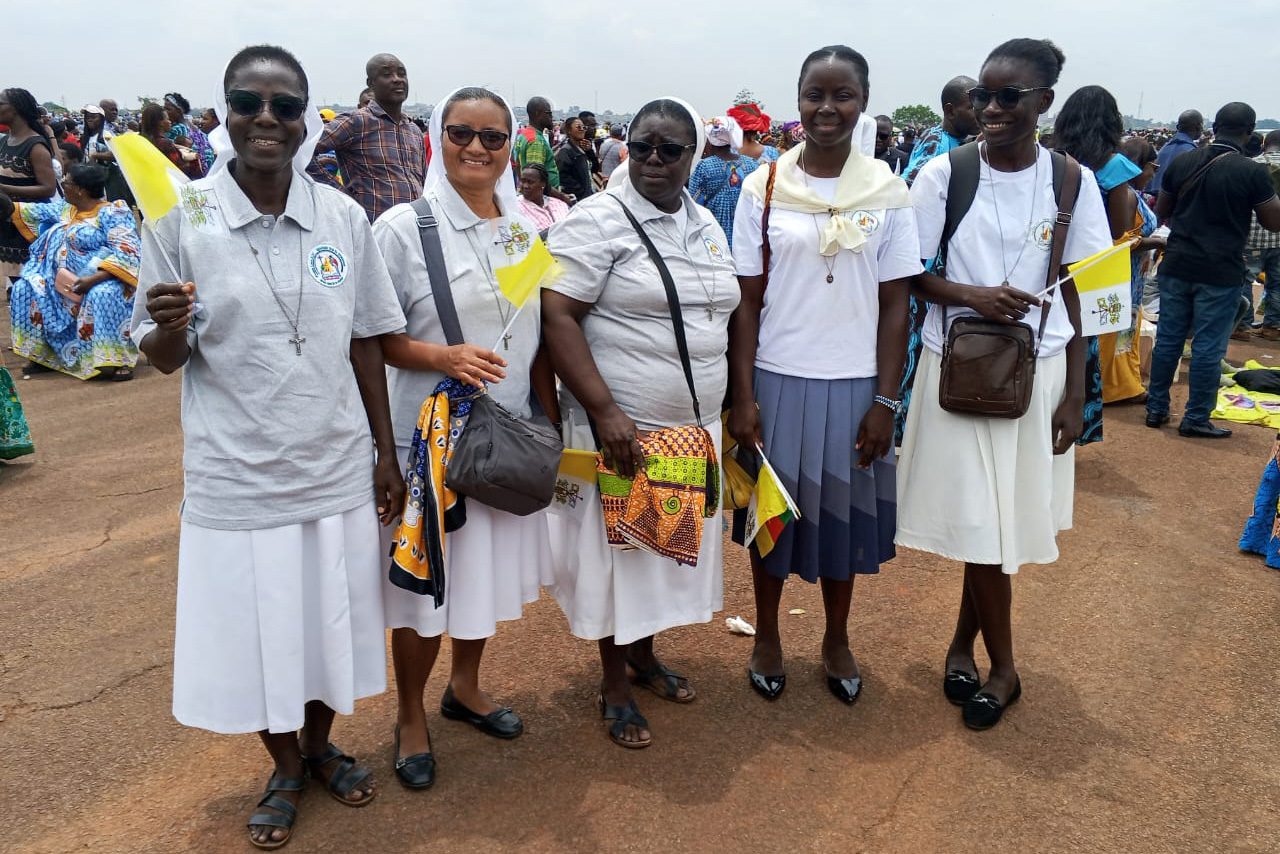
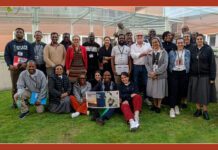
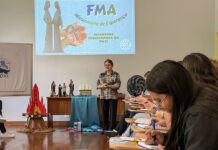
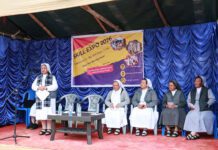
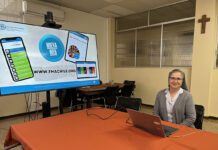
The Daughters of Mary Help of Christians of the Saint Maria Domenica Mazzarello Province (AEC), present in Bafia and Yaoundé, followed the Pope’s visit primarily during his stops in Yaoundé and the surrounding areas. Sister Florence Minkoué, FMA, Communications Coordinator, summarizes in this way the event of grace experienced by the Country:
In general, the Holy Father’s visit was perceived as a grace for the entire population in general, and for Christians in particular. The choice of places visited, his discourses, and the Pope’s serene simplicity demonstrated his solicitude toward the humble and the most vulnerable, as well as his commitment to peace and justice for the well-being of the People of God.”
The Testimony of Gloria, Aspirant:
From 15 to 18 April 2026, Cameroon experienced unforgettable moments. The regions visited by the Holy Father were decked out in festive attire. As soon as the Cameroonian people learned that the Pope had landed at Yaoundé-Nsimalen International Airport, the country filled with shouts of joy. A large crowd was already awaiting him under the sun. Men, women, and children waved flags and banners.
Many wept for joy at having seen the Successor of Peter. “I can’t believe he is here, among us,” said a mother, with her hands over her heart. For several days, the neighborhoods of Yaoundé had already been celebrating. Everywhere, the colors of the Vatican and Cameroon could be seen waving side by side. People prepared for this visit as if it were the arrival of Christ, with eagerness, prayer, and great love.
“His smile alone is enough, and you are already healed,” exclaimed a young man.
At the Palace of Unity, later at the Palace of Congresses, he addressed everyone: authorities, diplomats, and families alike. His simple yet profound words on peace and unity touched their hearts. Afterward, at the Ngul Zamba orphanage run by the Daughters of Mary, he spent time with the children. There, protocol vanished completely, leaving only tears of joy and moments of tenderness.
The lasting impression is profound. In Cameroon, the population remembers three words from this papal visit: joy, pride, and hope. Joy at having been chosen. Pride in showing the world that the land of Cameroon is a land of welcome. Hope, because the Pope affirmed that the country’s diversity “is not a fragility, but a treasure.”
A woman aptly summarized the experience: “For four days, we forgot our problems. We felt united and blessed. This is what I hold in my heart.”