






Rome (Italy). On 11 October 2025, marks the International Day of the Girl Child, established by the United Nations General Assembly in 2011 to raise awareness regarding the challenges that girl children and girls face every day in different parts of the world, to give voice to the dreams, stories of protagonism and achievements of girls, and to promote respect for their rights.
With the theme, The Girl I Am, The Change I Lead, this day is more than a symbolic event; it is a call to action.
Today, millions of girls find themselves at the forefront of crises, facing poverty, inequality, climate change, conflict, and displacement. Statistics provided by UNWOMEN and UNICEF indicate that girls between the ages of 15 and 19 are twice as likely as boys to be excluded from education, employment or training and, in fragile settings, are almost 90 per cent more likely to be out of school than their peers in stable settings. Nearly 4 out of 10 adolescent girls and young women do not complete upper secondary school.
Furthermore, almost 1 in 4 girls, between 15 and 19 years old, who have been in a relationship, have suffered violence from their partner. Another alarming fact is that one in 5 young women between the ages of 20 and 24 was married off as a child and self-harm is a leading cause of death among adolescents. Conflict, displacement, and crises only exacerbate gender inequalities, early marriage, sexual violence, and maternal mortality of girls. Too many girls remain excluded from education, deprived of healthcare, and are vulnerable to violence and practices harmful to physical and mental health.
The theme of this year’s Day, “The Girl I Am, the Change I Lead: Girls on the Front Lines of Crises”, emphasizes that while girls are disproportionately affected by global challenges, they are also at the forefront of solutions. Girls, in fact, are leading change in their communities with courage and creativity.
The report “Girls’ goals: what has changed for girls? The rights of teenage girls over the last 30 years” (Girl goals: What has changed for girls? Adolescent girls ’ rights over 30 years) from UNICEF, UN Women and Plan International highlights that change is possible and that smart investments can help transform the world for girls, families, communities, and national economies.
In fact, change is not a slogan, but a reality. From rural villages to urban centers, girls are organizing themselves, mobilizing, and making their voices heard, leading climate strikes, creating community networks, and combating gender violence.
2025 also marks the 30th anniversary of the Beijing Declaration and Platform for Action. This is a reminder that girls not only need protection, but are protagonists of transformation, contributing to policy making and strengthening communities.
From 2023 to 2025, the International Institute Mary Help of Christians (IIMA) in Geneva and VIDES International carried out the project “A Multi-Congregational Observatory to promote the rights of girls in 6 countries in the post-pandemic: A joint effort to bridge the digital divide and ensure the mental health of girls.”
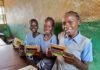
Advocacy and training programs were organized for girls and young women from Ecuador, Kenya, India, Nepal, Peru, and South Sudan to acquire skills critical to interacting with the United Nations system for the protection of human rights, with a focus on the rights of children and young people. Through mentoring and personalized guidance, young girls were empowered to strengthen their leadership, build trust, and develop advocacy skills.
As a result, these girls are emerging as young leaders, expressing their proposals, influencing decision-making processes, and becoming key actors of change within their communities, contributing to a more equitable and inclusive future.