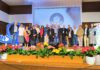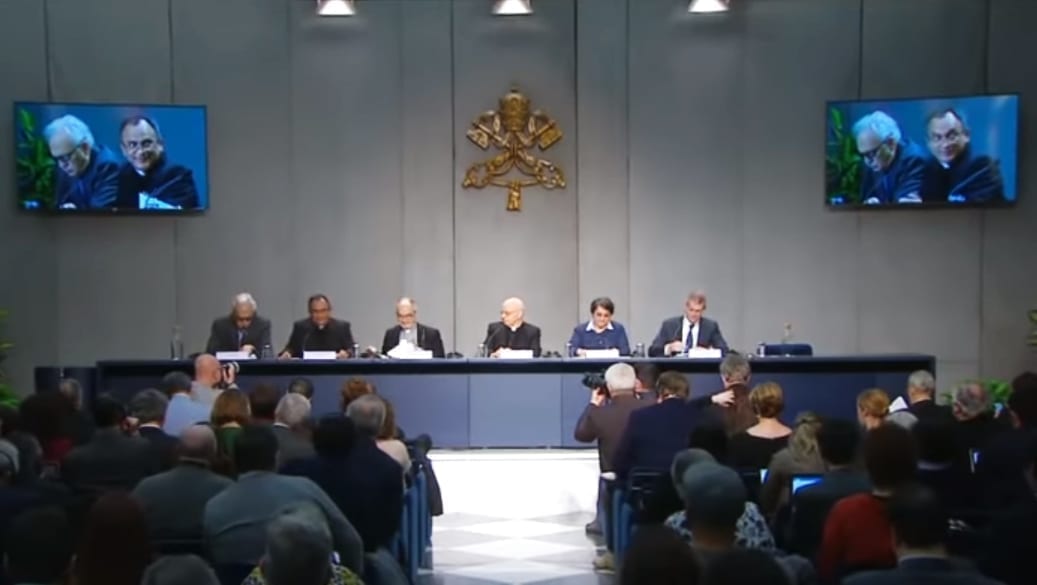

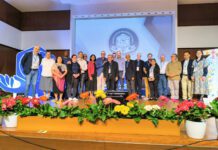
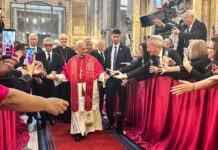
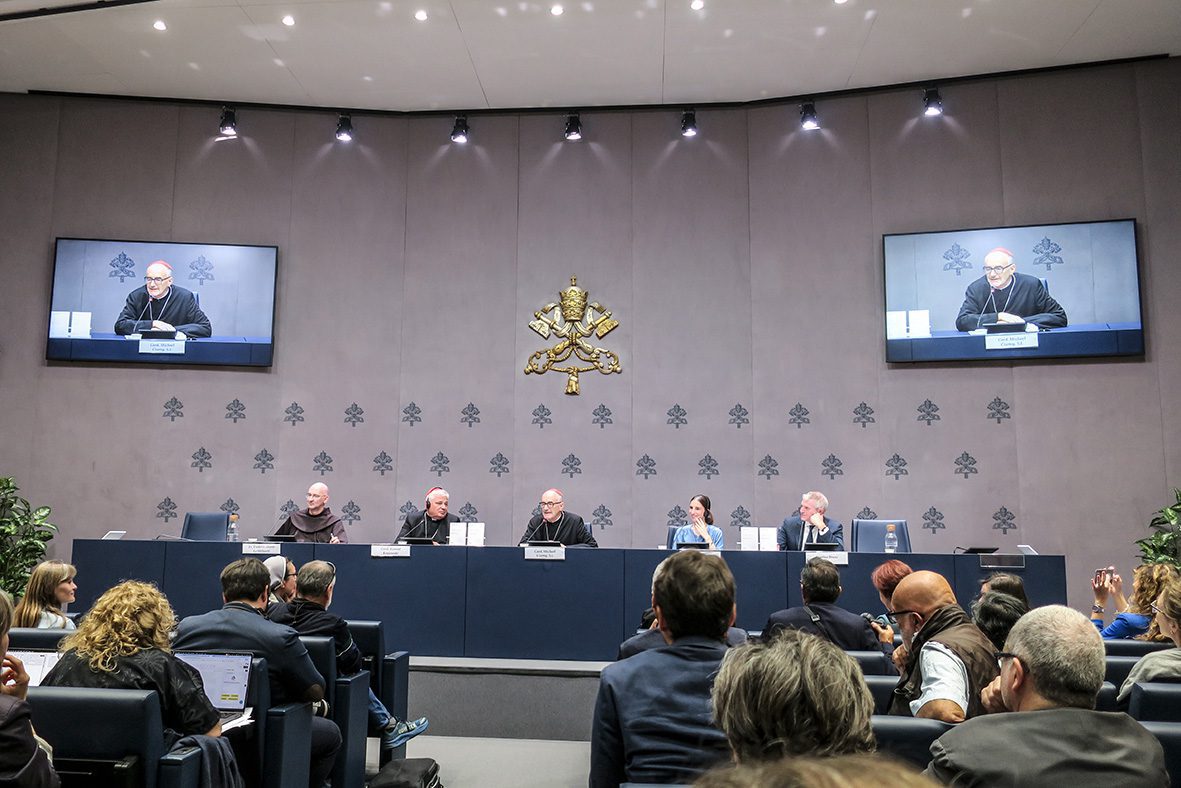
Rome (Italy). On 9 October 2025, the Press Conference to present the Apostolic Exhortation “Dilexi te” of Pope Leo XIV on love for the poor took place in the Holy See Press Office.
The following spoke at the Press Conference: Card. Michael Czerny SJ, Prefect of the Dicastery for Promoting Integral Human Development; Card. Konrad Krajewski, Prefect of the Dicastery for the Service of Charity; Father Frédéric-Marie Le Méhauté, Provincial of the Friars Minor of France/Belgium, doctor of theology; Sister Clémence, Little Sister of Jesus of the Fraternity of the Three Fountains in Rome.
The document, in continuity with the fourth and final encyclical of Pope Francis – Dilexit nos “On the human and divine love of the heart of Jesus Christ” (24 October 2024) – was signed by the Holy Father on 4 October, on the significant anniversary of the Feast of Saint Francis, “the poor man of Assisi” and then published on 9 October.
In introducing it, Pope Leo explains that Pope Francis in the last months of his life was preparing an Apostolic Exhortation on the care of the Church for the poor and with the poor, “imagining that Christ addresses each of them saying: You have little strength, little power, but ‘I have loved you’ (Rev 3:9)”. The verse of Revelation remains the biblical foundation of this “project” received as an inheritance which, he explains, “I am happy to make it mine – adding some reflections – and to propose it again at the beginning of my pontificate, sharing the desire of the beloved Predecessor that all Christians may perceive the strong connection that exists between the love of Christ and His call to bring us close to the poor” (DT, 3).
The Director of the Holy See Press Office, Matteo Bruni, immediately highlighted the framework in which this document stands, recalling the words of Pope Leo, “We are not on the horizon of charity, but of Revelation. Contact with those who do not have power and greatness is a fundamental way of encountering the Lord of history. In the poor He still has something to tell us” (DT 5).
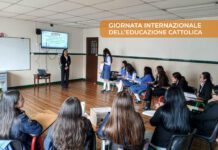
In their presentations, the speakers highlighted various aspects, drawing on their own life experience. Cardinal Czerny took up some of the themes of the Exhortation emphasizing how “the promotion of integral human development, according to the social doctrine of the Church, intertwines education, the Eucharist, and service. Education is the first act of justice, because it frees people from spiritual poverty and prepares them for social responsibility.”
The theme of education, defined by Pope Francis as “one of the highest expressions of Christian charity (…) A mission of love, because it cannot be taught without loving” emerges in Chapter Three (68-72) where, among the Congregations dedicated to popular education, the Salesians are mentioned: Saint John Bosco began the great Salesian work, based on the three principles of the “preventive system” – reason, religion, and loving-kindness (DT 70).
Another theme touched upon was that of peace, so longed for in these times and also linked to poverty. “In Dilexi te, Pope Leo joins Pope Francis in declaring: there will be no peace as long as the poor and the planet are neglected and mistreated,” recalled Card. Czerny. “Treating them with dignity is the first act of peace. Only a society that places the marginalized at its center can be truly peaceful, and only a world composed of societies of this type can be at peace.”
Cardinal Krajewski, with his experience as Almoner to the Pope for thirteen years, highlighted the practical aspect of almsgiving, a practical expression of a Church always ready to help the poor. “We are Pope Leo’s Emergency Department; we are the ambulance always ready to leave for the needy”, he said. The very last lines of the document (115-119) are reserved for almsgiving, to highlight how, “Love and the deepest convictions must be nourished, and it is done with gestures” and how, “we need to practice almsgiving to touch the suffering flesh of the poor.”
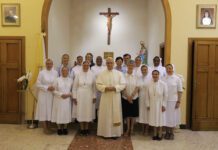
Concrete contact with the poor, in particular with Roma women of Romanian origin, was at the center of Sister Clémence’s beautiful testimony. “These are women who, as the Exhortation reminds us, are ‘doubly poor’ due to their situation of exclusion.” Poor women, but “rich in humanity”, who “possess the wisdom that is formed from the experience of precariousness, which encourages sharing and solidarity.” Through small anecdotes in which she remembers these women by calling them by name, Sister Clémence tells how she herself remained edified by their faith and thus found herself in the words of Dilexi te, “It is a surprising experience […] and which becomes a real turning point in our personal lives, when we realize that it is precisely the poor who evangelize us.”[3]
From this perspective, Father Frédéric-Marie Le Méhauté, underlined the importance of acting, not only “for” the poor, but “with them”. “The poor have a thought. That is to say, they can be actors and not only ‘objects of our compassion’ (79) or our policies. They can help us analyze problems and, above all, they are bearers of real solutions. Moving to understand them starting from them is therefore a necessity because ‘reality is best seen from the margins and the poor are endowed with a particular intelligence, indispensable to the Church and humanity’ (82).”
During the Press Conference, the appeal to every baptized person to commit themselves personally to the defense and promotion of the weakest emerged. A commitment that is based on Christian love, which overcomes every barrier. “A Church that places no limits on love, that knows no enemies to fight, but only men and women to love, is the Church that the world needs today” (DT120).
On the Website of the Dicastery for Promoting the Integral Human Developmente can be found the video of the Press Conference, the discourses, the summary of the apostolic exhortation, and the infographics that illustrate its main contents.
Apostolic Exhortation Dilexi Te