
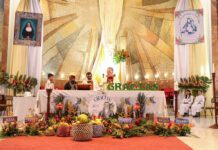
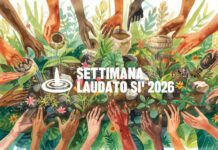
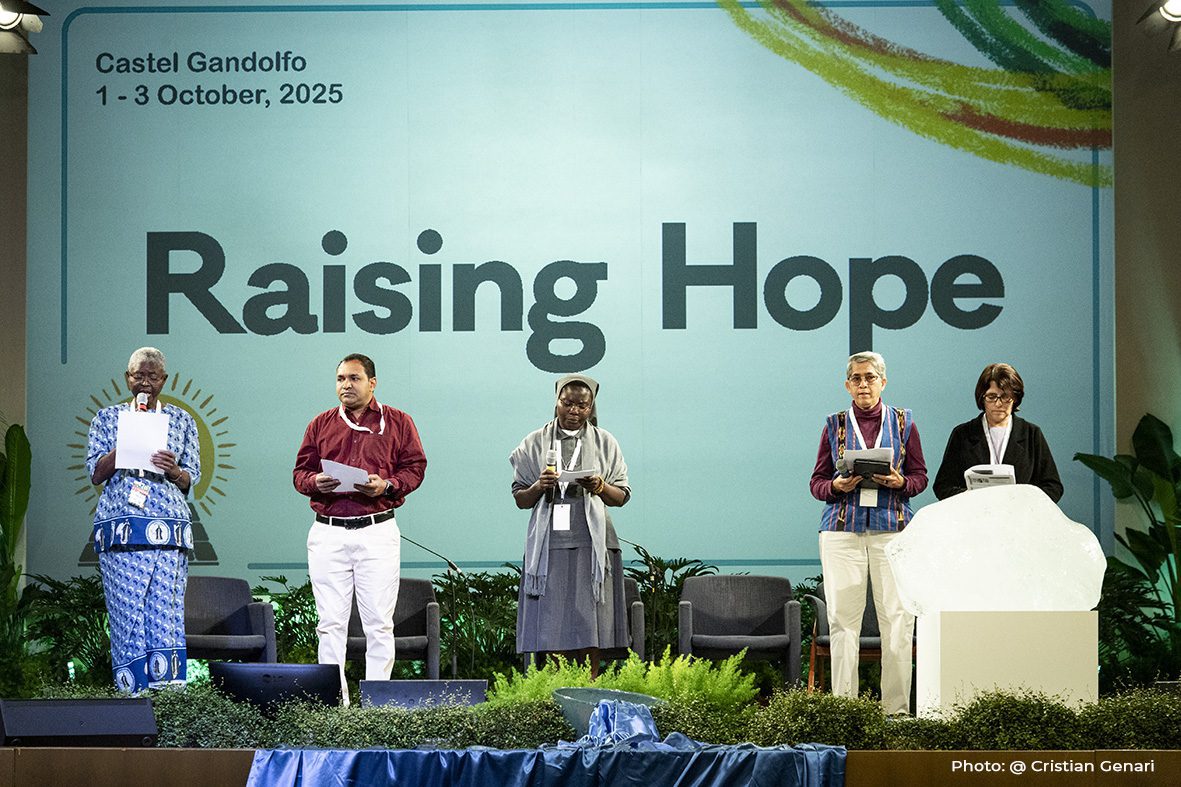
Castel Gandolfo (Rome). From 1 to 3 October 2025, the Mariapoli International Center of the Focolare Movement in Castel Gandolfo, Rome, hosted the Increasing Hope Conference organized by the Laudato Si’ Movement – in collaboration with the Dicastery for the Service of Promoting Integral Human Development, Caritas International, CIDSE, UISG, Focolare Movement, and Alliance of Ecclesial Networks – to celebrate the 10th anniversary of Pope Francis’ Encyclical Letter Laudato Si’.
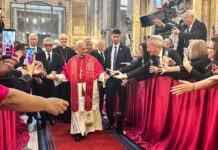
The event was inaugurated by Pope Leo XIV on 1 October. In his Message he underlined how much the Encyclical of Pope Francis has “strongly stimulated the Catholic Church and many people of good will, becoming a starting point for dialogue, sparking reflection groups, school and university programs, collaborations, and projects of various types on every continent. The impact has reached international summits, the areas of ecumenism and interreligious dialogue, economic and entrepreneurial ones, as well as theological and bioethical studies. The language of ‘care for our common home’ has been incorporated into academic, scientific, and political debates.”
This aspect manifested itself in the large presence of personalities, with members of international agencies, indigenous leaders, economists, climate and biodiversity experts, also underlined by the Holy Father. “it is encouraging to observe the diversity of the organizations represented in this conference, as well as the variety of organizations that join the Laudato si Movement’ and the Action Platform.”
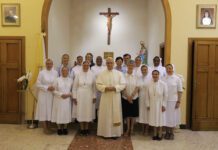
Among the participants, Sister Chanda Constance Nsofwa, Daughter of Mary Help of Christians, collaborator of the Youth Ministry Sector and representative of the FMA Institute in the Sector of religious women for the Laudato Si’ Action Platform, collaborated in the animation of moments of prayer together with the other religious women of the UISG/USG.
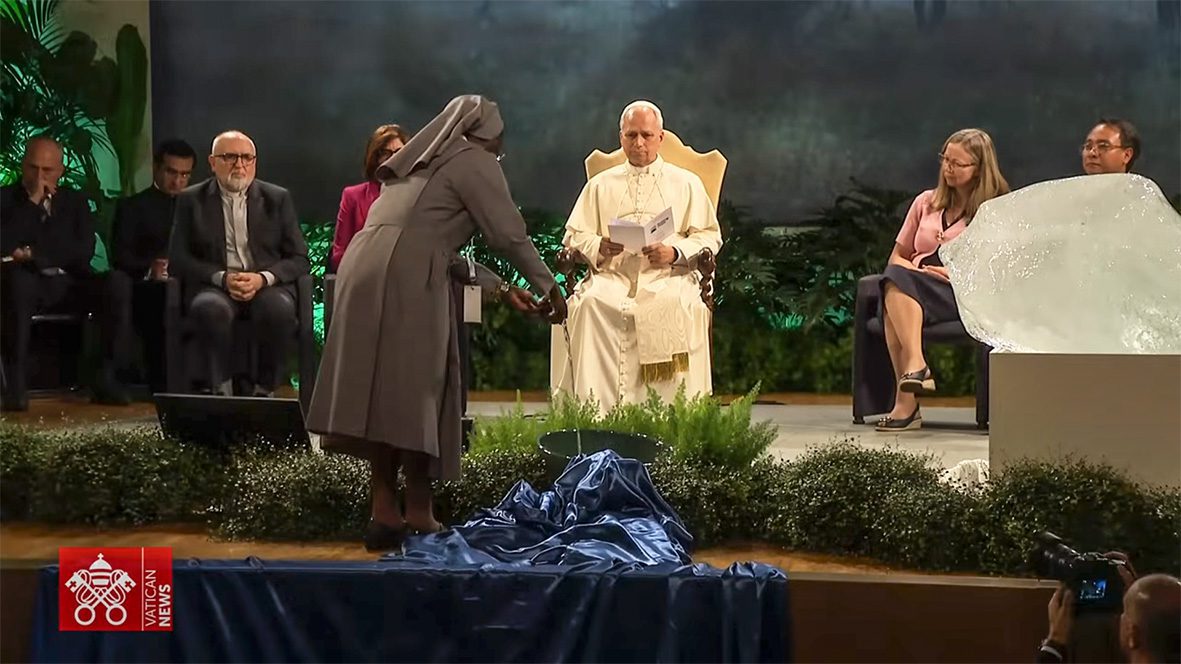
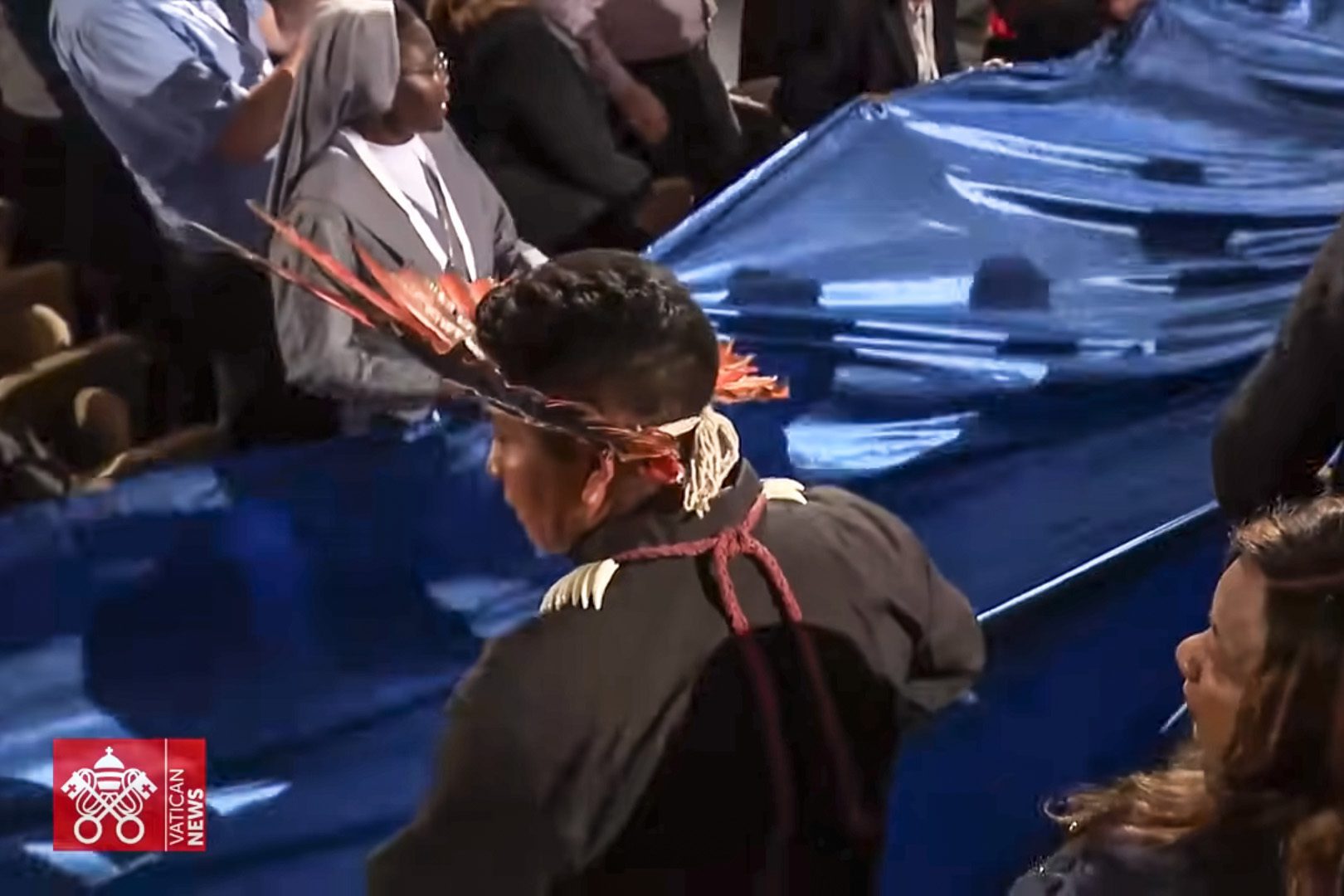
The opening was characterized by a significant symbolic and spiritual moment to make people reflect on the shared commitment to caring for the common home and towards ecological conversion. Some representatives from various countries – East Timor, Ireland, Brazil, Zambia, and Mexico – brought water from their homeland, which they poured into a common basin called the “Bowl of Tears” to symbolize a shared body of water, along with interdependence with creation and with each other. At the end of the Conference, the holy water was then distributed among the participants, who were able to bring it to their respective Countries of origin.
To underline the “cry of the earth” awaiting the conversion of humankind, a block of ice from Greenland more than 20,000 years old was also brought to the Conference. Breaking away from the Greenland ice sheet due to climate change, it was melting into the ocean. Pope Leo invoked the blessing on the block of ice, the water in the bowl, and everyone present. “May we work for the flowering of all creation.” The moment, which ended with a common commitment to invite everyone to move from tears to hope, from pain to action, was accompanied by musical performances by Adenike, Gen Verde and the Pacific Artists for Climate Justice.
The Conference was enriched by several presentations, including those of the Minister of the Environment and Climate Change of Brazil, Marina Silva, and the former Governor of California, Arnold Schwarzenegger, who has long been involved in initiatives to safeguard creation. Also engaging were the round tables, spiritual moments, cultural events and testimonies which aimed to highlight both the progress made since the promulgation of Laudato Si’, and the urgent steps to be taken in view of COP30, which will be held in Brazil from 10 to 21 November 2025. The program also included a view of Borgo Laudato Si’.
In the above-mentioned Message, Pope Leo invited them to remember the past with gratitude and to reflect on what remains to be done, “to ensure that caring for our common home and listening to the cry of the earth and the poor do not appear as fads or, worse still, are seen and heard as divisive issues.”
In this perspective, he indicated the importance of returning to the heart. “It is only through a return to the heart that a real ecological conversion can also take place. We need to move from collecting data to caring; from environmentalist discourses to an ecological conversion that transforms the personal and community lifestyle.”
Conversion to integral ecology is a path “concrete and continuous” at the center of the Resolution adopted by the General Chapter XXIV of the Institute of the Daughters of Mary Help of Christians, with the aim of promoting personal, community and pastoral involvement. This process, in fact, requires the assumption online, of the seven objectives of Laudato Si’, according to the spirit of the Preventive System, with a broad and inclusive vision, in view of the diversity of the operational contexts of the FMA.
The celebration of the tenth anniversary of the Encyclical Laudato si’ therefore offers itself an opportunity and a stimulus to continue to carry forward the commitment and reflection towards the care of the common home and the conversion to integral ecology. Pope Leo encourages everyone, especially young people, parents, and those who work in local and national administrations and institutions “to make their contribution to the ‘cultural, spiritual and educational challenge’ (LS, 202), always and tenaciously aiming for the common good. There is no room for indifference or resignation.”