







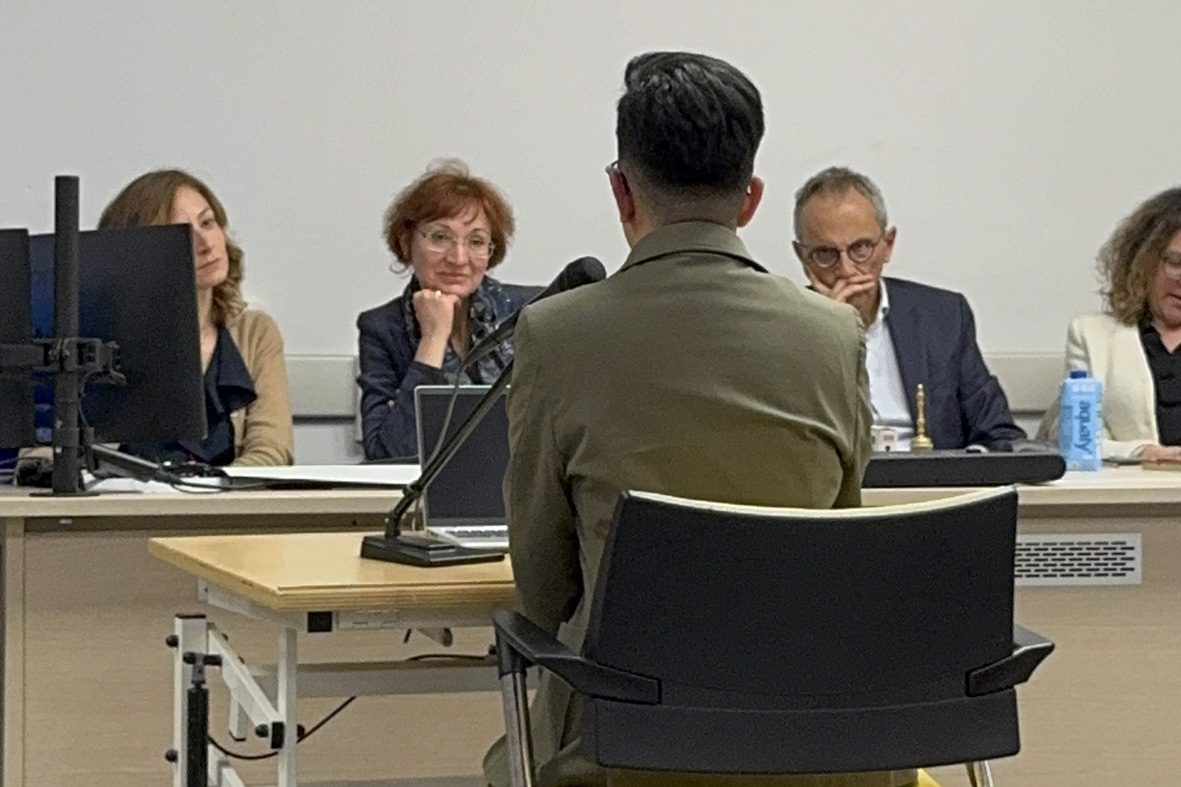
Sanluri (Italy). On 25 February 2025, Francesco Simbula, a Past Pupil of the Daughters of Mary Help of Christians in Sanluri, Sardinia, of St. John Bosco Province (IRO), at the Faculty of Humanities of the University of Cagliari, discussed a thesis in History of the Italian language that analyzes the communicative and linguistic strategies of the handwritten letters of Saint Mary Domenica Mazzarello.
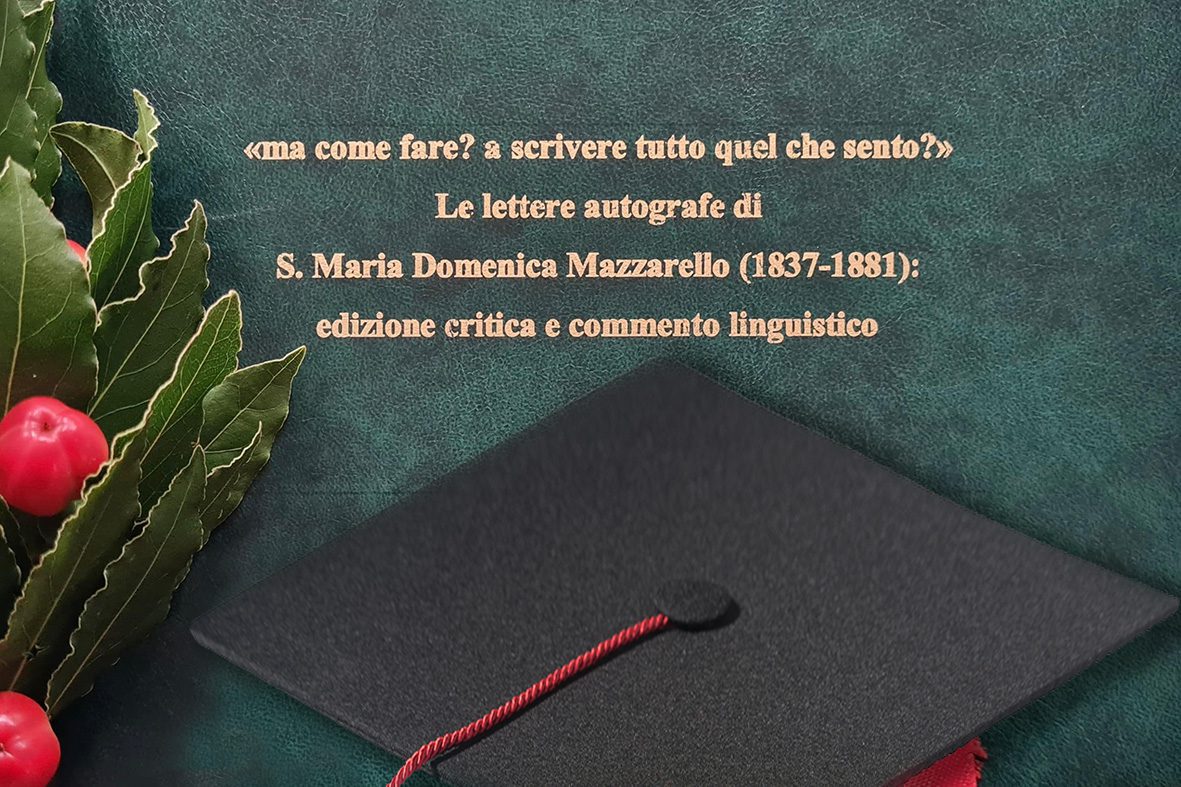
The letters of Mother Mazzarello (1837-1881), since their first publication in 1975, have been appreciated and studied from multiple points of view, mostly historical, charismatic, pedagogical, and spiritual. Now, fifty years later, Francesco, accompanied by the professors Rita Fresu and Stefania Sotgiu, is carrying out a research work on them that he hopes to see published soon: “How can I write all that I feel?” (L 8,1) The autograph letters of St. Mary Domenica Mazzarello (1837-1881): critical edition and linguistic comment”.
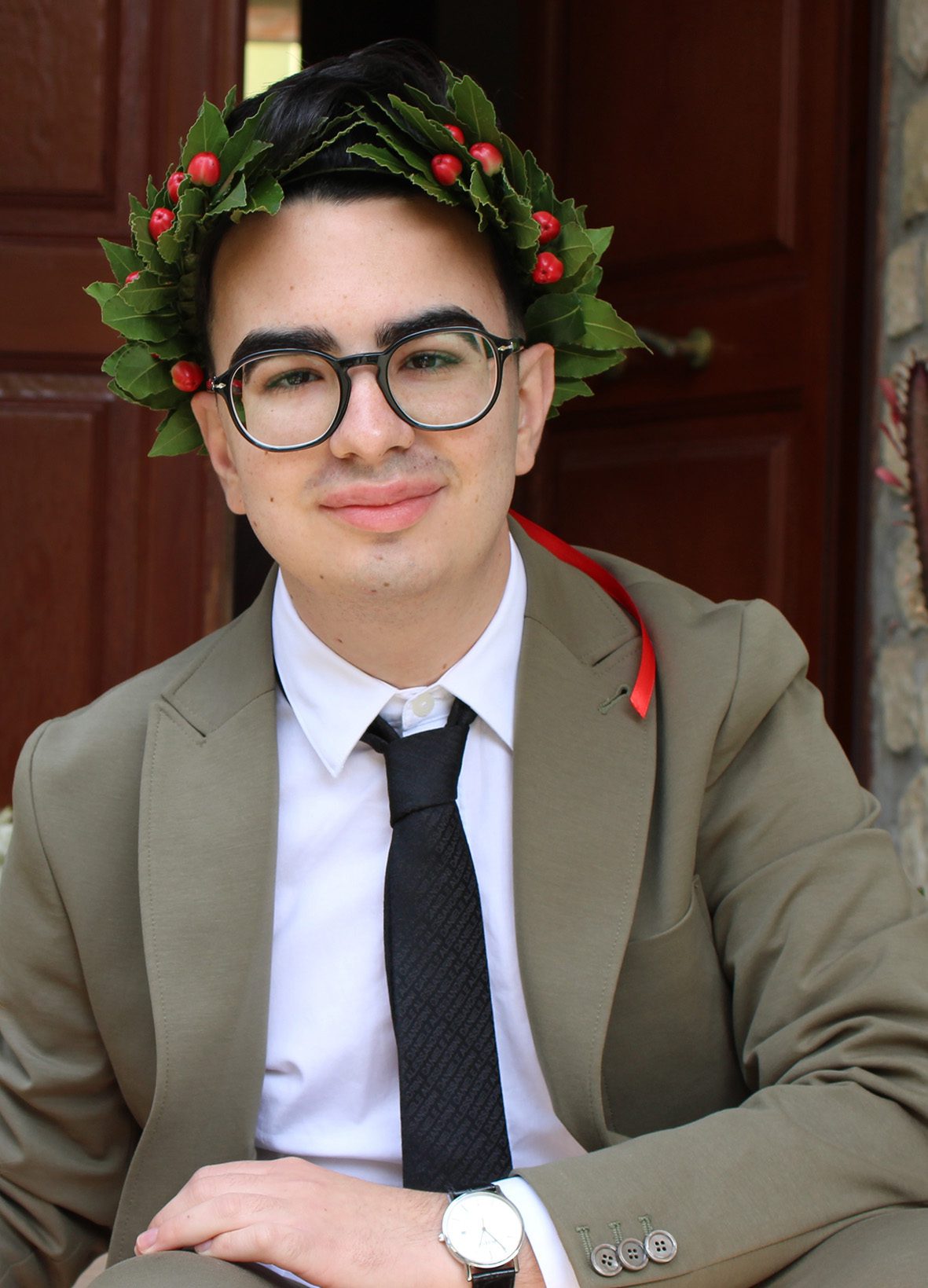 Francesco recalls with gratitude his teacher, Sister Maddalena Scano, who passed away three weeks after his graduation, and the FMA of the San Raimondo Kindergarten in Sanluri, that contributed to his educational and instructional journey begun twenty years ago and which ends this year with this careful study of Saint Mary Domenica Mazzarello.
The survey is part of a series of studies on the trinomial ‘language-woman-faith’, which in recent years has attracted increasing attention from scholars. Between the nineteenth and twentieth centuries, in fact, female consecrated life presents a significant transformation, briefly illustrated by the new graduate in a paragraph entitled, “From nuns to founding sisters and entrepreneurs”. The thesis has the merit of collecting the results of the first systematic linguistic analysis – that is, conducted on all traditional levels of analysis – of the epistolary of the Cofounder of the Daughters of Mary Help of Christians.
Francesco carried out his research in Rome, at the General Archive of the Institute of the Daughters of Mary Help of Christians. He examined the original documentation, carefully preserved, and then analyzed and compared the texts from a strictly linguistic point of view: graphics, morphological elements, syntax, etc.
In presenting the work, he affirms: “We reached results – in my opinion – really extraordinary, as Mother Mazzarello, although she started from a condition of almost total illiteracy and dialectofonia (Phonetics of dialects), as an adult, she was able to acquire the tools of writing and, above all, to use the language tool for the practical and expressive purposes required by her role.
In fact, although she belongs to the group of semi-educated writers, Mary Mazzarello subjected her texts to an intense self-review. She has demonstrated an important diaphasic awareness and a capacity of the function, use, and reworking of religious sources, and apparently tried to limit, as much as possible, dialect interference. Therefore, it deals with valuable documents for the history of language, and I am happy to have been able to complete my university journey with this work, which was evaluated by the Commission with praise and worthy of printing.”
To the young Francesco, along with compliments and gratitude for having deepened texts of great charismatic and affective value for the Daughters of Mary Help of Christians, such as the Letters of Mother Mazzarello, the wish for a bright future, in which to continue carrying on with the same passion as he received in his educative journey.







Che bella tesi sulle lettere scritte da Santa Maria Domenica Mazzarello! E’ una iniziativa letteraria davvero originale; attendo di leggerla, penso che questo sia desiderio anche della altre sorelle.
Il mio fraterno apprezzamento e augurio di continuato contributo linguistico al giovane autore Francesco e alle consorelle che lo hanno accompagnato pastoralmente durante la sua crescita.
Volentieri divulgherò questa interessante esemplare notizia tra le giovani Thai e persone conoscenti. Questa sua tesi sia un valido contributo a far conoscere la sensibilità femminile della FMA consacrata anche alle giovani attuali in discernimento della scelta della vita matrimoniale o quella di consacrata al Signore.
Le nuove generazioni sanno leggere e interpretare testi interessanti e poco noti al grande pubblico. Caro Francesco continua a leggere il presente come sinfonia di linguaggi. che dovrebbero essere orientati alla pace. Tu rappresenti i giovani che guardano al passato per inventare un futuro di Grazia e di giustizia. Madre Mazzarello ti accompagni. Ti sorride. Ti avrebbe voluto come Segretario generale. Sr Margherita Maderni
Bravissimo!
Grazie Francesco per questo lavoro e grazie per presentarci Madre Mazzarello con questo studio approfondito delle sue lettere. Dio benedica la tua vita.