

Rome (Italy). On 1 January 2026, the 59th World Day of Peace, established by Pope Paul VI in 1968, will be celebrated – at the beginning of the calendar that measures and describes the path of human life over time –with the hope “that Peace with its just and beneficial balance will dominate the unfolding of the history to come.”
The intention of Paul VI, as the Catholic Church, was “with the intention of service and example,” to “launch the idea,” in the hope of gathering “not only the broadest consensus in the civilized world, but that this idea will find everywhere multiple skilled and valid promoters to impress on the ‘Day of Peace’, (…) that sincere and strong character of humanity, conscious and redeemed from its sad and fatal conflicts of war, which knows how to give the history of the world a happier, orderly, and civilized development.”
Since then, the invocation of the Popes to achieve peace has continued to rise, and in recent years, it has become increasingly heartfelt in witnessing the increase in the number and intensification of local and regional conflicts, which Pope Francis has called a “third world war in pieces.”
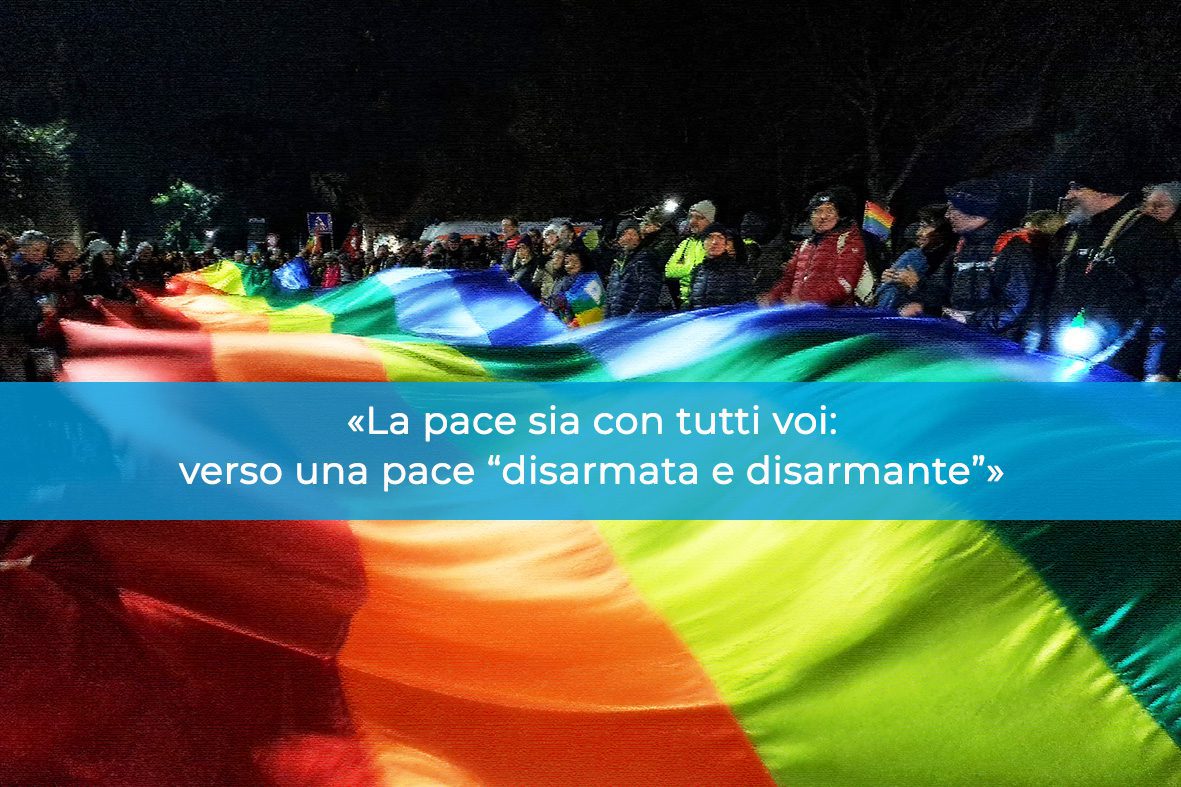
“Peace be with all of you” is the title of the 1st Message delivered by Pope Leo XIV – presented on 18 December at the Vatican Press Office – for the Day with which the new year 2026 opens. These are the same words with which he presented himself to the world on the day of his election to the Pontificate, 8 May 2025. “Since the evening of my election as Bishop of Rome, I have wanted to include my greeting in this choral announcement. And I wish to reiterate it. This is the peace of the risen Christ, an unarmed peace and a disarming, humble, and persevering peace. It comes from God, God who loves us all unconditionally.”
Pope Leo’s message is one of light in which the contrast between darkness and light emerges several times, because, “seeing the light and believing in it is necessary to avoid sinking into darkness.” And precisely because, given the international situation, a sense of despair and discouragement risks prevailing, the Holy Father animates in recognizing the light:
“Peace exists; it wants to inhabit us; it has the gentle power to illuminate and broaden intelligence. it resists violence and conquers it. Peace has the breath of the eternal; to evil we cry out ‘Enough,’ to peace we whisper ‘Forever.’ (…) The opposite, that is, forgetting the light, is unfortunately possible. It then loses its realism, giving in to a partial and distorted representation of the world, in the sign of darkness and fear.”
In the words of St. Augustine, he encourages to “radiate its bright heat all around.” “If you wish to draw others to peace, first have it yourselves; be steadfast in peace yourselves. To inflame others, you must have the flame burning within.” Whether we have the gift of faith, or we feel we do not, dear brothers and sisters, let us open ourselves to peace! Let us welcome and recognize it, rather than consider it distant and impossible.”
A disarming peace
Inevitable is the mention of the arms race, towards which, like his predecessor, Pope Leo has expressed firm dissent several times, even recently, in response to journalists. The example he refers to is that of Jesus himself when, defended by Peter, he orders him to put his sword back in its sheath. “The peace of the risen Jesus is disarmed, because His struggle was disarmed, within precise historical, political, social circumstances. Christians must together, prophetically witness this newness, mindful of the tragedies with which they have too often been complicit.”
As St. John XXIII already expressed in the encyclical Pacem in terra, “human beings live under the nightmare of a hurricane that could unleash itself at any moment with unimaginable overwhelmingness. Since the weapons are there.” In support of this statement, the Holy Father precisely reports data on military spending worldwide, which increased by 9.4% compared to the previous year, confirming the trend that has been uninterrupted for ten years and reaching the figure of 2,718 billion dollars, or 2.5% of world GDP.”
The challenge against rearmament is also educational, as unfortunately policies, rather than promoting a “culture of memory, which preserves the awareness developed in the twentieth century and does not forget the millions of victims,” through the media and educational programs “they spread the perception of threats and transmit a merely armed notion of defense and security.” And in addition to denouncing the economic and financial interests of private individuals who push States toward policies of death, the Pope also urges us to foster “the awakening of consciences and critical thinking” and to “join efforts to contribute to each other a disarming peace, a peace that arises from evangelical openness and humility.”
An Disarmed Peace
Still in the Octave of Christmas, the opening of this section of the Message resonates particularly significant:
“Goodness is disarming. Maybe that’s why God became a child. The mystery of the Incarnation, which has its point of most extreme lowering in the descent into hell, begins in the womb of a young mother and manifests itself in the manger of Bethlehem.”
It is not a poetic and disenchanted incipit, but rather a call to make contact with one’s deepest humanity because, “Nothing has the capacity to change us like a child. And perhaps it is precisely the thought of our children, of children, and also of those who are fragile like them, that pierces our hearts” (cf. Acts 2:37). It is not enough, then, to reduce or even reduce armaments; instead, it is necessary to proceed with integral disarmament –a concept first introduced by St. John XXIII – through “the renewal of the heart and intelligence” and above all to foster trust in human beings, since “the principle that true peace can only be built through mutual trust.”
“We believe that this is a goal that can be achieved,” Pope John said, but it must also be desired. “A fundamental service that religions must render to suffering humanity” is to monitor “the growing attempt to transform even thoughts and words into weapons,” in addition to “cultivating prayer, spirituality, ecumenical and interreligious dialogue as paths of peace and languages of the encounter between traditions and cultures,” in order to be as a community, “houses of peace”. “Today more than ever, in fact, it is necessary to show that peace is not a utopia, through careful and generative pastoral creativity”.
At the end of the Jubilee Year, close to the closure of the last Holy Door on 6 January, that of St. Peter, opened by Pope Francis on 24 December 2024, the Message ends with the appeal to “motivate and support any spiritual, cultural, and political initiative that keeps hope alive, countering the spread of fatalistic attitudes” together with the lack of hope and constant mistrust scattered throughout today’s society:
“May this be a fruit of the Jubilee of Hope, which has urged millions of human beings to rediscover themselves as pilgrims and to begin within themselves that disarmament of heart, mind, and life to which God will not delay in responding by fulfilling His promises.”