




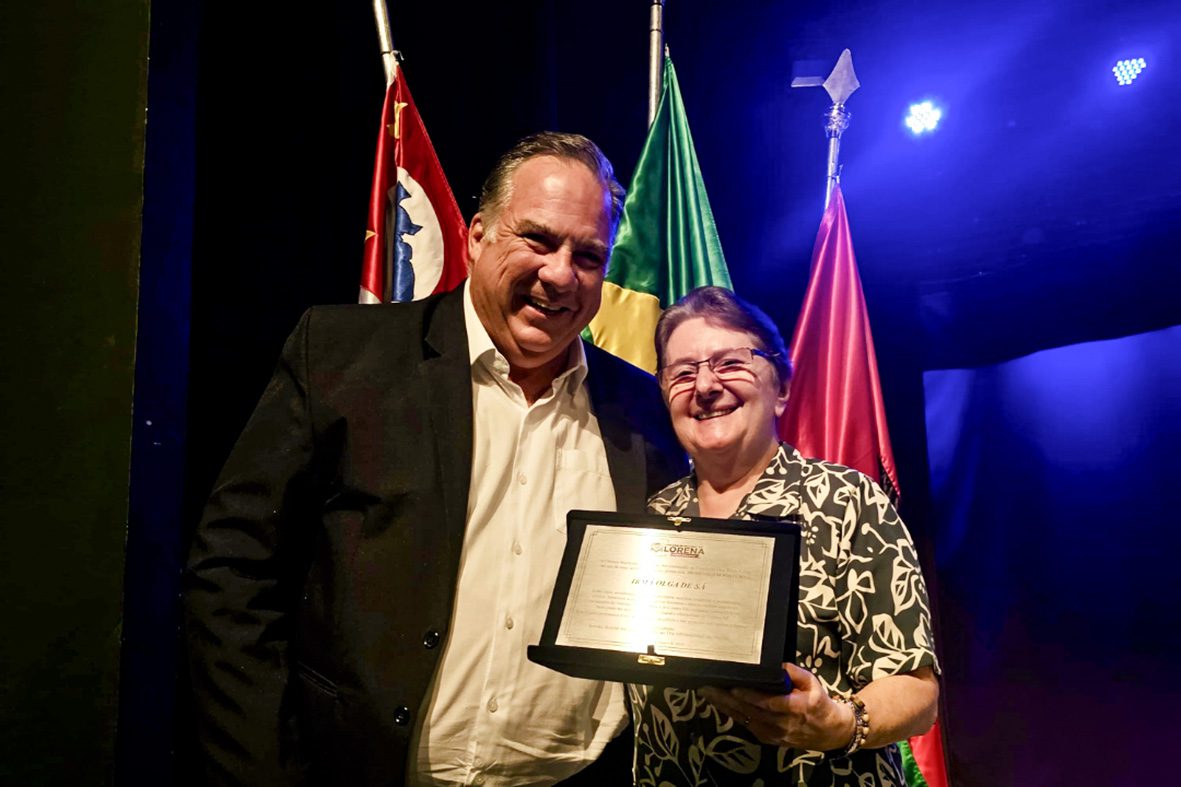
Lorena (Brazil). On 25 March 2026, the City Council of Lorena, São Paulo, held a solemn session to mark International Women’s Day at the Teresa D’Ávila Theater, located within the Teresa D’Ávila University Center (UNIFATEA) of the Our Lady of Aparecida Province (BAP). The event brought together public officials, institutional representatives, and various women honored for their contributions to the city and the region.
The ceremony aimed to highlight the achievements attained by women in various fields of activity, with the award recipients selected by the City Councilors of Lorena, and was attended by prominent figures from the municipality’s political, educational, and social spheres.
The ceremonial dais consisted of the Council President, Councilor Dr. Élida Vieira; the Vice President, Councilor Pastor Milton Gomes; the First Secretary, Councilor Waldemilson da Silva; the Second Secretary, Councilor Ana Lúcia Silva Mello; and the Rector of UNIFATEA, Prof. Carlos Miglinski. Its composition underscored the institutional character of the event and the integration between the legislative branch and the academic community.
Present as well were the Institution’s Vice-Rector, Sister Silvana Soares, along with some FMA Sisters: Rosalba Perotti, Maria P. Gabriel, Célia Maria Moreli, Maria Guadalupe Lara Briceño, Maria Aparecida Sartorelli, and Cleonice Lourenço, as well as the BAP Provincial, Sister Alaíde Deretti, bearing witness to the dedication of religious life to educational and social formation.
Among the evening’s tributes, a prominent place was accorded to Sister Olga de Sá (1928–2020), a Salesian religious sister recognized for her strong commitment to education and to the consolidation of higher learning in Lorena. Sister Olga served as Director General of the Teresa D’Ávila Integrated Faculties—currently UNIFATEA—as well as of the Santa Teresa Institute, leaving behind a historic legacy for academic education in the city.
Sister Alaíde Deretti, BAP Provincial and Chancelor of UNIFATEA, represented the Institution, underscoring the importance of recognition within the context of valuing women and women’s work in society. The choice of Sister Olga as the central figure in the institutional memory of education in Lorena reinforces the significance of the legacy that has been built.
“I found the entire tribute paid to Sister Olga and to all women to be truly beautiful, because actually seeing the beauty and the scope of all the work, work that is being carried out, that has been carried out by women, and that others continue today, is truly significant,” she affirmed.
Sister Alaíde also highlighted the role of education as the foundation of social and cultural development. In her view, the legacy left by Sister Olga represents an ongoing project of human formation and social transformation. “It is a cultural legacy. And where there is culture, there is development. To advance a people, culture is essential. The fact of carrying forward this educational project at the university level is something that cannot be described in words,” she stated.
She also reiterated the importance of the Salesian Institution in the formation of young people and in the welcoming of students. “Young people, including those facing the greatest difficulties, find a space here where they can fulfill their potential in life,” she added.
The session also marked the official launch of ProMulheres (Women’s Advocacy Office) of the Municipality of Lorena, an initiative aimed at combating gender-based violence, promoting equality, and strengthening women’s participation in decision-making spheres. This body was established through a resolution approved by the City Council and aims to expand reception services, counseling, and support for women in vulnerable situations, as well as to strengthen public policies directed at female citizens.