
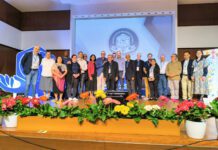

Assisi (Italy). On 19 November 2025, the 81st General Assembly of the Italian Episcopal Conference (CEI) – which took place in Assisi at the Domus Pacis in Santa Maria of the Angeli from November 17 to 20, 2025 under the leadership of Cardinal President Matteo Zuppi – approved the Pastoral Document “Educating for a disarmed and disarming peace,” which was then published on 5 December.
The Italian Bishops accepted the invitation of Pope Leo who, in the audience granted to the Bishops of the CEI on 17 June, had encouraged every community to become “a ‘house of peace’, where one learns to defuse hostility through dialogue, where justice is practiced, and forgiveness is guarded.”
The text is divided into three parts, useful for catechesis and in-depth analysis, according to the “see-judge-act” method. The first part offers an analysis of the global, European, and Italian situation that, while not exhaustive, outlines the most relevant issues. The second adds a reflection in the light of Sacred Scripture, Tradition, and the Magisterium. The third part outlines the paths of conscientious education, which allow us to address the issues of war, disarmament, Christian witness in an increasingly conflictual world, and democracy as a guarantee of peace.
In the Presentation of the Document, Cardinal Matteo Zuppi offers a key reading with concrete ideas for communities, to become “houses of peace”:
This document, Educating for an Unarmed and Disarming Peace, invites us to rediscover the centrality of Christ “our peace” in every proclamation and commitment to promoting reconciliation and harmony. It follows in the footsteps of the Church’s Social Doctrine, with a careful analysis of the current situation marked by numerous conflicts; by the ’“unnecessary massacre” of people, mostly civilians and children; from a mentality that chases the strategy of arms deterrence, which can change the economy and culture of our countries; from widespread violence that risks becoming a culture that fascinates the youngest in particular. For this, a renewed peace proclamation is needed to which this Document can offer a contribution. (…)
Our communities are given a tool to read contemporary reality (first part of the Document). Then the invitation is made to draw from the Word of God and the Magisterium a vision of reconciliation, of peace, of coexistence among peoples, continually threatened by sin in its even “structured” forms of injustice and war. To be at the school of peace means to put oneself at the school of the Word of salvation and the social Doctrine of the Church. The latter, particularly from Benedict XV to Leo XIV, has been a point of reference for all peoples in resolving conflicts and rethinking the paths of peace to be taken.
From this wealth of content, which disarms hearts and transforms instruments of destruction into means of development, arises a commitment that Christians share with all men and women of good will.
In the Document, there is constant reference to the “artisans and architects of peace” who in every era have been the truest example that “peace is not a spiritual utopia; it is a humble path, made of daily gestures, which intertwines patience and courage, listening and action.” Christian communities are always called upon to draw on examples and words that are effective even in our time.
Today, many areas and horizons are opening up in which to become “houses of peace”. First and foremost, there is prayer, which constantly implores this gift from God and animates hope; family and school, places where nonviolence begins to be learned; civil society and politics, called to have a vision that ensures development and solidarity, that are “the new names” of peace; to avert the strategy of the arms race and not to proliferate nuclear weapons. These are major issues that need to be returned to in order to shape the consciences of communities, which must be enlightened by an ideal of peace.
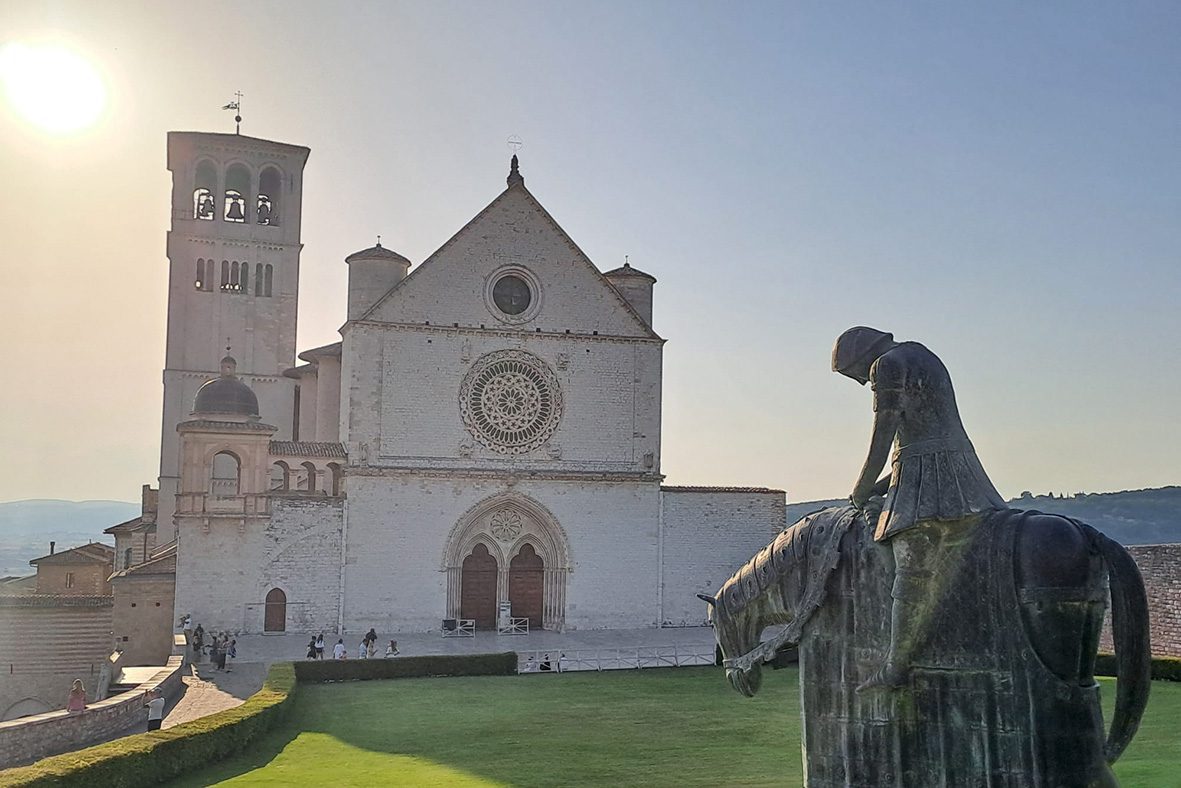
May Saint Francis of Assisi support us on this journey, whose life lesson, after eight centuries, remains relevant. As his first hagiographer writes, he, “in each of his sermons, before communicating the word of God to the gathered people, wished peace by saying, “May the Lord give you peace!” This peace he always sincerely proclaimed to men and women, to everyone he met or came to him. In this way, many who hated both peace and their own salvation, with the help of the Lord embraced peace with all their hearts, becoming themselves children of this peace and longing for eternal salvation.