




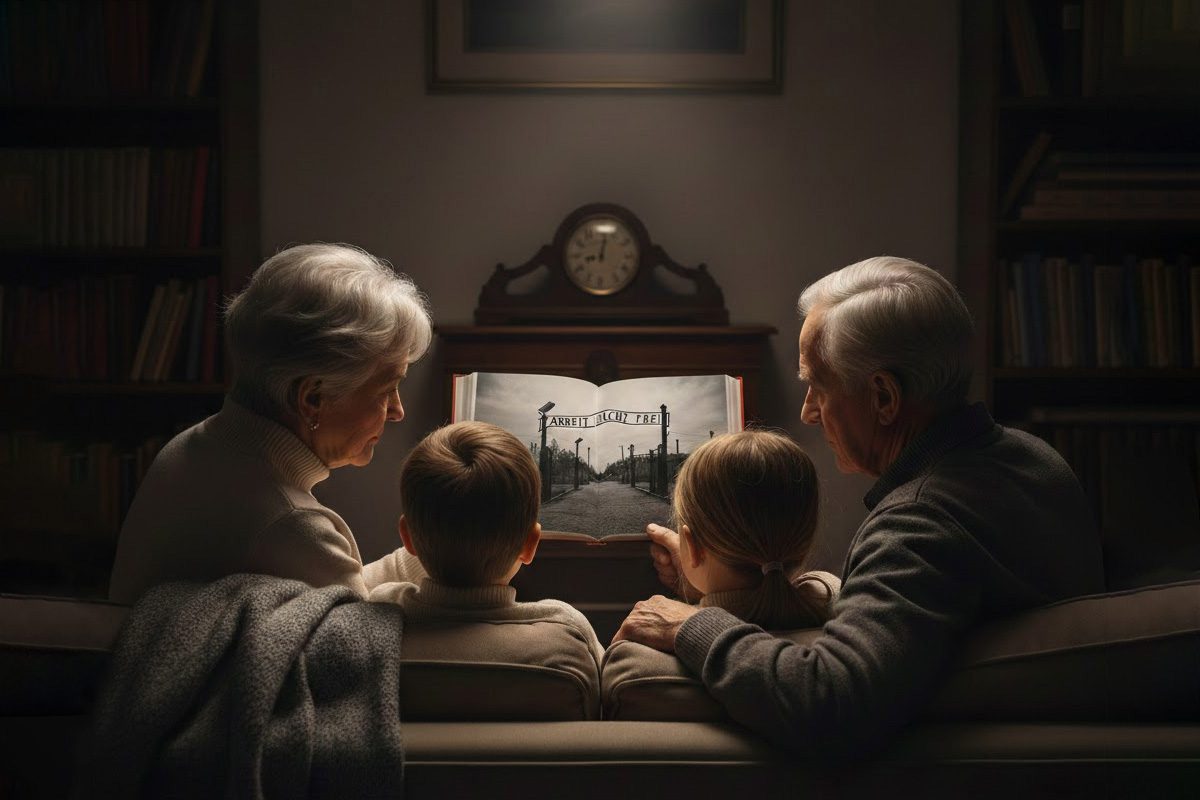
Rome (Italy). January 27, 2026, marks Holocaust Remembrance Day, an international recurrence to remember the victims of the Holocaust, on the anniversary of the liberation of the Auschwitz concentration camp in Poland
January 27, 2026, marks International Holocaust Remembrance Day, the anniversary of the liberation of the Auschwitz concentration camp in Poland on the same day in 1945. The anniversary, already commemorated by some countries –in Germany since 1996 and in Italy since 2001, as “Holocaust Remembrance Day” – was established worldwide on 1 November 2005 by the United Nations, on the 60th anniversary of the end of the Second World War.
By the 2005 Resolution, the United Nations calls on Member States to promote educational programs aimed at transmitting the memory of this tragedy to future generations and rooting it in the collective conscience.
“Holocaust Remembrance for Dignity and Human Rights” is the theme proposed by the United Nations for the Day 2026, with the following motivations:
Memory brings dignity to the victims and survivors of the Holocaust. It keeps alive the memory of the communities, traditions, and loved ones that the Nazis tried to erase. The Holocaust warns us of the deadly consequences of anti-Semitism and the hatred, dehumanization, and apathy left unanswered.
More than eighty years after the Holocaust, we are witnessing daily aggression against our fellow global citizens. Anti-Semitism and hatred are on the rise. Holocaust denial and distortion persist. Holocaust remembrance challenges denial and distortion, rejects falsehoods, addresses hatred, and insists on the humanity of its victims. In remembering the victims of the Holocaust, we affirm our common humanity and commit ourselves to defending the dignity and human rights of everyone.
In the run-up to this Day, various initiatives, competitions, and moments of reflection are being promoted in all schools and cities to prevent this dark period of history from falling into oblivion.
In this regard, in Rome, as part of iniziative Memoria Genera Futuro 2026, (Memory Generates Future 2026) on 22 January, at the House of Memory and History, the presentation of the short film “Cecilia e la casa segreta” (Cecilia and the secret house) took place – which will be broadcast on January 27th at 7pm on Rai Gulp and will be available on RaiPlay. It is a story of justice, love, and sacrifice, which is aimed at children and families and uses a narrative language based on a mechanism of progressive revelation of historical facts, and continuous invitation to discovery, designed for educational television.
The short is inspired by the true story of Gina Cerioli and the five employees of the Magenta Molho & C. factory who helped the Molho family hide, saving them from Nazi persecution, and who in 1998, were awarded the title of “Righteous Among the Nations” by the Yad Vashem memorial.
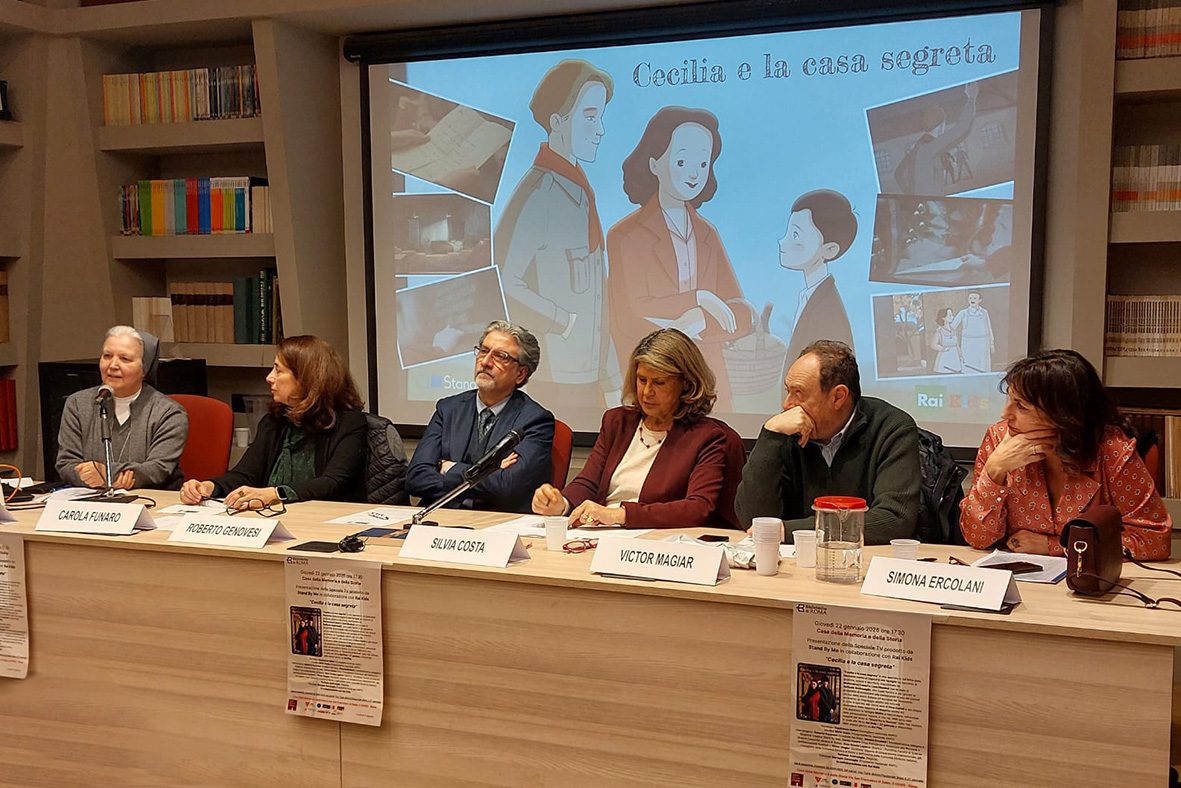
Among those invited to the reflection was Sister Grazia Loparco, Daughter of Mary Help of Christians, Professor of History at the Pontifical Faculty of Educational Sciences “Auxilium” in Rome. She stated that the religious institutes in Rome and throughout Italy hid a large number of Jews, boys and girls, children, entire families, in the name of respect for the human person and love towards others, especially those who were in greatest danger and for unjust reasons.
In the case of educational institutions, including those of the Salesians, Jews were “camouflaged” among the students of the classes that had become fewer, both by giving them the names of students and boarders who had not returned from their holidays after the events of September 1943, and by inventing many devices and codes to warn in the event of searches.
Sister Grazia also mentioned her research that is still ongoing, on other categories of people also wanted by the Nazi-Fascists during the Resistance, with countless situations in which, as Christians, one put one’s life at risk for people, Jews, partisans, or draft dodgers-who were often unknown. Conscience dictated unprecedented choices of charity, even going beyond the normal observance of religious rules, which at the time were very specific and demanding.
These accurate studies, along with publications and conferences to bring them to the public’s attention, are truly invaluable for reconstructing so many stories and details that would end up being forgotten and which once again highlight the importance of remembering this historical period that humiliated human dignity, of which unfortunately, the direct witnesses, the Holocaust survivors, are dying.
Pope Francis, in his words after the Angelus of 26 January 2025, forcefully reiterated the need not to forget and, at the same time, to educate the younger generations. “The horror of the extermination of millions of Jewish people and other faiths that occurred in those years can neither be forgotten nor denied. (…) Let us build together a more fraternal, more just world, educating young people to have a heart open to all, in the logic of fraternity, forgiveness, and peace.”