




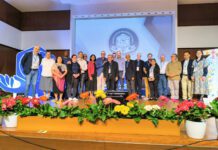
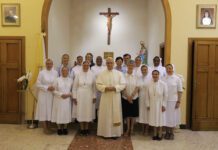
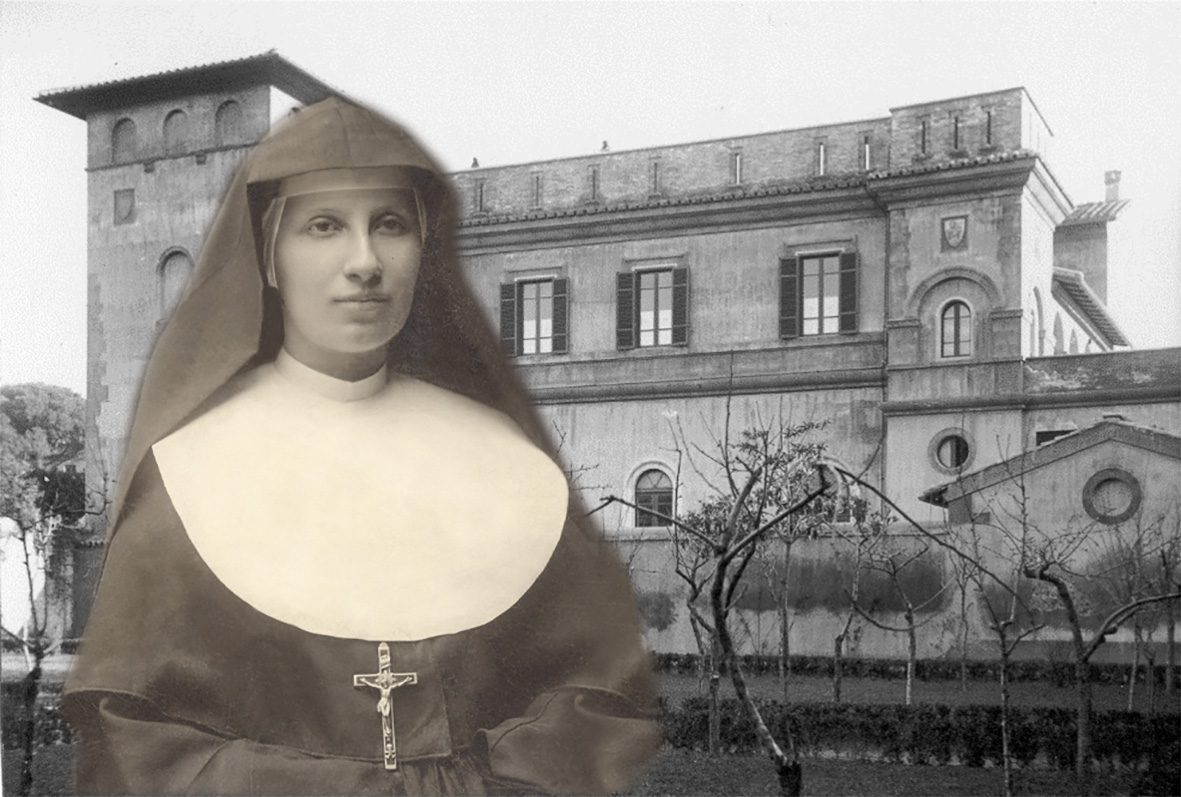
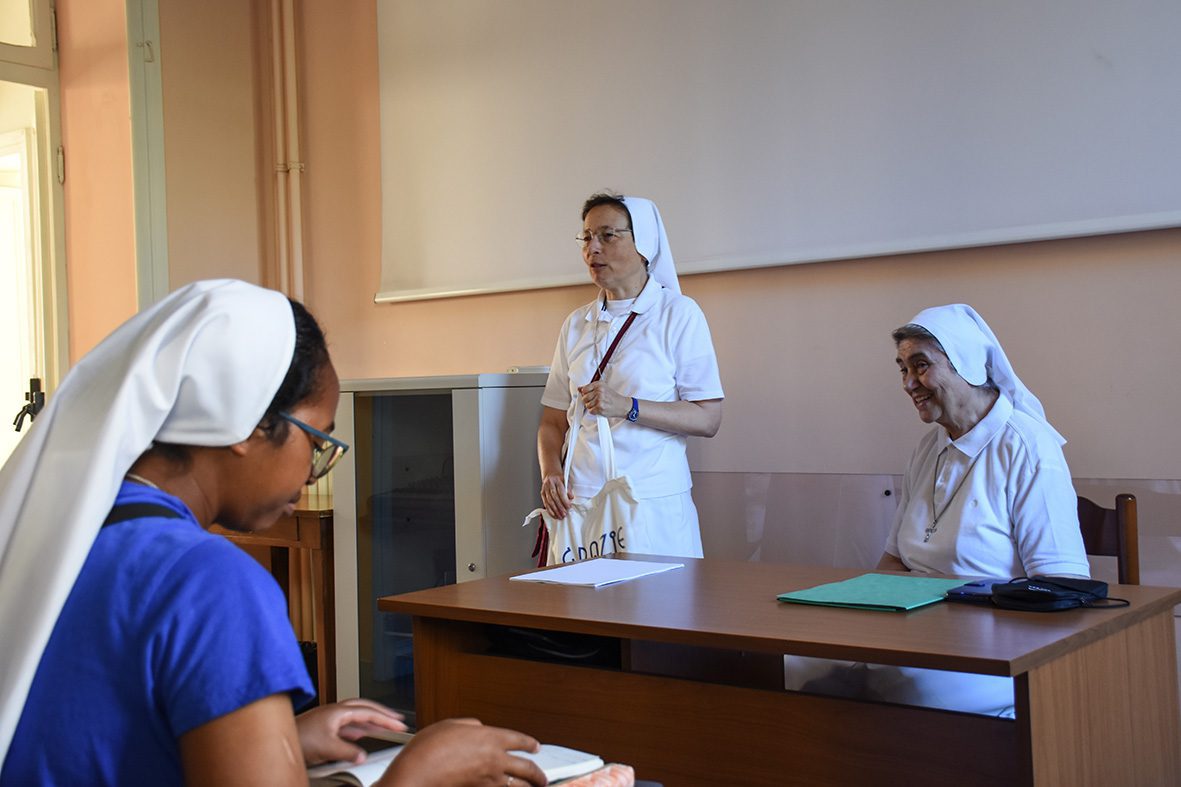
Rome (Italy). On 3 September 2025, the dies natalis of the Venerable Sister Teresa Valsè Pantellini, is celebrated, a figure that the young Daughters of Mary Help of Christians with one to four years of profession at the CIME Conference, explored in depth during the formative time spent in Rome from 4 to 10 August.
For Sister Teresa, Rome was the city of the big step. Here, in fact, she concretized her “irrevocable decision” to join the FMA, crossing the threshold of the house in via Marghera –now the seat of the Roman Province “St. John Bosco” (IRO) – where she was welcomed as an aspirant.
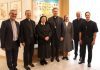
Accompanied by Sister Maria Luisa Nicastro, Secretary General of the Institute, the young FMA wanted to retrace her steps starting from Via Marghera, rediscovering its history and value for her biographical story. Through the words of Sister Claudia Daretti, for many years Secretary of the IRO Province and member of ACSSA Italia, they reread the life of Teresa, a young woman capable of giving up the comforts she knew well to decisively embrace the vocation she perceived as certain.
Her love for the poorest young girls was consolidated during the years of her Novitiate. Following in her footsteps, the Temporary Professed went to Borgo Parrasio, formerly the seat of the Accademia dell’Arcadia, on the slopes of the Janiculum. Precisely in the Trastevere district, and in particular in the house in via della Lungara, Sister Teresa definitely made the experience of gratuitousness and littleness her own. There the Daughters of Mary Help of Christians could welcome Roman girls of the peripheries in a simpler environment more suitable for recreation compared to Bosco Parrasio.
Sister Teresa Valsé found herself since her novitiate, taking care of the “Trastevere”, in the oratory and in the workroom for young workers. They were difficult works and environments, in which only the assiduous practice of the Preventive System could guarantee esteem and trust. The FMA and the Venerable found themselves facing the problems of the workers’ question and the girls of the social slums, among whom anticlericalism and other theories easily spread.
Written testimonies document the inner transformation of girls, often neglected by their families. The Trastevere girls strained the patience and loving kindness of the Sisters with mischievous and insolent attitudes and irreverent reactions. A witness states, “Sister Valsé owes it to us if she became a saint, for the patience we made her exercise” (Positio, 255).
Of a strong temperament and refined education, Sister Teresa not only took an interest in the oratory, but also worked to create honest work opportunities for those young girls. In Rome, guesthouses and hotels, as well as noble families, entrusted the washing and tidying up of linen in public laundries and ironings. The FMA therefore accepted the management of a laundry – ironing place to teach and provide honest work for the young girls.
Thus, it was that the young FMA, coming from a rich family, found herself knocking on noble doors as a religious woman to ask for work for them. She collaborated with the Sisters of the community, with Father Bonanni, the Jesuit who offered the FMA the direction of the laundry that he had opened with the aristocrats who sponsored it, the benefactresses; with the parish priest of Saint Dorotea, with the Oratorians, involving them as protagonists.
The itinerary of the Temporary Professed continued to the premises that now house “John Cabot University”, an American university active in Rome, located right in the former home of the FMA in via della Lungara. Warmly welcomed by the staff and by the statue of Don Bosco still present in the recreational area, they visited the structure, tracing with their gaze behind the windows of the library, what was perhaps young Teresa’s room. They also visited an exhibit curated by a university student, which traces the history of the complex and also recalls the period of residence of the Salesian Sisters.
It was exciting to find photographs from the early twentieth century exhibited in a context so frequented by many young people today. Although in different forms, Via della Lungara remains a lively place of meeting, formation, and growth for many girls and boys.
The pilgrimage ended in the church of Saint Dorotea, a parish in the neighborhood, entrusted to the friars minor, where the young FMA paused in prayer.
One of the participants in the pilgrimage concludes, “Sister Teresa Valsé Pantellini, for us young Sisters, is not only a luminous witness of a Salesian life lived truly, but also a Sister with whom we can walk to discover today’s poverty, to whom we ask to help us to have a profound gaze of discernment and gift, on the reality we deal with every day.
Looking at Rome through her eyes allowed us to relive the decisive stages of her vocation and her mission. The pilgrimage to the significant places of her life was an opportunity for grace and hope. Walking in her footsteps, she accompanied us in the mystery of our call, helping us to renew that ‘irrevocable’ choice which, like her, we wish to confirm in the service of our Lord and young people, especially the poorest.”



Que alegria recordarla con virtudes de una hija Feliz al servicio de las ninas y jóvenes pobres… Confiemos le las nuevas vocaciones… Hacerla trabajar… Para que interceda por Los jovenes. Un abrazo. Sor Aida.