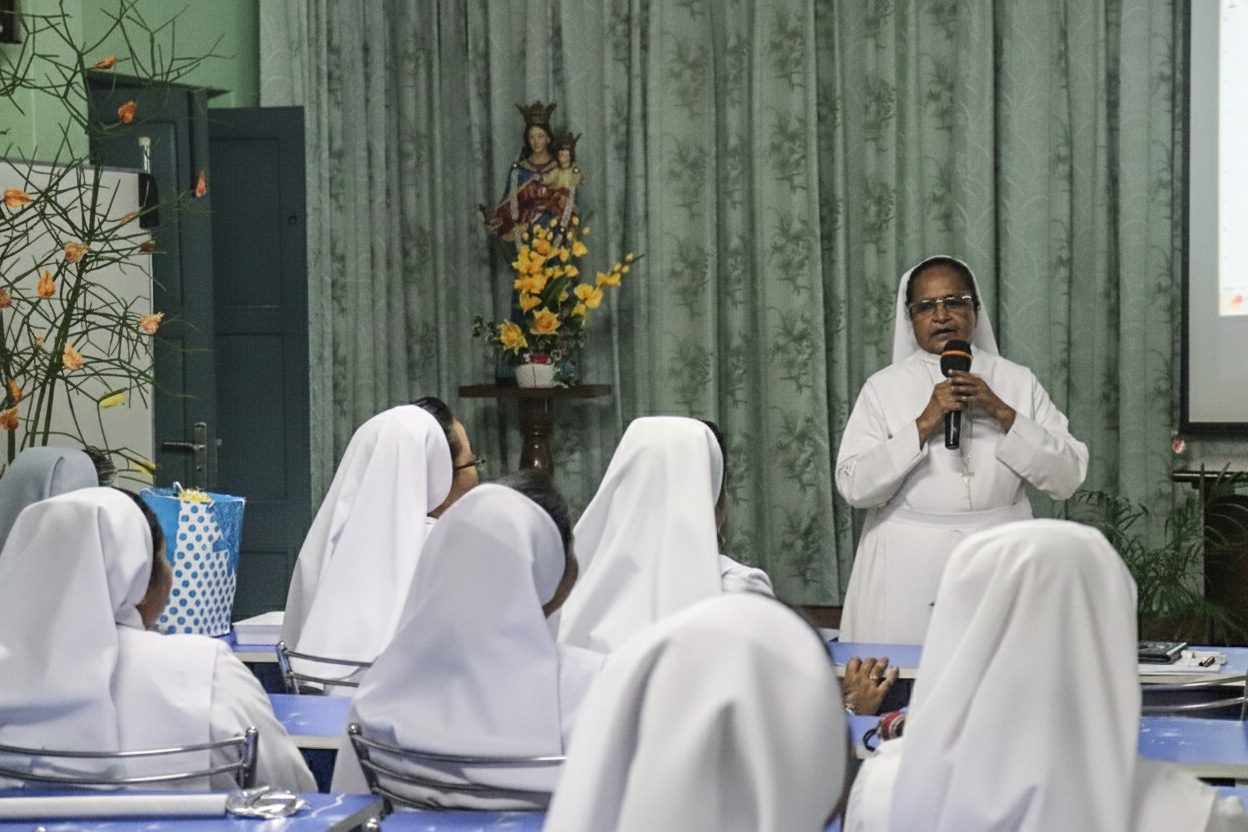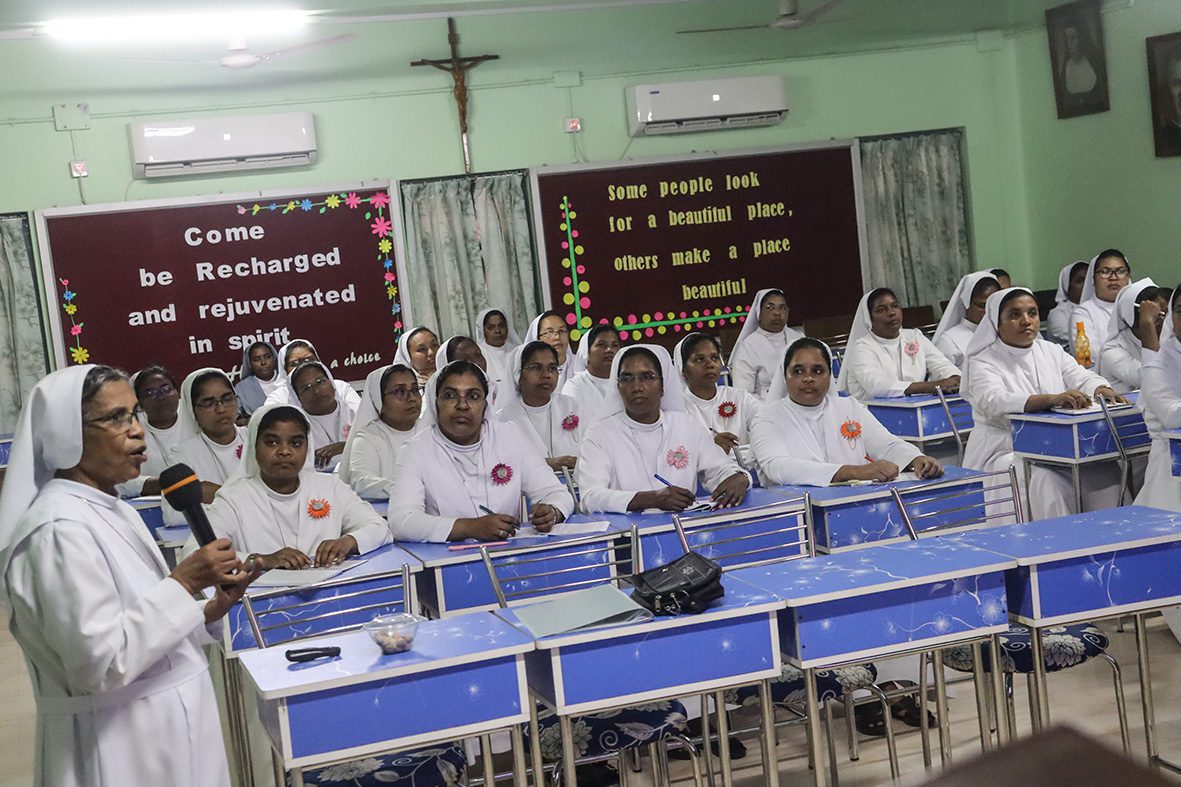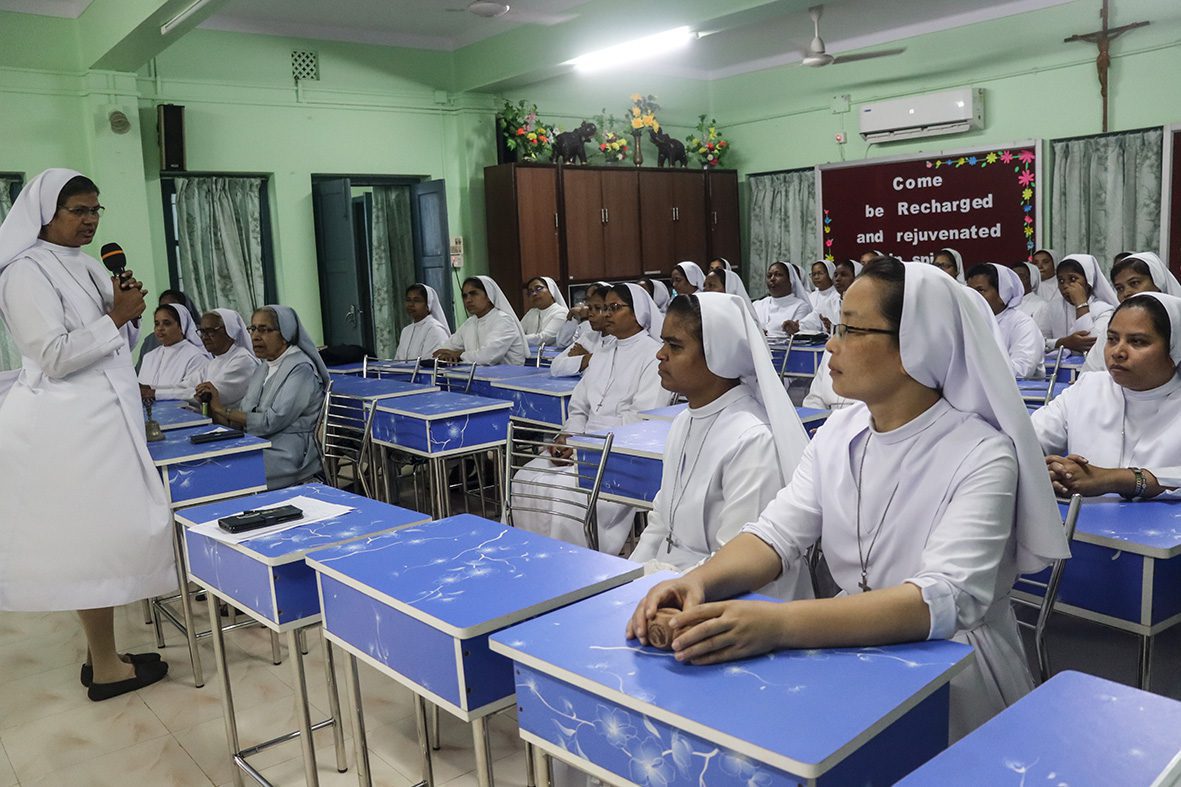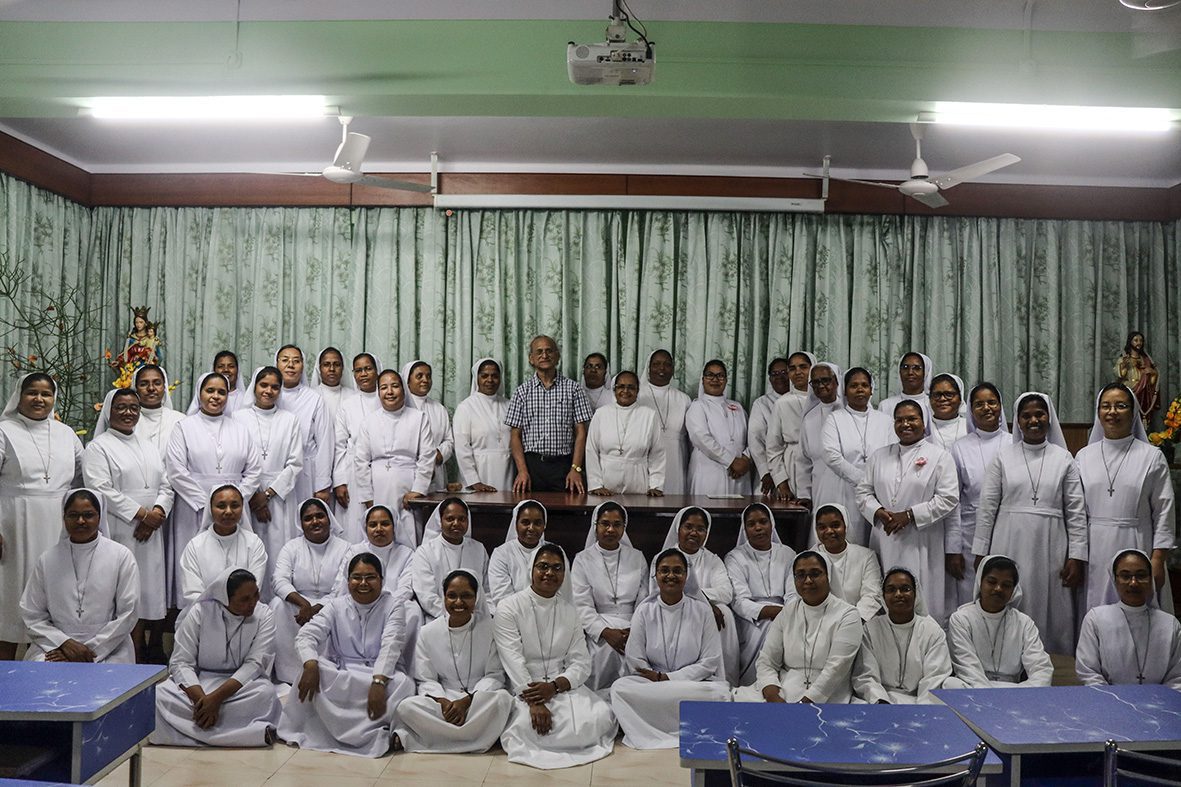

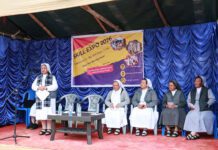



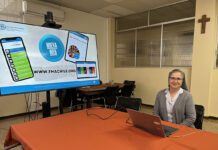
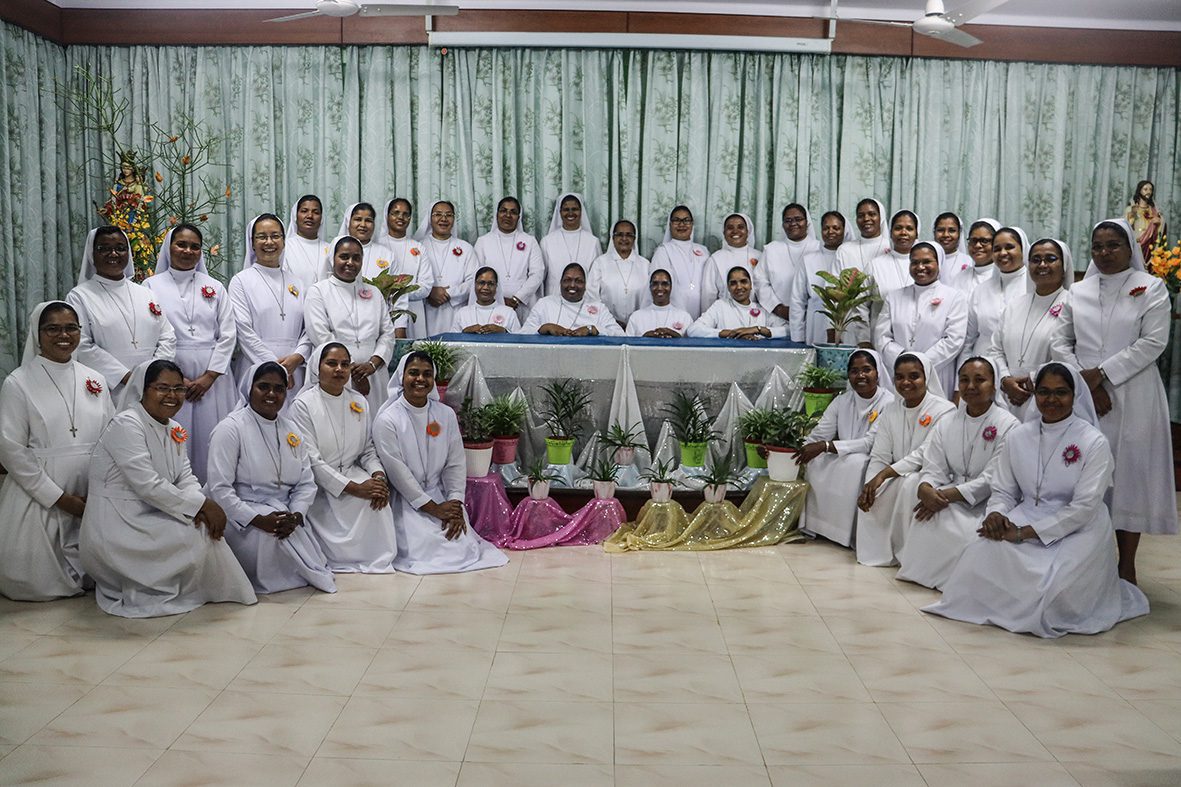
Calcutta (India). From 3 to 6 October 2025, at the headquarters of Mary Help of Christians Province (INC) in Dum Dum, Calcutta, a formation seminar was held for the Daughters of Mary Help of Christians of Early Adulthood, who made their profession from 2001 to 2013, organized as part of the Province ongoing formation plan, with the aim of “promoting spiritual, emotional, and vocational maturity”. The central theme was, “Spiritual recharging and regeneration”.
The seminar aimed to encourage a holistic renewal of the person through spiritual, theological, and psychological inputs, to strengthen fraternal bonds between young religious women and to encourage reflection on personal and community commitments in consecrated life.
The program of the days included prayer, theological reflections, psychological insights, group work, and recreational activities. This method allowed participants to engage in both personal introspection and collaborative learning.
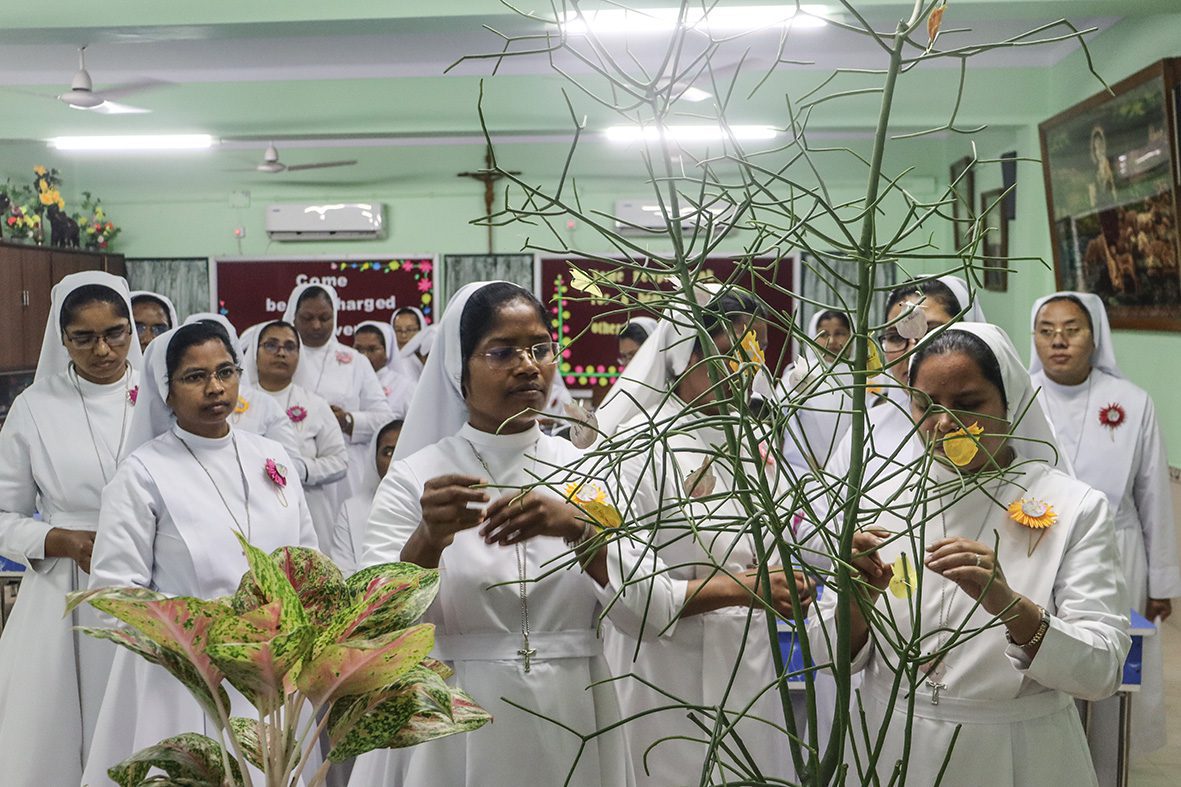
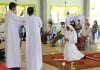
The encounter began with a moment of prayer animated by Sister Stella Potteparambil and Sister Sandhya Minj. In line with the “Time of Creation 2025”, the 38 participants symbolically placed their names on a shrub with a flame, to represent the burning bush, as a sign of vocational commitment.
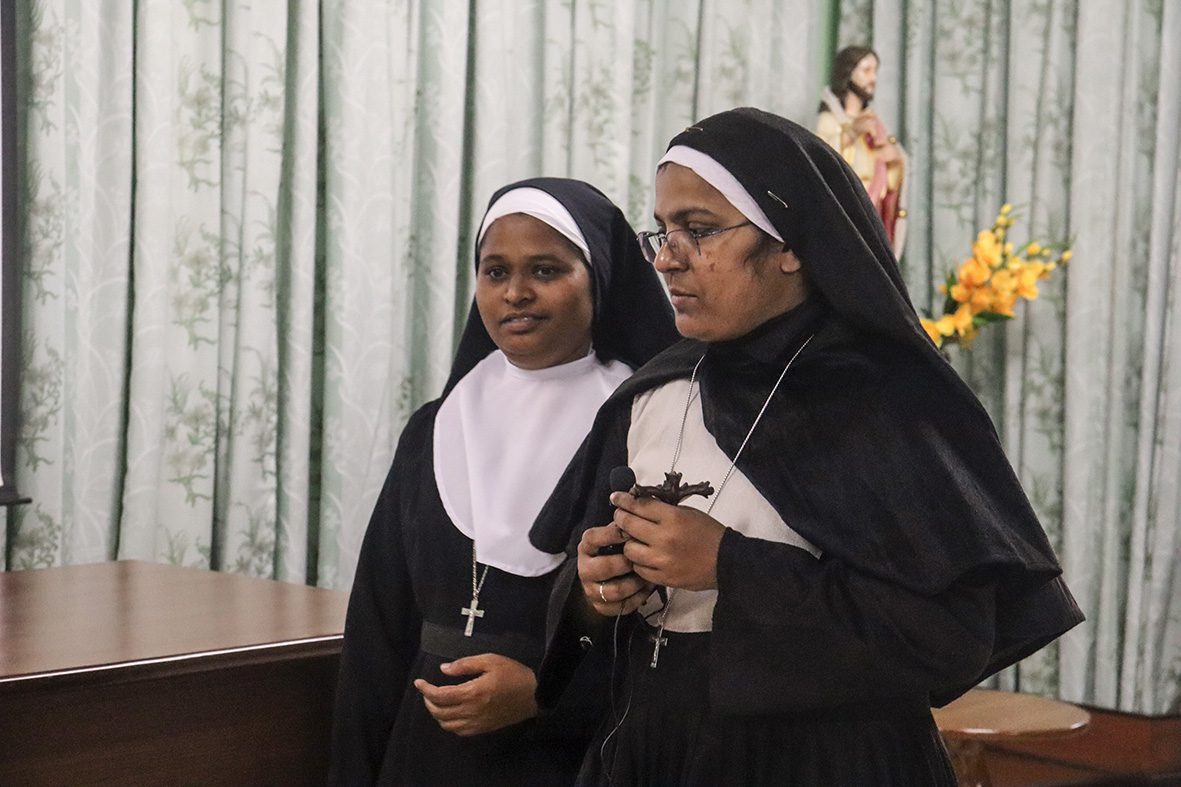
The Provincial, Sister Leelamma Palliparambil, gave the introductory talk, emphasizing the importance in religious life of virtues such as responsibility, resilience, empathy, humility, integrity, reliability (accountability), compassion, courage, and wisdom.
In the first in-depth session, Sister Stella Potteparambil introduced the concept of “Docibilitas” as an aptitude for ongoing formation. She emphasized that consecrated persons are shaped by lived experiences, interpersonal relationships, and the reality of their context, observing that true happiness is the result of openness to growth and transformation.
The second day began with prayer, meditation, and Holy Mass. Sister Lily Perumpettikunnel led the morning session on the “Cost of Discipleship”, distinguishing between cheap grace and expensive grace. She stated that authentic discipleship requires sacrifice, perseverance, and radical fidelity to Christ, with Mary as an example of courage and commitment.
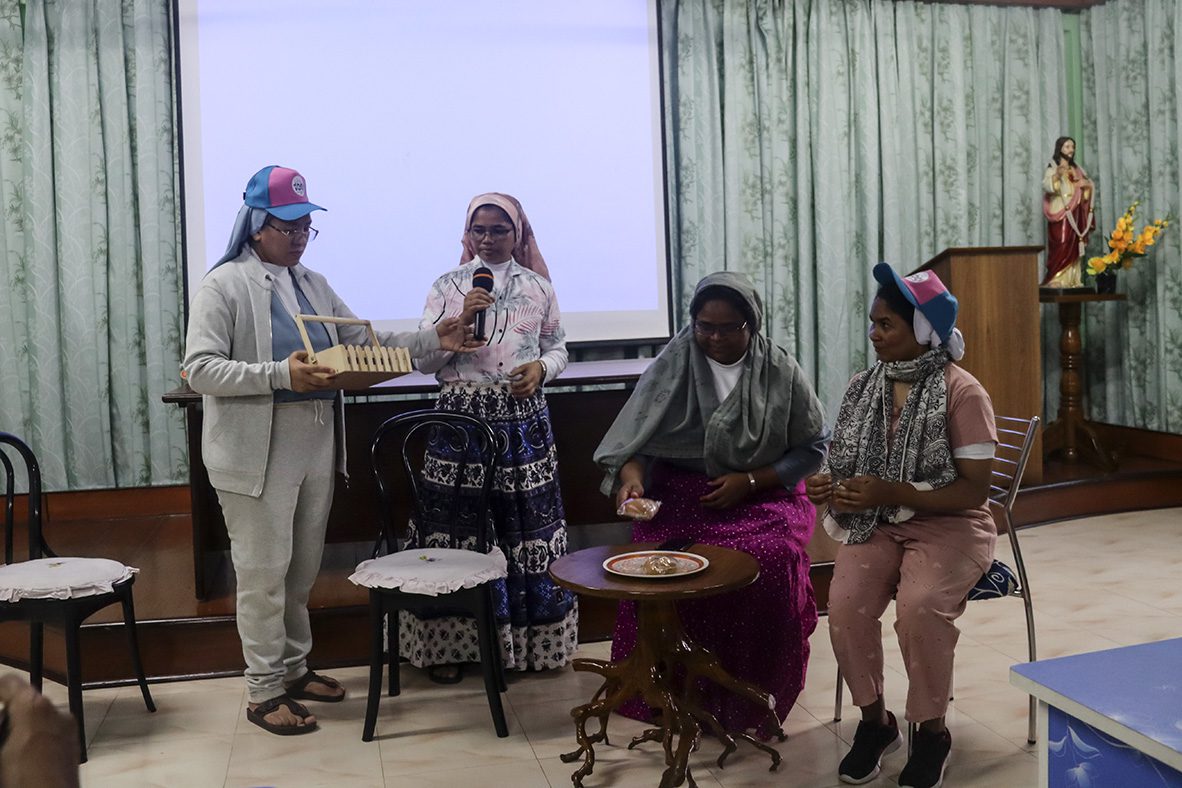
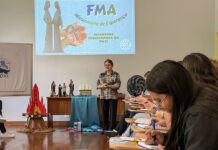
The afternoon’s work included group presentations on the FMA Formation Plan and a quiz on Sister Maria Troncatti. The day ended with a boat trip on the Hooghly River, which fostered fraternity and relaxation.
On the third day, the participants worked on the psychological dimensions of consecrated life. Fr. Jose Parapully, SDB, addressed themes such as emotional maturity, chastity, loneliness, emotional balance, disenchantment, friendship, and koinonia. He emphasized that unresolved loneliness can lead to counterproductive behaviors, including excessive use of social media, while positively received loneliness turns into a privileged context for encountering God and oneself.
The importance of genuine friendships as an essential element for personal growth, mission fruitfulness, and communal harmony was also emphasized. Fr. Jose also emphasized that disenchantments in religious life should not be interpreted as failures, but as opportunities for transformation and renewal.
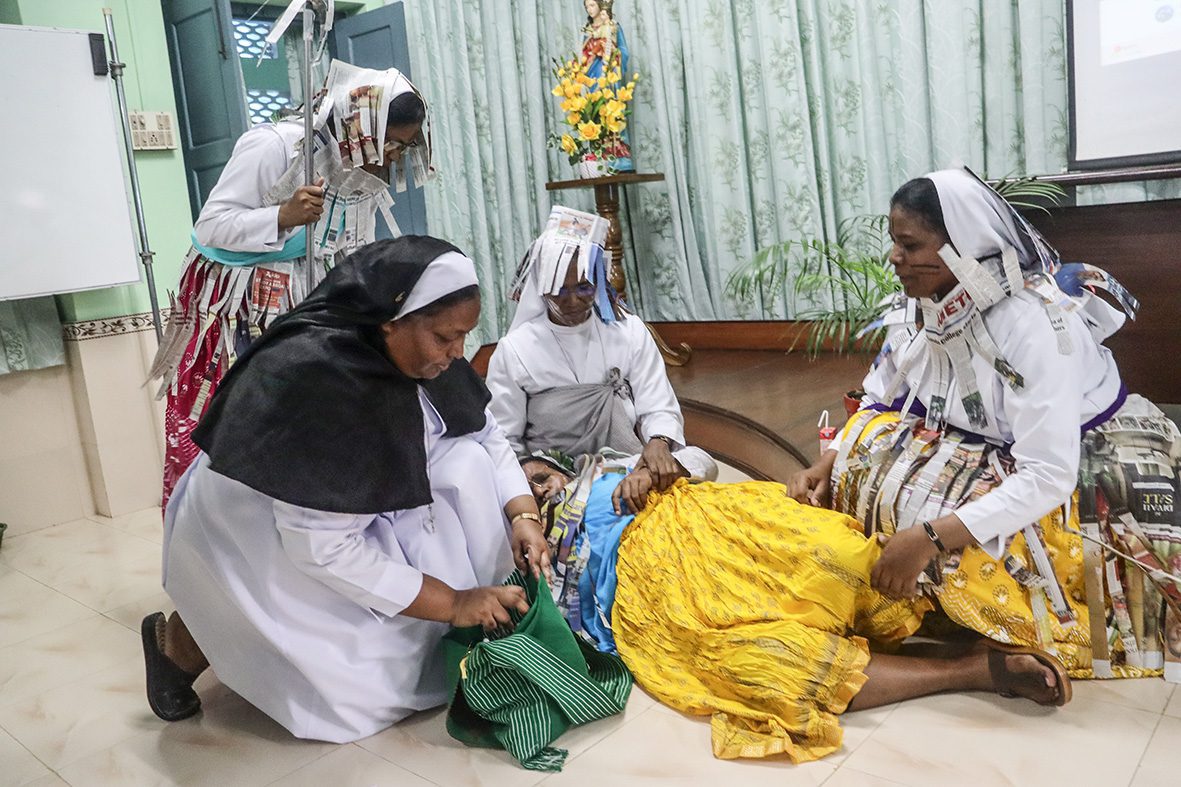
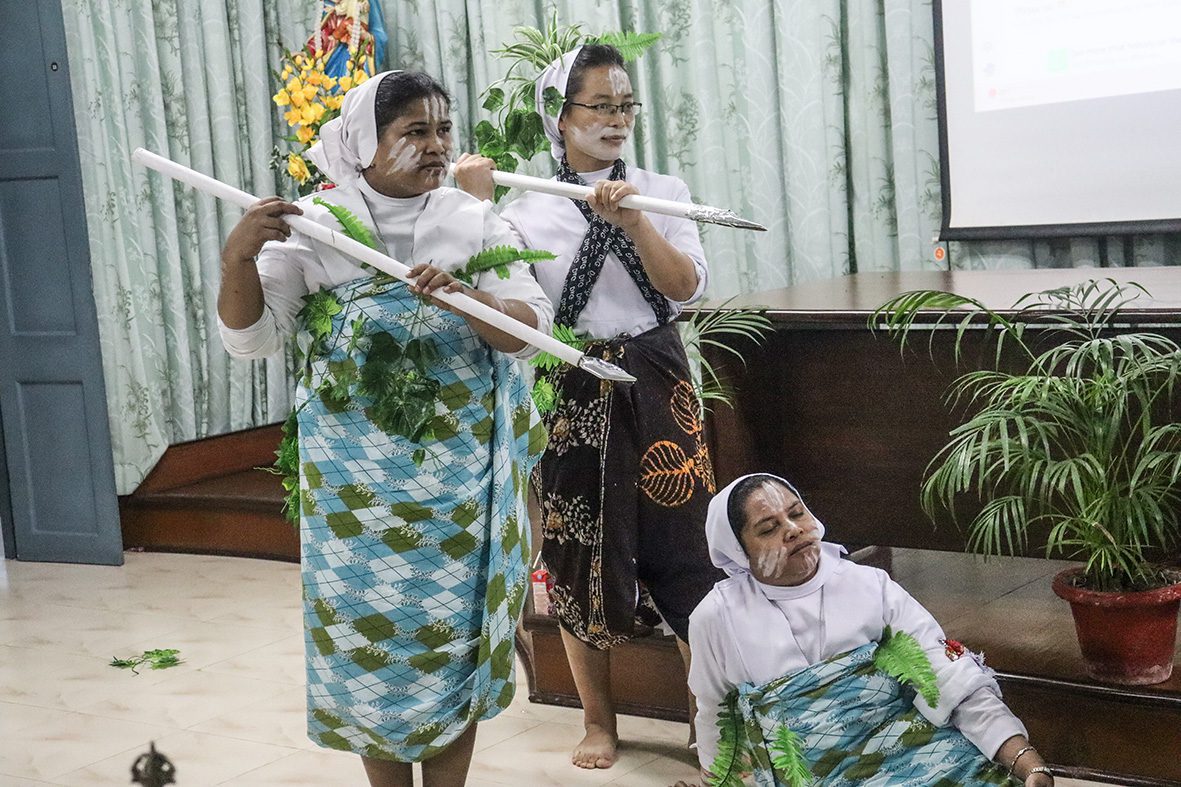
The final day highlighted integration and commitment. The participants engaged in group work to develop personal and community commitments, which were then shared in the plenary session. Theatrical performances on Sister Maria Troncatti followed.
The Provincial concluded the seminar by encouraging perseverance, courage, and joy in vocational life. Prizes were distributed to the winners of the activities. Sister Neelam Kindo closed by expressing gratitude.
A significant moment was also the interactive session with Fr. Pascual Chavez, Rector Major Emeritus, who presented some reflections inspired by Pope Leo XIV on the “Jubilee of Consecrated Life 2025” with which he invited the Sisters to embody a testimony full of hope in contemporary society. In his message, he highlighted the means used by Don Bosco to inspire young people:
- Courageous criticism of the dominant culture: Don Bosco did not passively accept the prevailing culture of his time; he courageously criticized it and tried to transform it. He emphasized the need to cultivate a “culture of care” that nurtures values and responsibility.
- Positive experience: Don Bosco believed that young people represented the fullness of life and that they should be surrounded by fragments of positivity. He urged helping young people swim against the current of negativity, not as passive consumers, but as protagonists of their own life. They were to be encouraged to come out of themselves, to create, to be “hope-singers and hope-builders”.
The Seminar successfully promoted openness to ongoing formation (docibilitas), fostered emotional and psychological awareness among the participants, strengthened fraternal bonds and community responsibility. Through prayer, reflection, and interactive learning, participants departed with renewed ardor, emotional maturity, and strengthened vocational identity, enriched and recharged to continue their mission. The encounter concluded with a festive meal in the spirit of gratitude.