









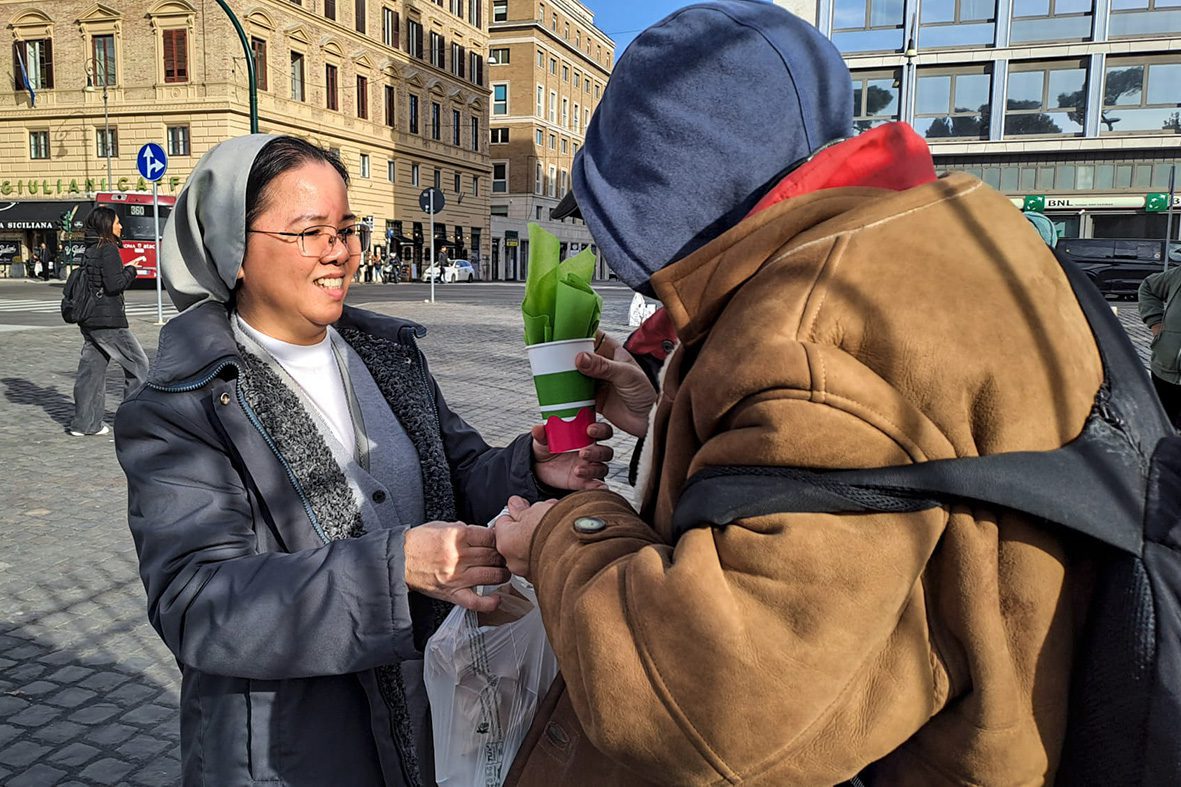
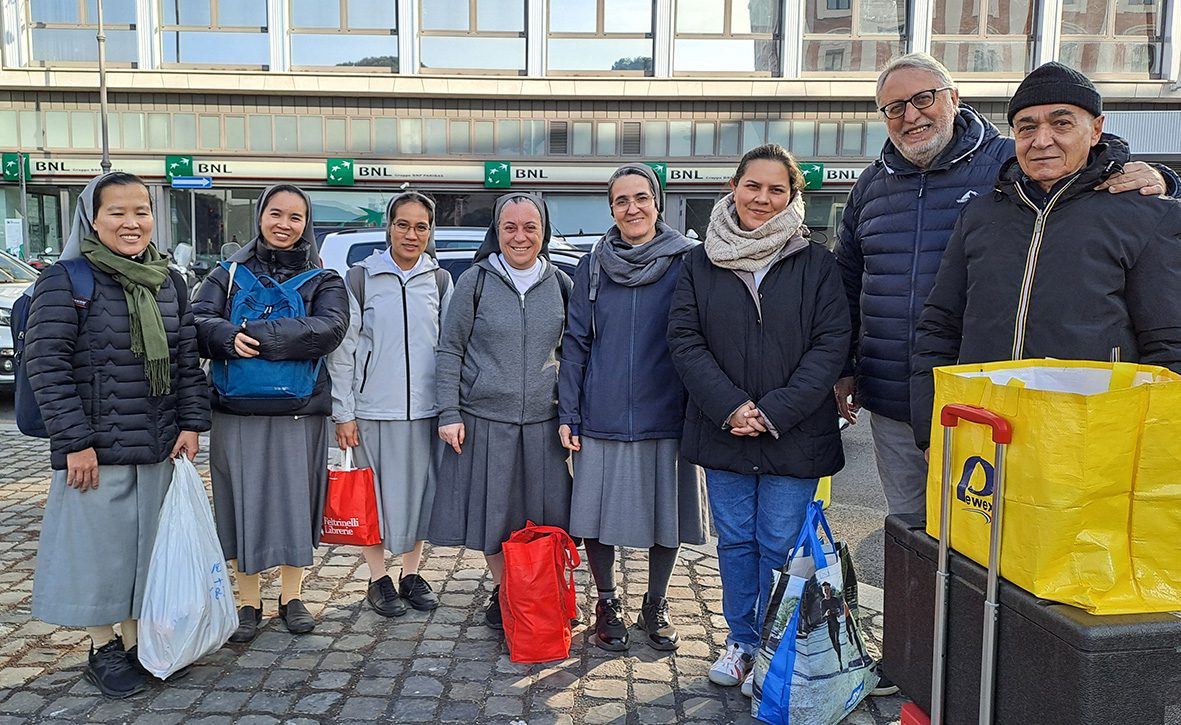
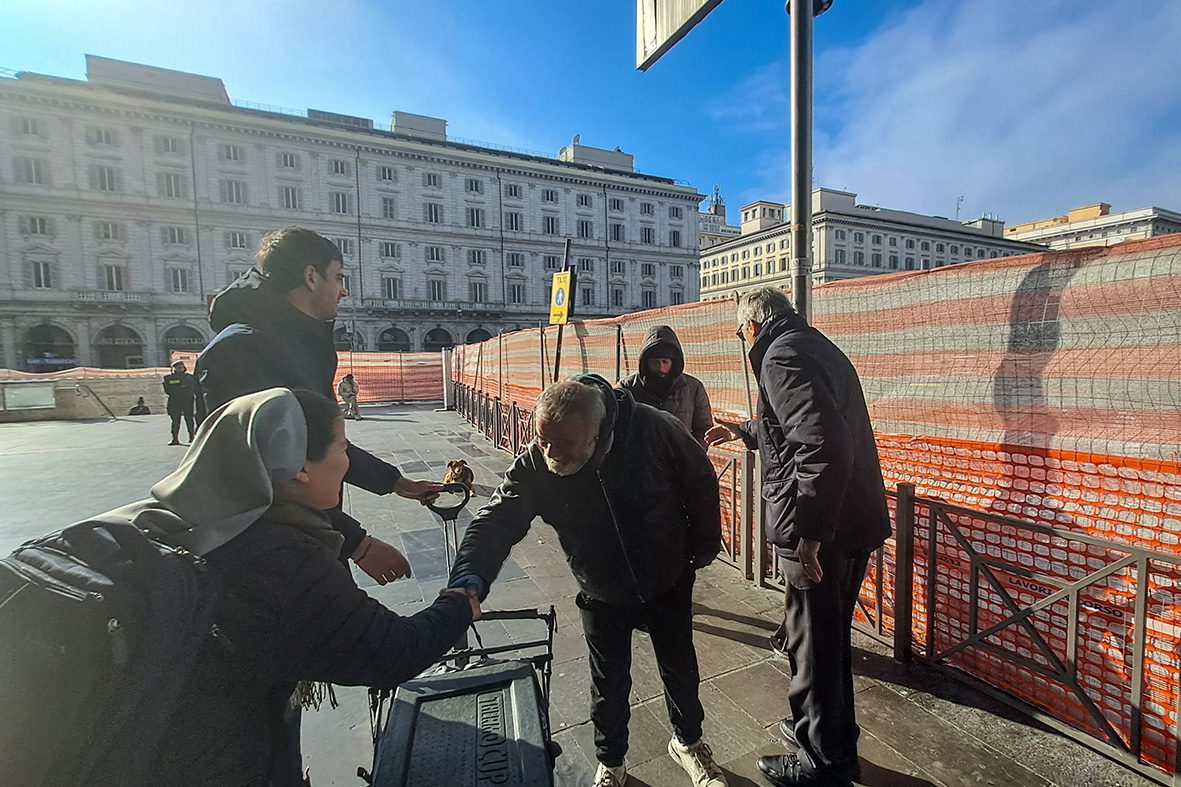
Rome (Italy). Every Saturday, a group of Daughters of Mary Help of Christians from the Community of Mary Help of Christians at the Generalate in Rome (RCG) joins volunteers from the Community of Sant’Egidio at Termini Station to distribute meals, but above all to listen and offer support to those who no longer have a place in the city’s hustle and bustle.
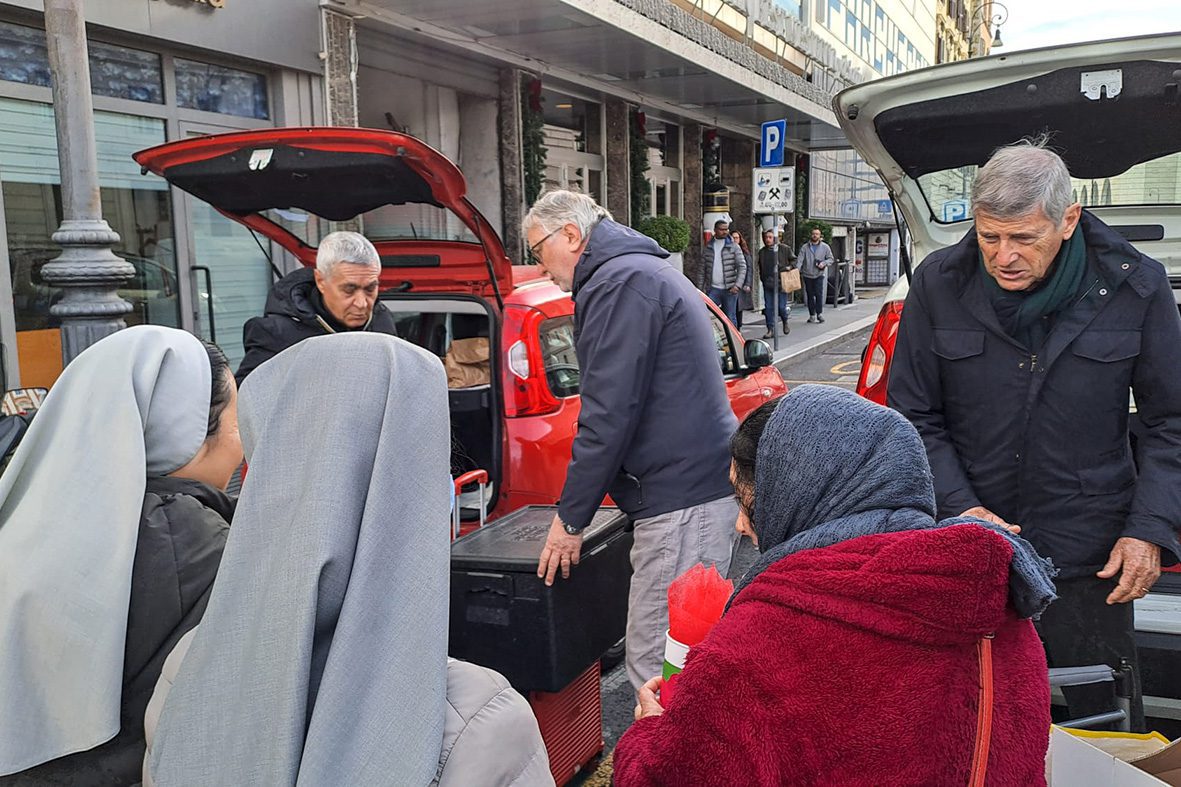
The experience, which has now been going on for several years, began with the group of new missionaries present every year at the General House for missionary preparation and has gradually extended to the Community, involving it in the preparation and distribution of around thirty meals and above all in supporting this charitable initiative, as expressed in the Constitutions of the FMA, “As a member of a specific community, the Daughter of Mary Help of Christians is commissioned” (C 64).
Sister Le Thi Anh Dung, a student of the Faculty of Social Communication Sciences at the Pontifical Salesian University, talks about her experience on the Faculty’s web portal, Open Prisma:
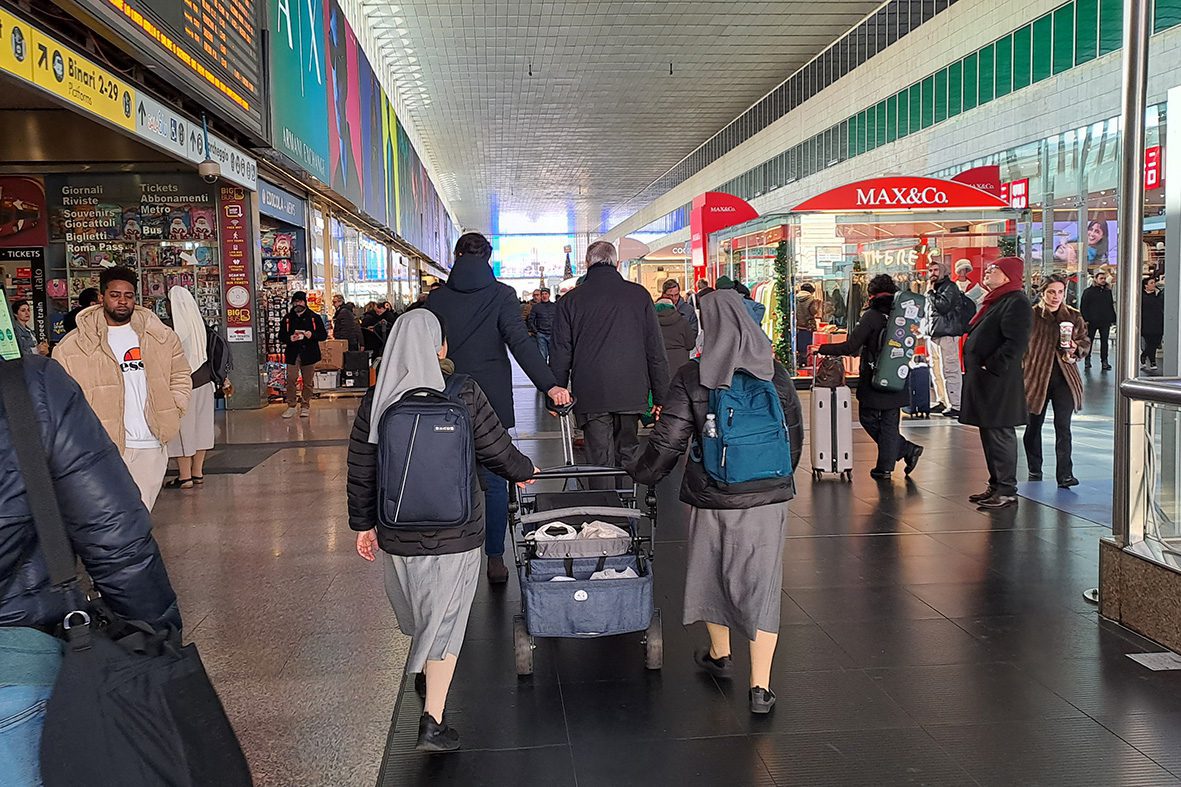
Busy, elegant, constantly bustling… that’s how Rome Termini train station appears. It’s the capital’s main railway station, the largest in Italy, and the fifth largest in Europe. From here, it feels like you can see the entire world with approximately 150 million passengers a year and 850 trains passing through every day.
Yet Termini is also a place where you can become invisible. You arrive quickly; you leave quickly. Thousands of faces pass by; you brush past without knowing each other; you share escalators without sharing your life. Caught up in your own journey, your eyes fail to truly meet those of others.
Around this large and well-known structure, the homeless and anonymous poor gather. They seem absorbed in the station’s incessant rhythm, almost lost in its hustle and bustle. They are unseen by those rushing toward a train, nor by those gazing at the glittering shop windows or colorful souvenirs. The station’s light illuminates everything, but it doesn’t always reach these silent brothers and sisters.
An invisible Saturday service
Towards the weekend, the station becomes even more crowded. Yet, every Saturday at noon, something changes. A group of lay people and Sisters meet outside the station. They share a simple, pre-prepared lunch, and split into two small groups. One heads outside the station; the other enters the central concourse.
They aren’t flashy enough to attract attention, and in fact, they don’t want to. They are lay volunteers from the Community of Sant’Egidio and the Daughters of Mary Help of Christians at the Generalate in Rome. They set out with the desire to bring attention to those who, in the eyes of the world, are becoming invisible.
Nourishment not only for the body
The volunteers walk among the crowd, unhurried. At one point, they stop: a man is wrapped in a thin blanket, lying on a piece of cardboard. “Hi, friend.” Amid the noise of the city, that simple greeting is enough to wake him up. “Want something to eat? Today we have…”
They’re not there to hand out aid as a duty, but to look the person in front of them in the eye. They listen to their response and offer what’s most appropriate, knowing that some people don’t eat pork for religious reasons. This kindness makes them feel welcome, without distinction.
Love that makes the invisible visible
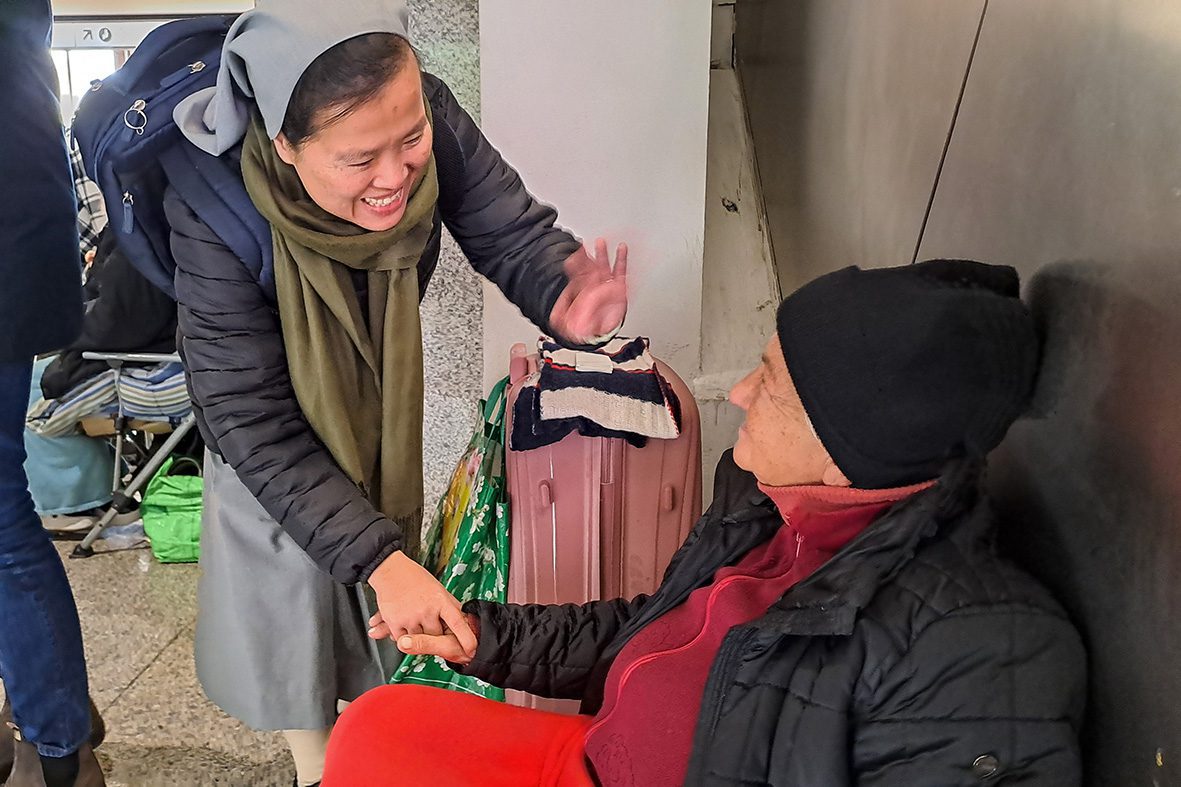
Further along, they meet Marta, an elderly homeless woman who knows them well by now. Just a few weeks earlier, they’d found her lying on the ground for who knows how long. They were the ones who picked her up and called the ambulance. Now they greet her, ask how she’s doing, and offer her encouragement. She doesn’t speak Italian, and they don’t speak English well. Yet they understand each other. In the noise of the world, the heart finds its own language.
The volunteers continue their journey. The thirty prepared lunches are delivered quickly, but above all with care. A meal alone isn’t enough to satisfy daily hunger, but it can warm the soul.
By welcoming them with bright eyes and a respectful nod of thanks, the homeless know they’re not invisible, at least to these volunteers. And by offering a smile, often with teary eyes, the volunteers recognize something invisible that only the eyes of the heart can discern.
Prayer that supports the invisible miracle
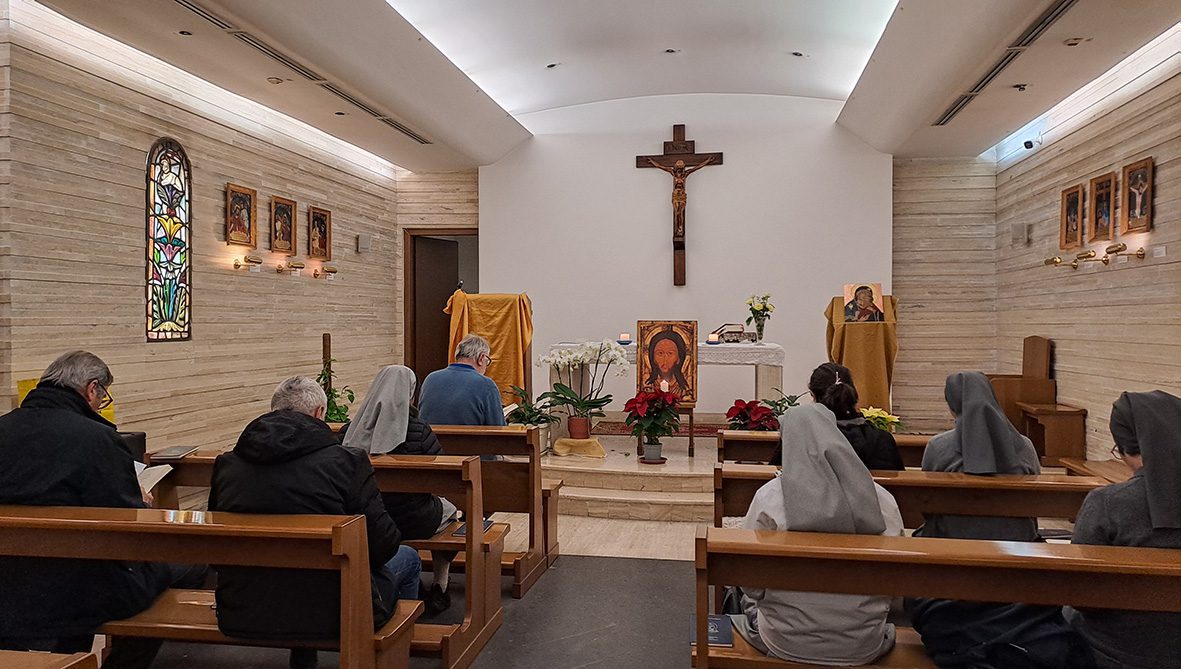
After about an hour, the distribution ends. But the apostolate doesn’t end there. The group retreats to the small chapel on the lower level of the station. There, they entrust all the friends they’ve met to the Heavenly Father, give thanks for the shared joy, and pray that He will continue to care for His most vulnerable children. Simple and brief, prayer becomes the invisible force that sustains their service.
The station continues its frenetic pace, unaware of what has happened in silence. No newspaper will report it. It brings no economic benefits or tangible results for society. Yet something great has happened, a small miracle. Because love, true love, has made the invisible visible and transformed a place of passage into a meeting place, more human, more luminous, more akin to the heart of God.









I’m really very happy about this beautiful and meaningful initiative that makes the invisible visible. Thanks for sharing.