





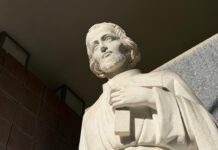



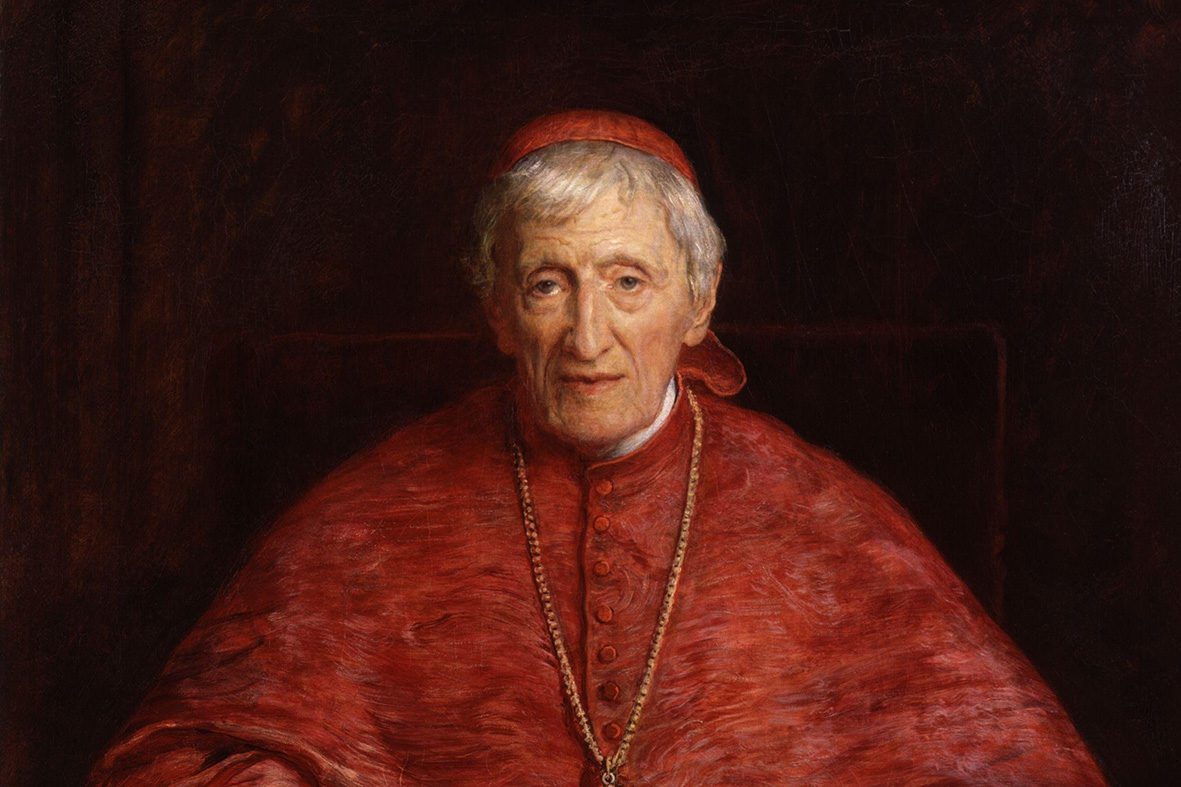
Rome (Italy). By a decree of the Dicastery for Divine Worship and the Discipline of the Sacraments, signed by the Prefect, Cardinal Arthur Roche, and the Secretary, Archbishop Vittorio Viola, on 9 November 2025, the Feast of the Dedication of the Lateran Basilica, and published on 3 February 2026, it was established that the optional memorial of Saint John Henry Newman be celebrated on 9 October. This date represents the day of Newman’s conversion, an Anglican pastor who converted to Catholicism in 1845.
John Henry Newman (1801-1890) was beatified on 19 September 2010 by Pope Benedict XVI, canonized in 2019 by Pope Francis, and proclaimed a Doctor of the Church by Pope Leo XIV on 1 November 2025, on the Solemnity of All Saints and during the Jubilee of the educational world, on which occasion the Pope also proclaimed him “co-patron, together with Saint Thomas Aquinas, of all those involved in the educational process.”
The Decree explains the reasons why it is being included in the General Roman Calendar:
The kindly light of God’s grace, which came into this world to enlighten the gentiles (cf. Lk 2: 32), led John Henry Newman to find peace in the Catholic Church and gave him such strength that he was able to say “God has created me to do Him some definite service … I have a part in this great work; I am a link in a chain, a bond of connexion between persons. He has not created me for naught”. Throughout his long life Cardinal Newman was unstinting in this service to which he had been called. The service of intellectual enquiry; the service of preaching and teaching; as well as service to the poor and the least.
His lively mind has left us enduring monuments of great importance in the fields of theology and ecclesiology, as well as poetic and devotional compositions. His constant search to be led out of shadows and images into the fullness of the truth has become an example for every disciple of the Risen One. Thus, in a special way, Saint John Henry, having been recognized as a radiant light for the Church on pilgrimage through history, may rightly be numbered among the other saintly Doctors inscribed in the General Roman Calendar.
In the Commentary on the Decree, Cardinal Roche emphasizes that its inclusion in the General Roman Calendar “aims to present his figure as an extraordinary example of the constant pursuit of truth that enlightens and saves.”
The Prefect also cites the homily of 1 November 2025, in which Pope Leo refers to Newman’s famous hymn “Lead, Kindly Light” in relation to education: “The task of education is precisely to offer this Kindly Light to those who might otherwise remain imprisoned by the particularly insidious shadows of pessimism and fear. For this reason, I would like to say to you, let us disarm the false reasons for resignation and powerlessness, and let us share the great reasons for hope in today’s world.”
Remember also that Pope Francis, in the encyclical Dilexit nos, emphasized another significant aspect of the life of Saint John Henry Newman, namely that he “took as his motto the phrase Cor ad cor loquitur, since, beyond all our thoughts and ideas, the Lord saves us by speaking to our hearts from his Sacred Heart. This realization led him, the distinguished intellectual, to recognize that his deepest encounter with himself and with the Lord came not from his reading or reflection, but from his prayerful dialogue, heart to heart, with Christ, alive and present” (n. 26)
Quotations from the writings of this co-patron of education – very much in line with Salesian educational principles – can also be found in the Apostolic Letter Drawing New Maps of Hope, where Pope Leo recalls that the expression Cor ad cor loquitur was Newman’s cardinal motto, “taken from a letter of Saint Francis de Sales: ‘The sincerity of the heart, and not the abundance of words, touches the hearts of men'” (3.1).
A little further on, emphasizing that “the integral anthropological visionmust remain the cornerstone of Catholic pedagogy,” he specifies that “it—following in the footsteps of Saint John Henry Newman’s thought—goes against a purely mercantilistic approach that often today forces education to be measured in terms of functionality and practical usefulness” (4.2).
The Commentary on the Decree finally explains the choice of liturgical texts for the celebration on 9 October: the Collect, the biblical readings, and the Liturgy of the Hours.
Cardinal Roche concludes by once again emphasizing the relevance of the contributions of this new Doctor of the Church:
The inclusion of this celebration in the General Roman Calendar invites us to contemplate Saint John Henry Newman as a man led by the “kindly light” of God’s grace to find peace within the Catholic Church. His enduring contributions of profound theological and ecclesiological significance, as well as his poetic and devotional writings, continue to inspire the spiritual and intellectual journey of the faithful. His steadfast pursuit of moving beyond shadows and images to reach the fullness of truth remains a shining example for every disciple of the Risen Lord.





Esencial, don precioso!
Excelente!!!