







Rome (Italy). On 28 October 2025, on the 60th anniversary of the Conciliar Declaration Gravissimum educationis “on the extreme importance and relevance of education in the life of the human person” and during the Jubilee of the World of the Education, the Apostolic Letter “Drawing new maps of hope”, signed by Pope Leo XIV on 27 October at the foot of the Altar of Confession in St. Peter’s Basilica, is published before the Mass with the students of the Pontifical Universities.
The Foreword emphasizes the relevance of the conciliar text, “With that text, the Second Vatican Council reminded the Church that education is not an ancillary activity, but forms the very fabric of evangelization. It is the concrete way in which the Gospel becomes an educational gesture, a relationship, a culture. Today, faced with rapid changes and disorienting uncertainties, that legacy shows surprising stability” (1.1).
He continues, “The Declaration Gravissimum educationis has not lost its relevancy. From its reception was born a firmament of works and charisms that still guides the path today: schools and universities, movements and institutes, lay associations, religious congregations, and national and international networks. These institutions have generated and consolidated a spiritual and pedagogical heritage, capable of responding to the most pressing challenges, a heritage that is not a script. It is a compass that continues to indicate the direction and talk about the beauty of the journey” (1.3).
Challenges and expectations unfortunately are still relevant after 60 years. Faced with the many millions of children in the world who do not yet have access to primary education, how can we fail to act? Faced with the dramatic situations of the educational emergency caused by wars, migration, inequalities, and various forms of poverty, how can we fail to feel the urgency of renewing our commitment? Pope Leo encourages hope with a phrase from his recent Apostolic Exhortation Dilexi te: “Education ‘is one of the highest expressions of Christian charity’. The world needs this form of hope.”
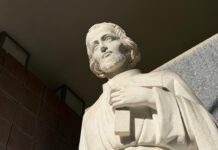
In the 2nd chapter, we read a brief summary of the history of Catholic education as “history of the Spirit at work” and, as in Dilexi te, several Saints and “courageous women” are mentioned who contributed to favoring “the least” in access to education, including Saint John Bosco who “with his ‘preventive method’, transformed discipline into reasonableness and closeness”(2.3).
Another very Salesian aspect emerges in the document, that of Christian education as “choral work: no one educates alone” and therefore of the “educating community” understood as “a ‘us’ where the teacher, the student, the family, the administrative and service staff, the pastors, and civil society converge to generate life.” The splendid harmony between the Saints also emerges, such as Saint John Henry Newman, whom the Holy Father on November 1 declared Doctor of the Church and co-patron of the educational mission of the Church together with Saint Thomas Aquinas, who had as his cardinal motto Cor ad cor loquitur, from a letter from Saint Francis de Sales, “The sincerity of the heart and not the abundance of words, touches human hearts” (3.1).
Then there are different “definitions” of the “profession of educating” enunciated, such as “Educating is an act of hope and a passion that is renewed”; it is a “profession of promises”; “it is a task of love that is handed down from generation to generation.” We also talk about what must not be, that is, it must not be reduced “to workforce training or an economic tool; a person is not a ‘skills profile’, nor to be reduced to a predictable algorithm, but a face, a history, a vocation” (4.1).
Other principles dear to the Salesian tradition are an integral anthropological vision which “embraces the whole person: spiritual, intellectual, affective, social, corporeal” and which “does not measure its value only on the axis of efficiency”, but rather “on dignity, on justice, on the ability to serve the common good” (4.2). It is an education that seeks to respond to the challenges of today “because every generation is new, with new challenges, new dreams, new questions.” We must “rebuild trust in a world marked by conflicts and fears, remembering that we are children and not orphans, from this awareness fraternity is born” (4.3). And continuing, it is an education that knows how “to put the person at the center,” to form men and women of virtue, freer, “citizens capable of serving and believers capable of bearing witness,” where the educational alliance with the family is “effort and blessing”.
An inspiring image that recurs in the document, as suggestive as it is concrete, is that of the “constellation” (Ch. 8) “because the Catholic educational world is a living and plural network” with “fixed stars” and stars of “their own luminosity,” but which “all together draw a course.” In fact, “the plurality of charisms, if well-coordinated, composes a coherent and fruitful framework,” even if it must be admitted that “the future requires us to learn to collaborate more, to grow together.”
Among the stars that guide the path, the “North Star” is the Global Educational Pact (Ch. 10), a prophetic legacy of Pope Francis collected “with gratitude” by his successor, “an invitation to form an alliance and network to educate for universal fraternity,” with its seven paths that “have inspired schools, universities, and educational communities around the world, generating concrete processes of humanization.” To these seven ways, Pope Leo adds three priorities: the interior life – “young people ask for depth;” the human digital – “we form in the wise use of technologies and AI, putting the person before the algorithm;” unarmed and disarming peace, “we educate to non-violent languages, reconciliation, bridges and not walls.”
Within the text there is also no shortage of essential educational themes such as the promotion of the protection of creation, ecological responsibility, and peace (Chapter 7). There is also a correct approach to technologies and the digital environment (Chapter 9) to inhabit and that requires, “pastoral creativity,” as well as “discernment on educational planning.” There must be the conviction that “no algorithm will be able to replace what makes education human: poetry, irony, love, art, imagination, the joy of discovery and even, education in error as an opportunity for growth. The decisive point is not technology, but the use we make of it.”
60 years after the Gravissimum educationis and five years after the Global Educational Pact, while celebrating a “fruitful educational history”, heartfelt is the Pope’s call to update as a Church, the proposals in the light of the times. “It is not enough to conserve: we need to relaunch” – he says – and asks “all educational realities to inaugurate a season that speaks to the hearts of the new generations, recomposing knowledge and meaning, competence and responsibility, faith and life” (10.2).
In formulating these requests, the Pope is aware of the hardships they entail: “hyper-digitalization can shatter attention; the crisis of relationships can hurt the psyche; social insecurity and inequalities can extinguish desire. Yet, precisely here, Catholic education can be a beacon, not a nostalgic refuge, but a laboratory of discernment, pedagogical innovation, and prophetic testimony. Drawing new maps of hope; this is the urgency of the mandate” (11.1).
Entrusting this path to the Virgin Mary, Seat of Wisdom, and to all holy educators, Pope Leo addresses a final exhortation to Pastors, consecrated persons, lay people, heads of institutions, teachers, and students: “be servers of the educational world, choreographers of hope, tireless seekers of wisdom, credible creators of expressions of beauty.”





Ce message est vraiment riche
je vous remercie pour ce document écrit sur éducation.
très intéressant
Merci beaucoup à notre Saint Père Léon 14 pour ce message profond.
Merci pour le message très riche et profond
Merci beaucoup pour ce document et son message si profond
Excelente e claro conteúdo
.
Grand merci pour le message 💦