





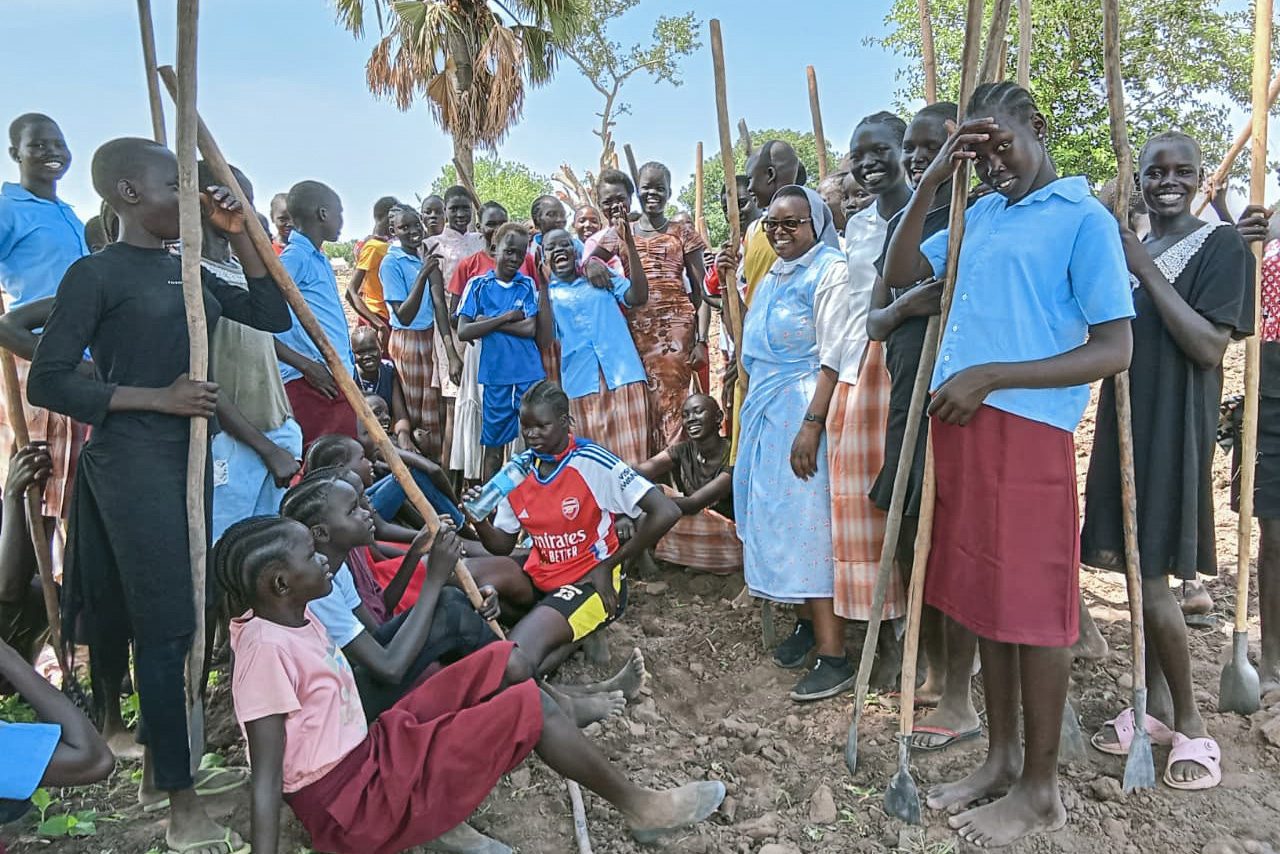
Tonj (South Sudan). One of the most impactful initiatives of St. Bakhita Educational Center in Tonj, of the Daughters of Mary Help of Christians of Mary Help of Christians Preprovince (AES), is the cultivation of groundnuts, introduced in 2015 with the primary school.
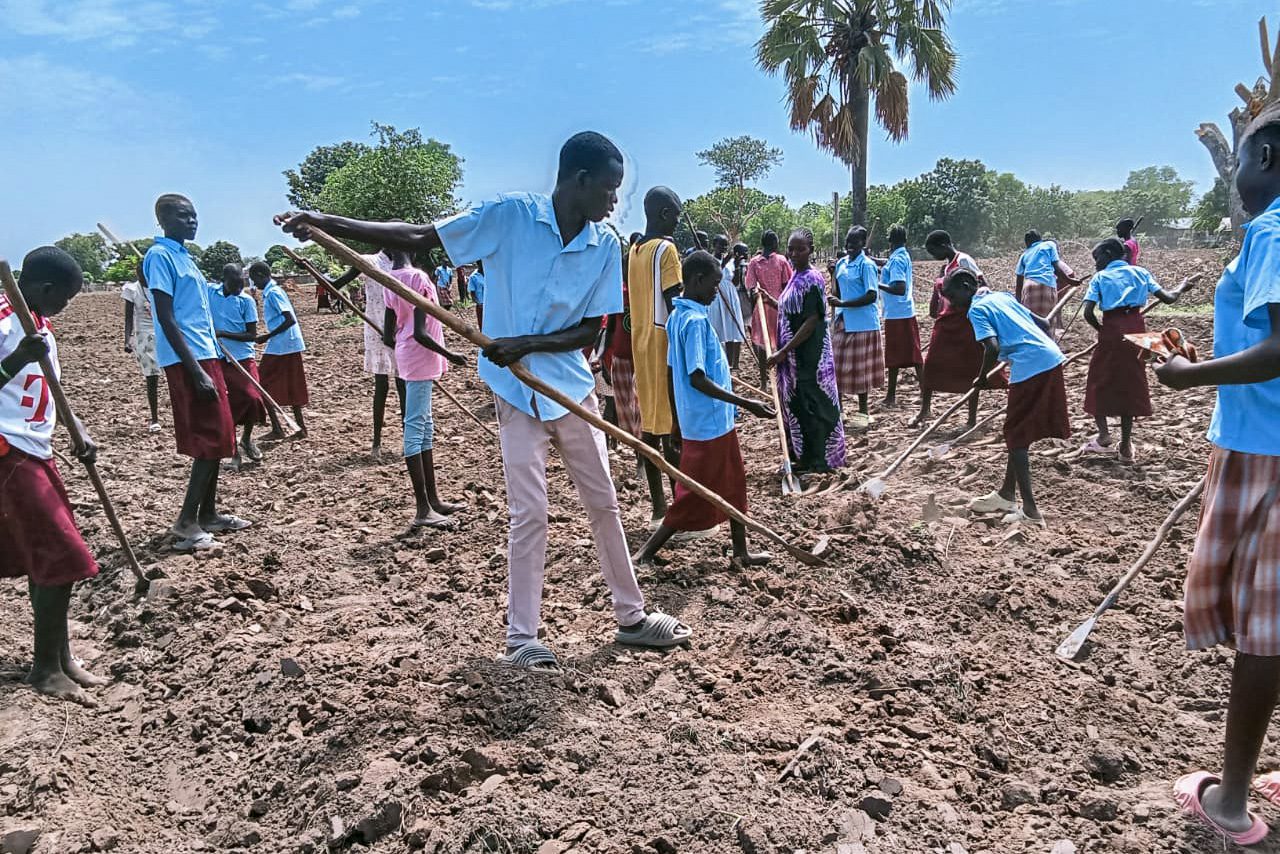
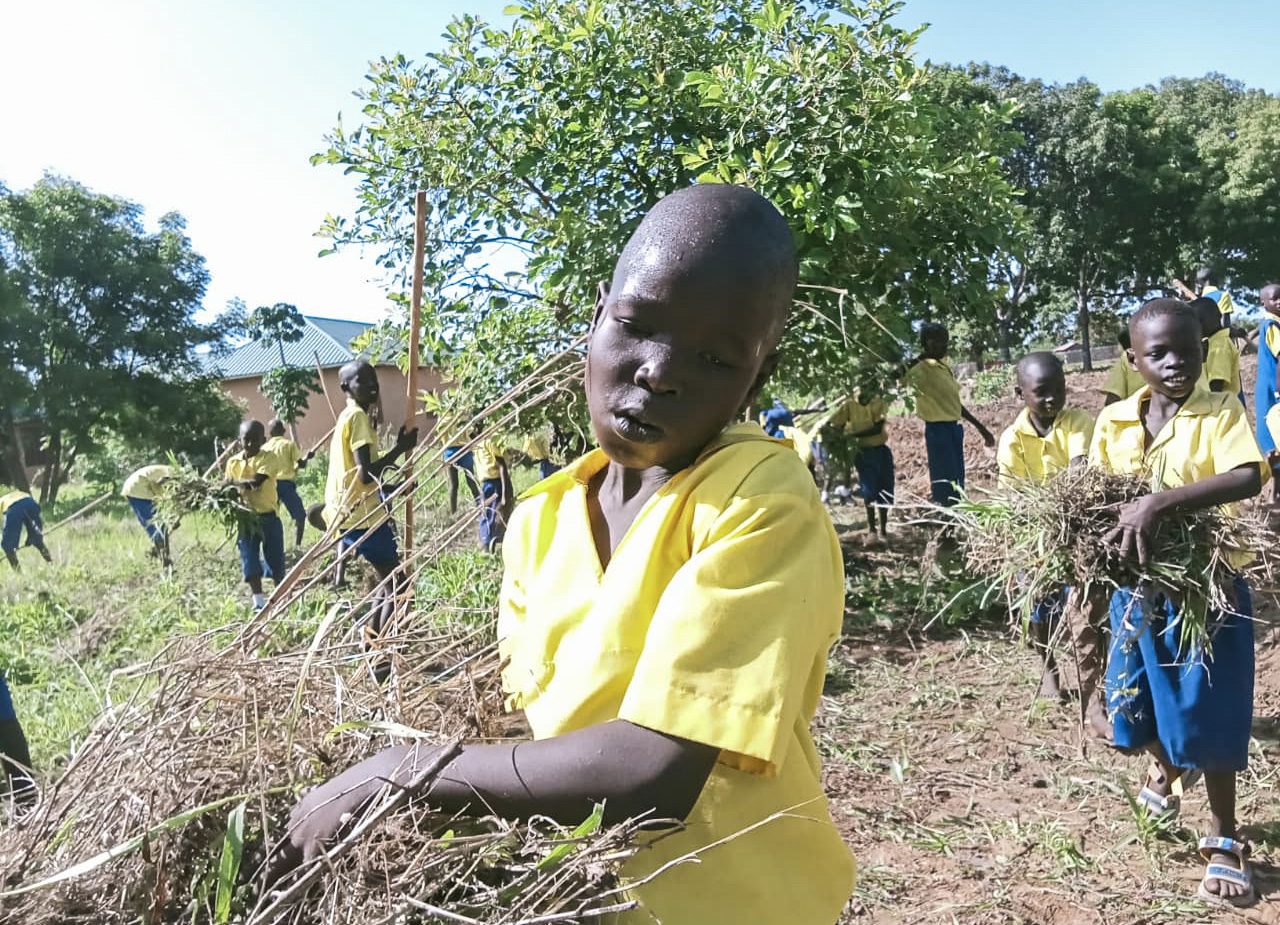
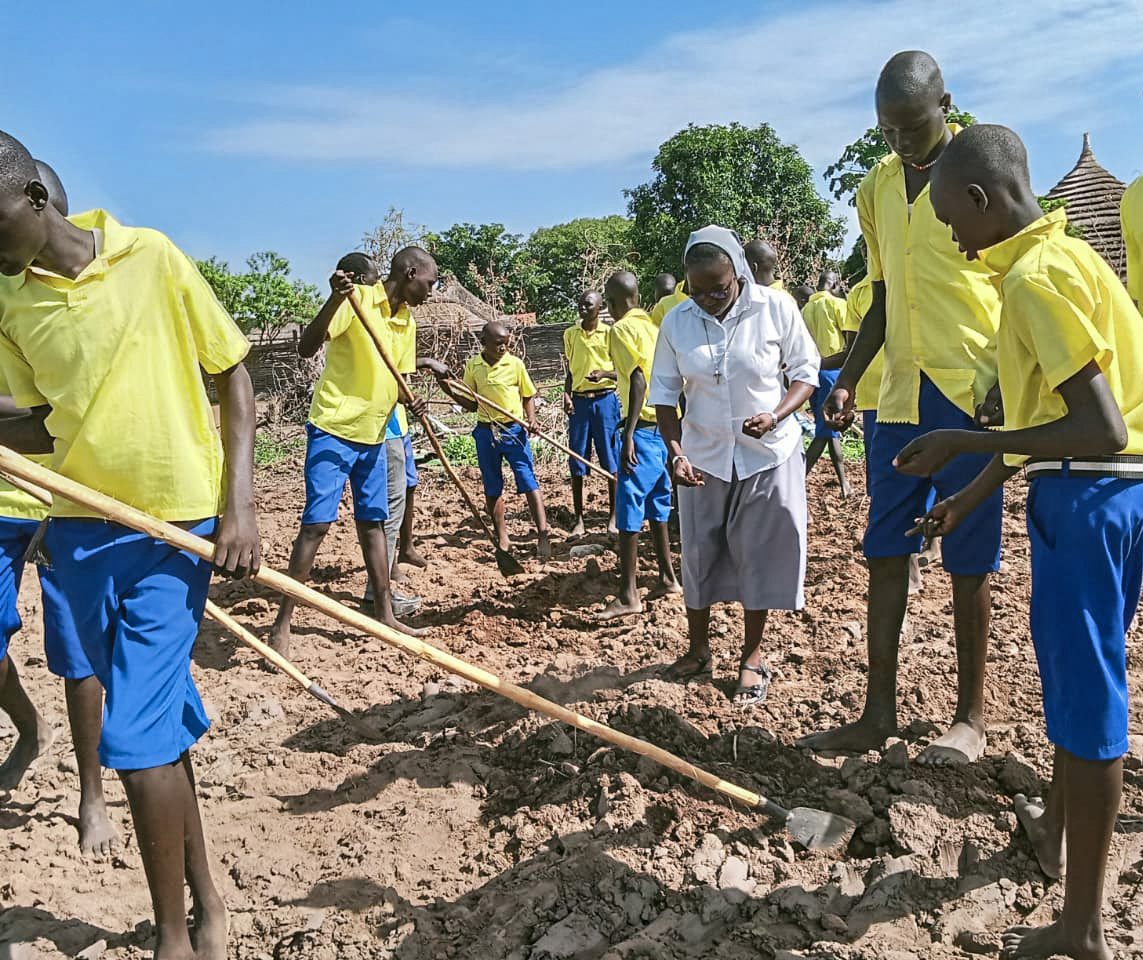
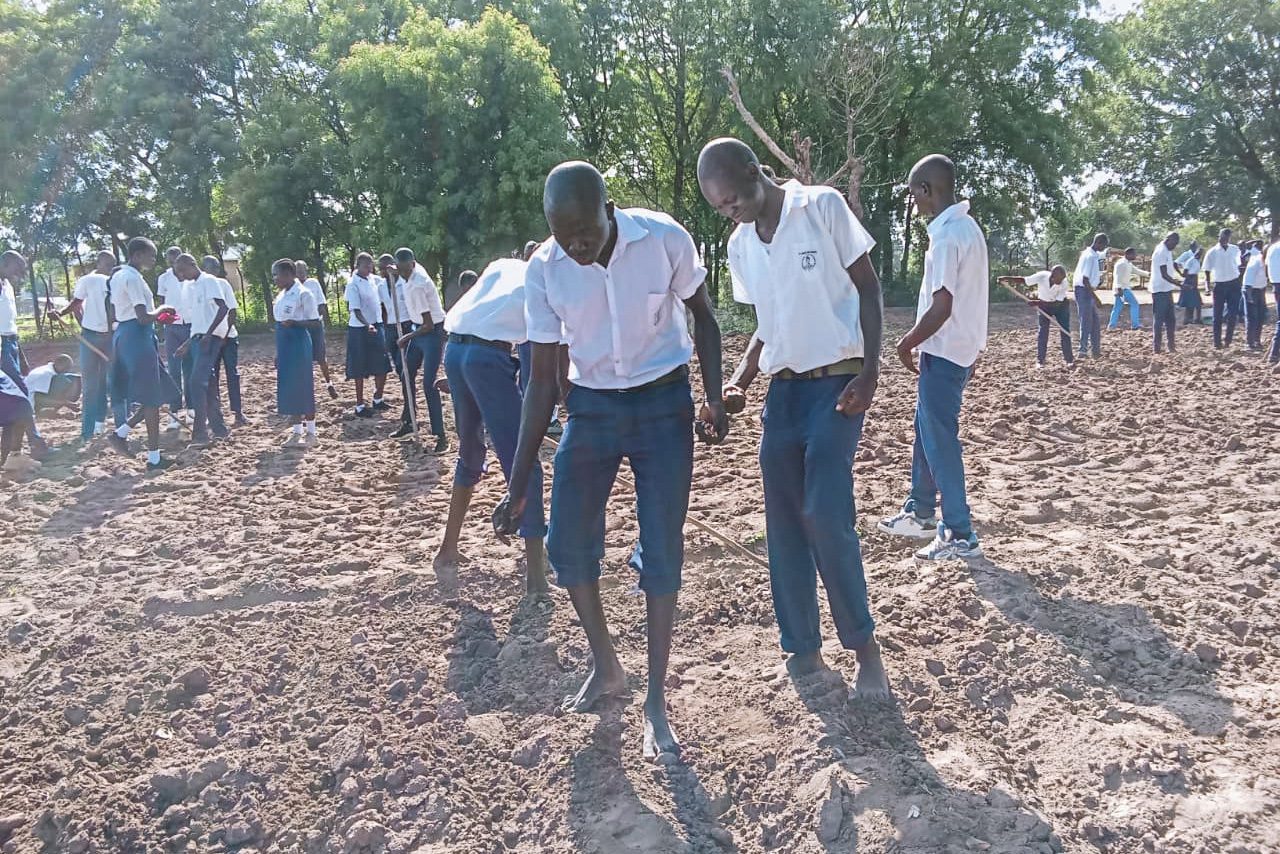
This activity was designed to help students put classroom learning into practice, and to promote a deeper appreciation for agriculture in a community where only white-collar jobs are traditionally valued. Gli studenti di tutti gli ordini di Scuole – from Primary 4 to 8, all secondary classes, and Accelerated Learning Program (ALP) – enthusiastically participate in this project, guided and supported by the staff and the FMA.
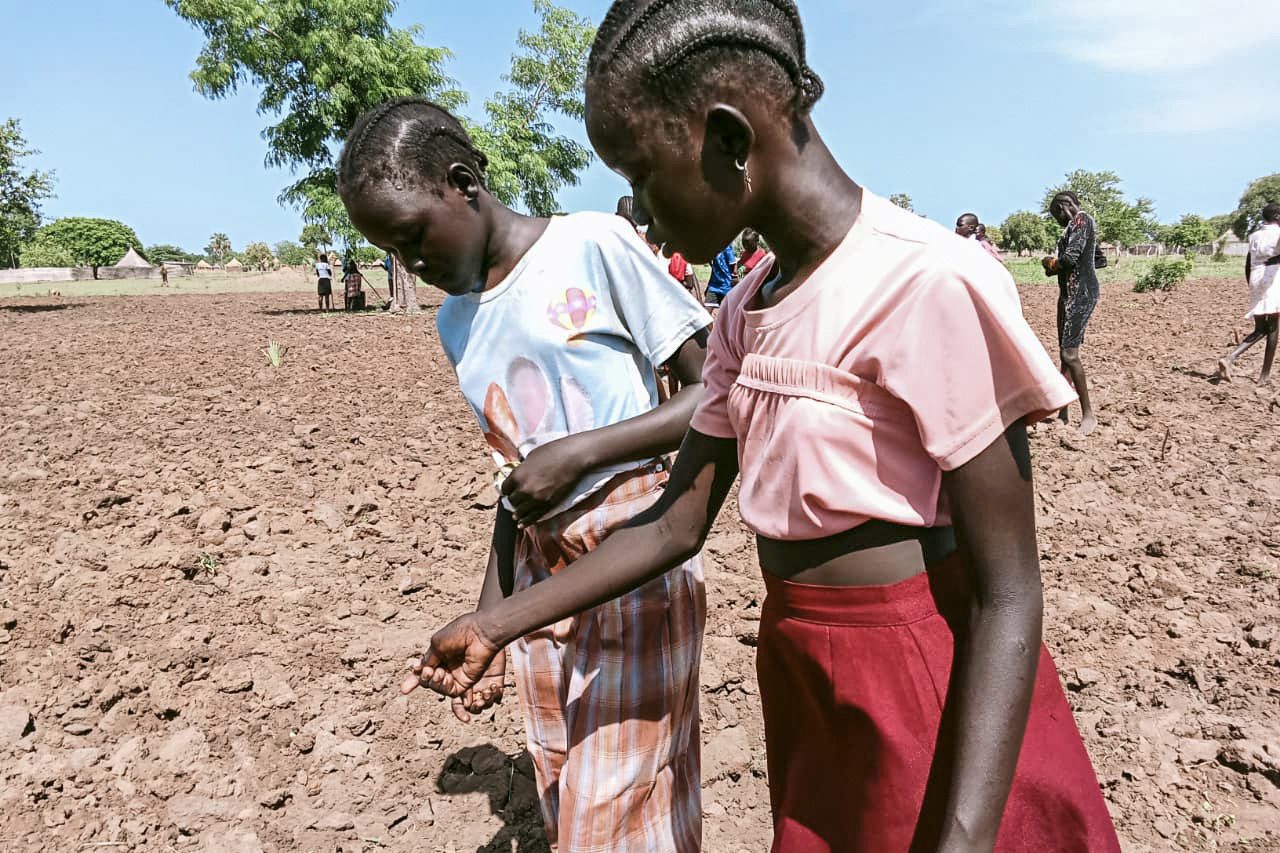
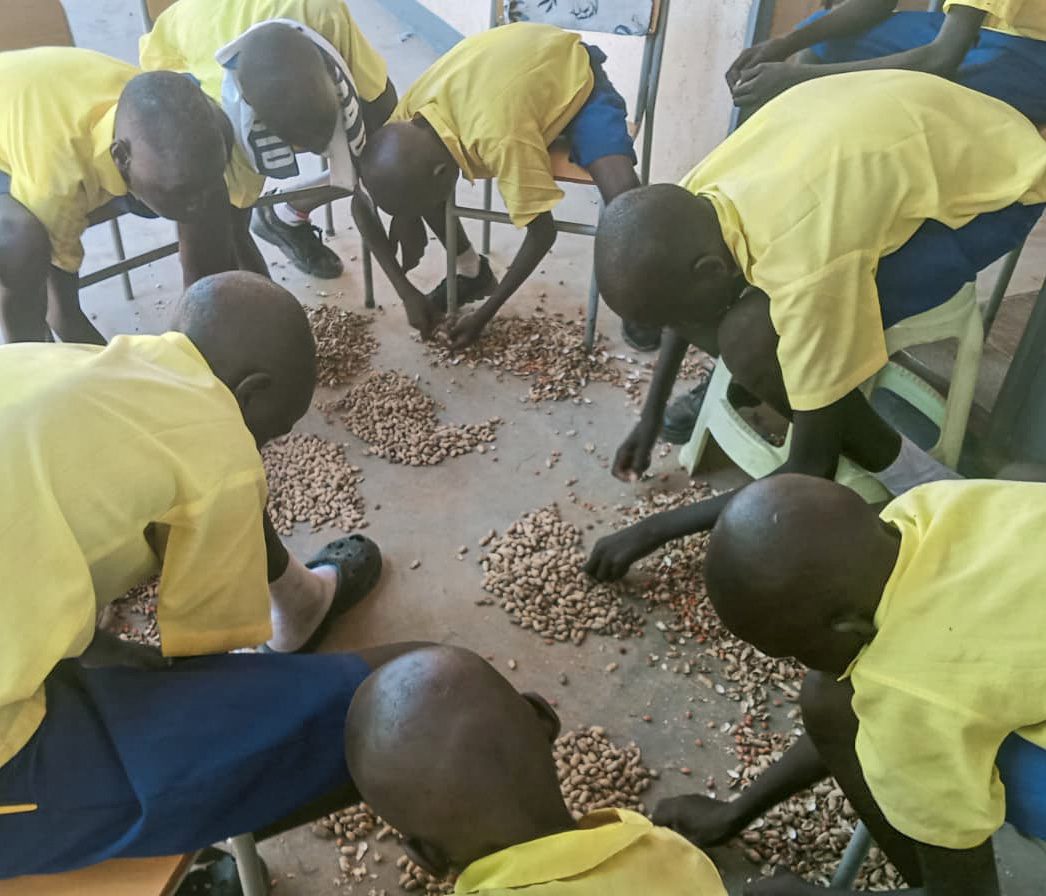
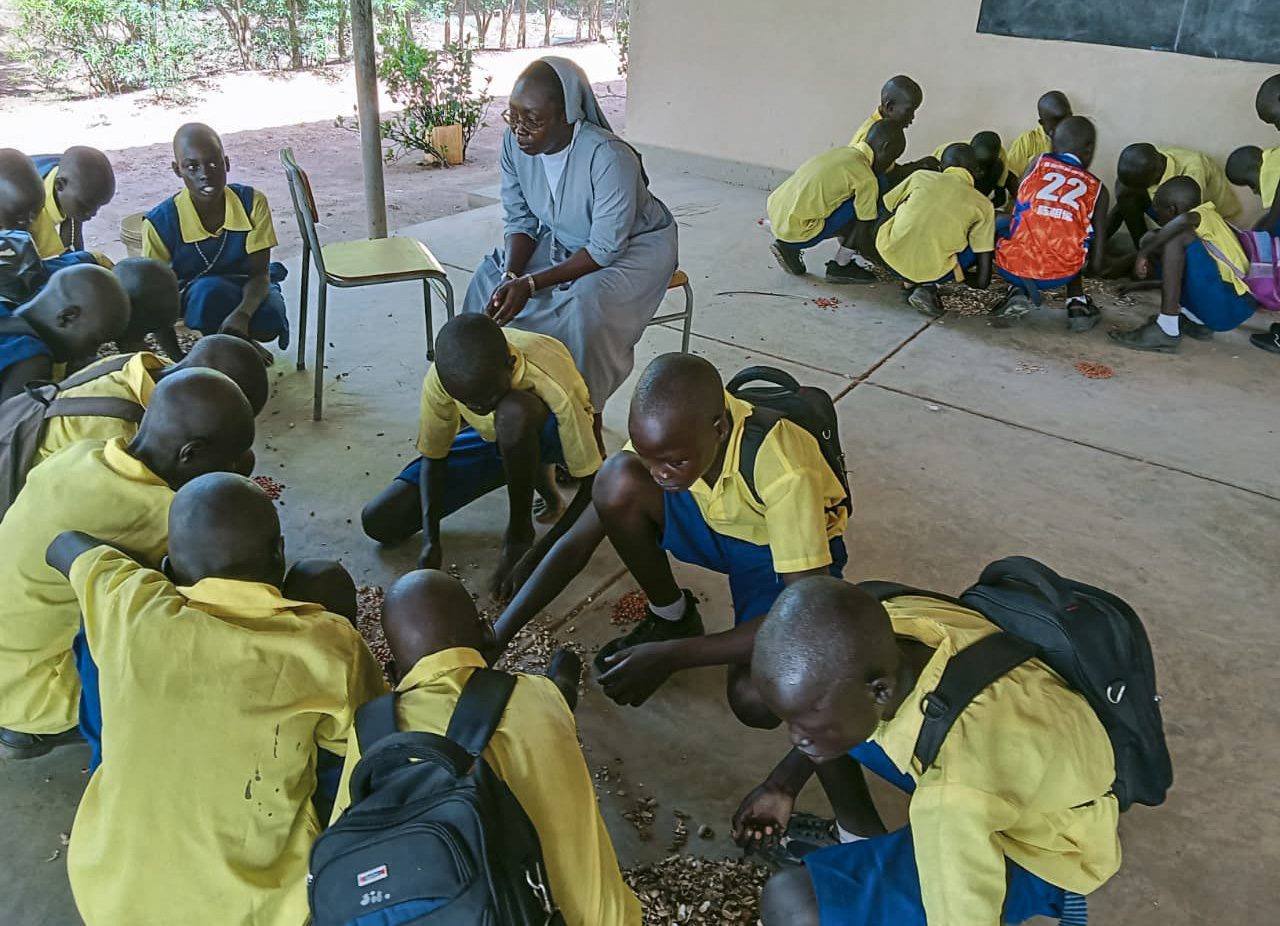
Each year, as the rainy season approaches, they prepare the land together and plant groundnuts, a staple crop in the region. During the weeding and harvesting periods, more than 1,300 students actively engage in the cultivation work.
Fostering Sustainability Through Agriculture
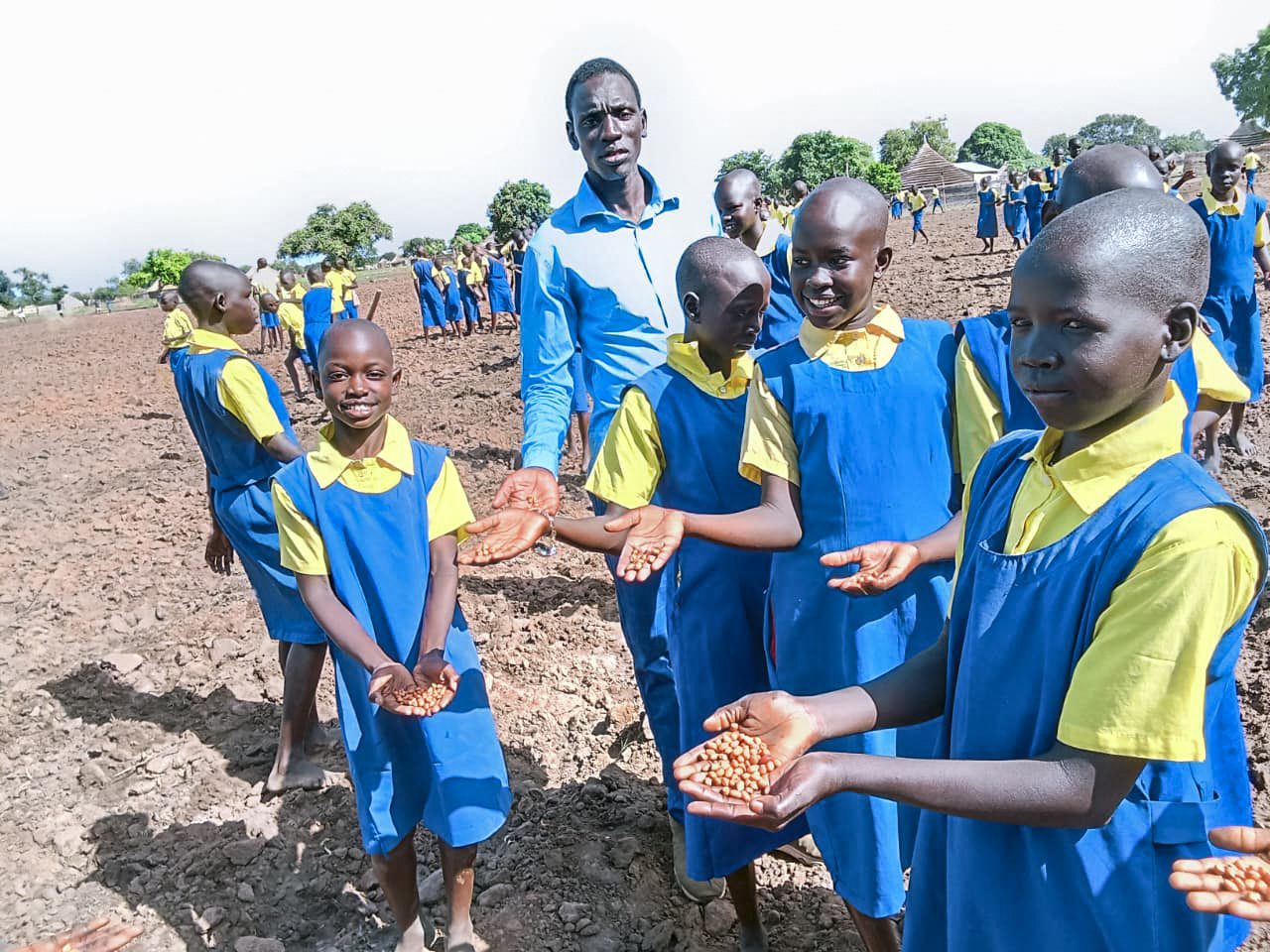
In 2022, a generous benefactor helped us purchase groundnut seeds. These were distributed not only to students but also to their parents, women in the community, and local chiefs. The goal was to support families in generating income to pay school fees and improve their livelihoods.
The seeds were shared on a rotational borrowing basis—after harvest, the recipients returned a portion of the seeds so others could benefit the following season.
Currently, students facing financial difficulties receive one sack of groundnuts to plant at home. After the harvest, they return one sack to the center, keep one for the next season, and sell the rest to cover school expenses. Those who borrow groundnuts have been able to successfully pay their school fees after selling the harvest.
Impact and Hope
This agricultural program has brought about a positive shift in students’ attitudes. They are enthusiastic and take the initiative, often reminding teachers about garden responsibilities. It has instilled a sense of responsibility, teamwork, and pride.
This year, one of our former pupils expressed his desire to study agriculture at the university. This is clear evidence that change is taking place. In Tonj, most young people typically aspire to study law or medicine, so choosing agriculture is a significant sign of a shift in mindset and values.
Thanks to this initiative, many students have been able to continue their education without interruption. This year alone, the center distributed over 200 sacks of groundnuts to those in need.
The voice of the students
Mathew – “Our school garden plays a very important role in our lives as learners. It helps us pay our school fees by giving us the opportunity to plant crops from the seeds provided the previous year. After harvesting, we can sell part of the produce and use the money to pay for our education. The school garden also supports us when there is no lunch provided at school. Unlike other schools that don’t have a garden and struggle during such times, our garden helps us survive and stay strong.
At home, the school garden continues to help us. If there is no food at home but we received a sack of groundnuts from school and harvested two, five, or even more sacks, we can feed ourselves and save some to plant again. This is another big advantage of the school garden.
The garden also supports students who do not have crops of their own to plant. It gives everyone a chance to grow something and benefit. In addition, the garden helps students who have stomach problems and cannot eat foods like sorghum or maize. Thanks to the school garden, alternative food options can be provided for those students.
Finally, the school garden helps us buy important school supplies such as uniforms, sportswear, and exercise books. From all this, we have learned that the school garden is very beneficial for us learners. That’s why we believe we need enough land for the school garden to grow and help even more.
Thuc – “The school garden is very important for many reasons:
Education in Agriculture: The garden teaches pupils how to cultivate crops and understand the importance of farming as a key part of agriculture. It gives learners hands-on experience, helping them become skilled and confident farmers in the future.
Support During Food Shortages: When there is no lunch provided at school, the garden provides food to support learners. It ensures that students can stay healthy and focused on their studies.
Financial Support: The school garden helps learners who are unable to pay school fees. By cultivating crops and selling the produce, students can raise money to support their education.
Community Support: The garden also supports parents who do not have crops to plant during the rainy season. The school allows them to borrow seeds, which they return after the harvest. This strengthens the bond between the school and the community.
Support for Teachers and Learners in Need: It provides everyone a chance to benefit and take part in farming
Encouraging Hard Work and Responsibility: The school garden encourages a spirit of hard work and participation among all students. Everyone is motivated to get involved and contribute.
Pride and Gratitude: We are grateful to the Bakhita Salesian Sisters for introducing crop farming in our school. They have supported us like family, and we are proud of their efforts. The garden makes them proud too, as it benefits so many people.
In conclusion, we will never give up on this school farming project because it is now helping us in so many ways. It has become the backbone of our school, supporting education, health, and the entire community”.
St. Bakhita Educational Center was established in 2010 by the Daughters of Mary Help of Christians in Tonj, South Sudan. The center began with a kindergarten, followed by the opening of a primary school, and eventually a secondary school in 2018. Additionally, FMA launched an informal education program for girls who never had the opportunity to attend school and are above the usual school age. These girls follow an Accelerated Learning Program (ALP). They complete the national Primary 8 curriculum in just five years instead of the standard eight.
May this mission continue to be a sign of hope for the community that benefits from it.






This is very interresting. Thanks Sisters for sharing with us this inspiring experience in South Sudan.