




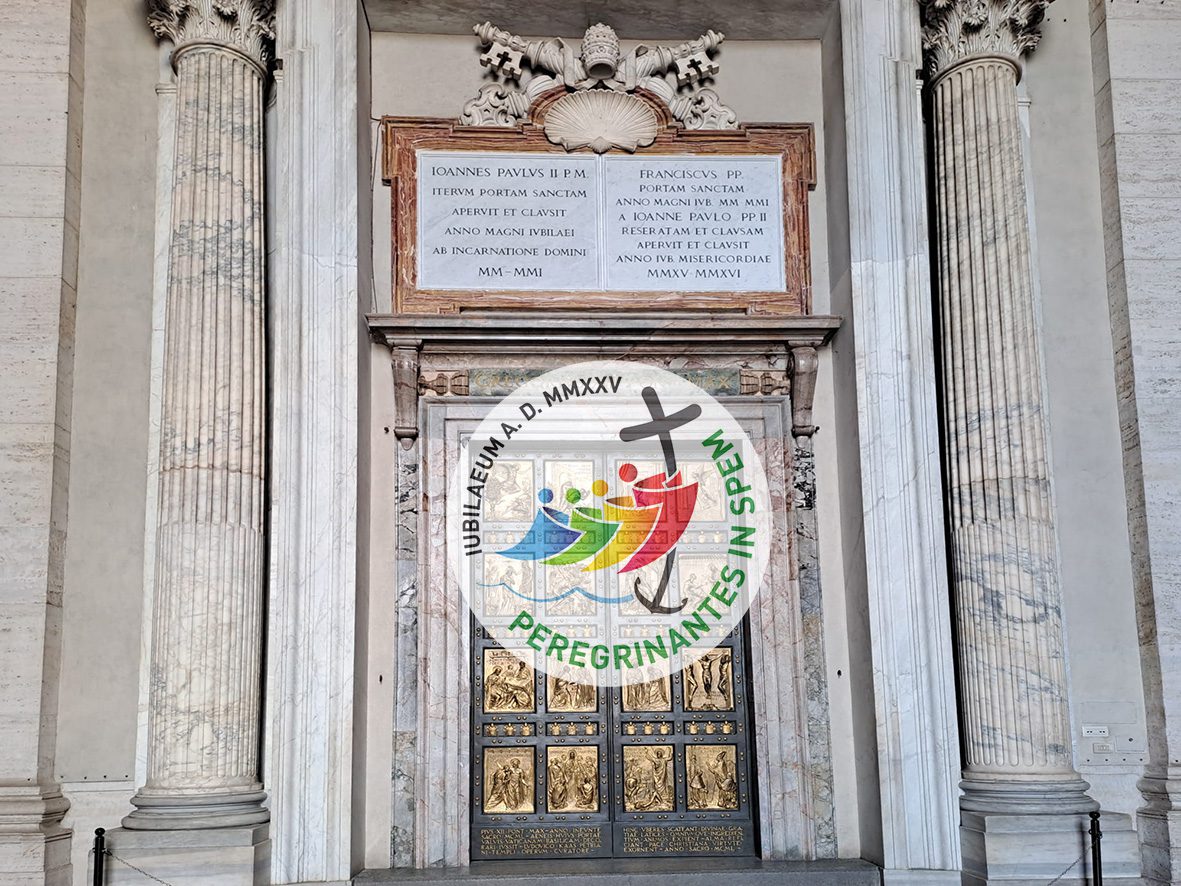
Rome (Italy). On 6 January 2026, on the Solemnity of the Epiphany of the Lord, Pope Leo XIV closed the Holy Door of St. Peter – the first opened and last closed of the four Papal Basilicas in Rome – officially concluding the Ordinary Jubilee of 2025.
Accompanied by the hymn “Pilgrims of Hope”, the Holy Father walked in procession before the open Door, where he addressed the liturgical greeting with a formula that summed up this solemn moment:
“As pilgrims of hope, we have sought the way of life in the light of God’s Word and His boundless mercy. The bread that came down from heaven supported our path, the love of Christ urged us to conversion, fraternity, the search for justice and peace. With a grateful soul, we prepare to close this Holy Door, crossed by a multitude of the faithful, confident that the Good Shepherd always keeps the door of His heart open to welcome us all the times we feel tired and oppressed.”
After the Te Deum and at the end of the singing of the antiphon – “O Key of David, scepter of the house of Israel, which you open, and no one can close; close and no one can open, come, free the captive one, who lies in darkness and in the shadow of death” – Pope Leo approached the threshold and knelt down. Then, in an emotionally charged silence, he rose and closed his doors.
In the eyes and hearts of those present, and of the thousands of faithful connected via the media, there were inevitably images of the gesture of openness made by Pope Francis – not standing, but sitting, in a wheelchair – that had so moved the world on 24 December 2025.
During the homily of the Eucharistic Celebration, following the rite of Closing the Holy Door, Pope Leo compared the experience of the jubilee pilgrimage to that of the Magi:
“The Holy Door of this Basilica, which today is the last to be closed, has seen a stream of innumerable men and women, pilgrims of hope, journeying toward the new Jerusalem, the city whose doors are always open (cf. Rev 21:25). Who were these men and women, and what motivated them? At the end of this Jubilee year, the spiritual searching of our contemporaries, much richer than perhaps we can comprehend, invites us to earnest reflection. Millions of them crossed the threshold of the Church. What did they find? What was in their hearts, their questions, their feelings? Yes, the Magi still exist today. They are the people who sense the need to go out and search, accepting the risks associated with their journey, especially in a troubled world like ours that may be unpleasant and dangerous in many ways.”
The “flow of countless pilgrims of hope” was quantified by Monsignor Rino Fisichella, Pro-Prefect of the Dicastery for Evangelization, who at the Press Conference of January 5th in the Holy See Press Office, together with other authorities involved in the organizational machinery, including the Mayor of Rome Roberto Gualtieri, drew up a “Balance sheet of the jubilee event”:
“The whole world has arrived in Rome. Pilgrims arrived from as many as 185 countries. 33 million and 475,369 pilgrims participated in the jubilee events, bringing with them the hopes and expectations of each individual. The forecasts of 31.7 million made before the Holy Year have been admirably exceeded.” Of these, as many as 13 million were young people.
Also noteworthy, although difficult to quantify, was the participation of the Daughters of Mary Help of Christians in the various Jubilees and pilgrimages to the Holy Doors, inaugurated by that of Mother Chiara Cazzuola with the General Council, on 26 December 2024, at the Holy Door of St. Peter, just two days after its opening.
FMAs from around the world came to Rome with young people, with the Educating Communities, with groups of lay people and members of the Salesian Family to experience the extraordinary moments of the particular Jubilees, many of which are recounted and documented on the Institute’s website.
The communities that were unable to reach Rome, however, did not lack the creativity to animate and echo in their own realities with pilgrimages to the local Holy Doors, celebrations, formative days, and various initiatives the jubilee themes and above all the desire for personal and community conversion that this great Church event has brought with it for centuries. It is an experience that does not end here, as Pope Leo recalled in his homily on 6 January:
“Holy places like cathedrals, basilicas, and shrines, which have become Jubilee pilgrimage destinations, must diffuse the aroma of life, the unforgettable realization that another world has begun. Let us ask ourselves: is there life in our Church? Is there space for something new to be born? Do we love and proclaim a God who sets us on a journey again?”
These are questions that will accompany the Church’s journey until the next Jubilee, presumably in 2033, on the anniversary marking the 2,000 years of the Redemption, which Pope Leo XIV has expressed his intention to celebrate in an ecumenical key.