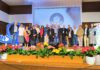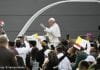

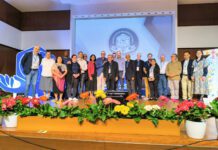
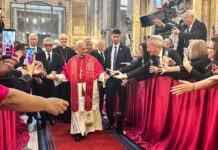
Vatican City. On 3 February 2025, in the Clementine Hall of the Apostolic Palace in the Vatican, institutional representatives, political leaders, and humanitarian organizations from different countries of the world met together with Pope Francis for the 1st World Leaders Summit on Children’s Rights, the first international summit on children’s rights entitled “Let us love and protect them”, announced by the Holy Father at the General Audience of 20 November 2024:
“It will be an opportunity to identify new ways of rescuing and protecting millions of children who still have no rights, live in precarious conditions, are exploited and abused, suffer the dramatic consequences of wars.”
The Summit was coordinated by the Pontifical Committee for World Children’s Day – celebrated for the first time in Rome on 25 and 26 May 2024 – and is part of the global educative alliances promoted by Pope Francis, starting from the Global Pact on Education, with seven commitments, including listening to the new generations, investing in the family, and caring for the common home.
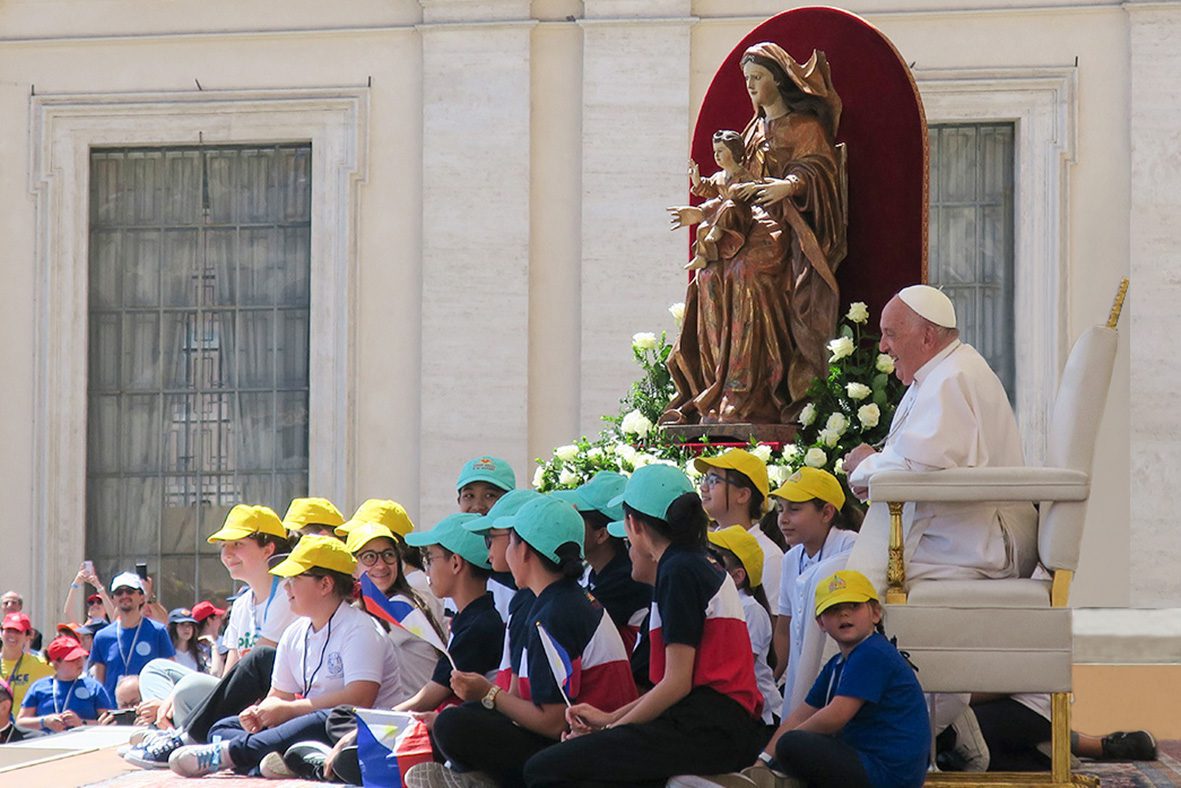
At the beginning of the day, Pope Francis met a group of children from five continents who handed him their drawings and messages together with a letter written on behalf of the world’s children and signed, “your children”, with their thanks for listening to their questions, for concern about them, and for trust in them.
The meeting was then developed through 7 thematic panels – 5 in the morning and 2 in the afternoon – introduced by Secretaries of the Dicasteries, Bishops, and Cardinals, including Card. Ángel Fernández Artime, SDB. There were more than thirty interventions on fundamental issues for the growth and development of children: the rights of the child in today’s world, the right of the child to resources, education, food, nutrition, and health, family, leisure and recreation, to live free from violence.
High-level speakers from different backgrounds, continents, and religions, Nobel laureates, and representatives of the world of culture, economy, politics, solidarity, sport, the Church, discussed today’s global challenges. They highlighted the dramatic reality of childhood, whose rights are often a “privilege reserved to the fortunate few”, as Jordan’s Queen Rania Al Abdullah pointed out in her first speech, citing a “disturbing” study on the psychological state of children in Gaza: “96% reported feeling death was imminent, almost half said they wanted to die. They don’t want to be astronauts or firemen, like the other children, but they would like to be dead.”
From listening to the reports and testimonies, we have grasped the systemic and integral approach to the theme, accompanied by the desire of all to work in network to face this “global moral crisis”, as it is defined within international Organizations.
Pope Francis’ initial and concluding interventions, were a lucid analysis of the situation of children robbed of all rights and their own childhood, excluded from vital opportunities, humiliated in their dignity, forced to pay the highest price of the environmental and ecological crisis. The Holy Father spoke of a sad and worrying situation. “More and more often those who have life in front of them cannot look at it with a confident and positive attitude. Precisely the young, who in society are signs of hope, struggle to recognize hope in themselves” and this is not acceptable, because “nothing is worth the life of a child. Killing the little ones is negtating the future.”
The Pope strongly urged to resist the addiction to these injustices, to counter the media dynamics that make humanity insensitive. “Today we are here to say that we do not want this to become a new normal. We cannot accept getting used to it.” We must make the most of the meeting, putting “at the center children, their rights, their dreams, their questions for the future”, to cultivate a gaze of compassion and love, which leads to urgent and collective operational decisions, to build a better world for them.
He repeatedly pointed out the urgency of listening to children and being a good example for their growth, “We must realize that young children observe, understand, and remember. And with their looks and their silences they speak to us. Let’s listen to them!” And more, “Children look at us: they look at us to see how we go forward in life.”
For his part, “to give continuity to this commitment and promote it throughout the Church” he announced by surprise the intention of preparing a Letter or an Apostolic Exhortation dedicated to children.
The summit ended with the signing by Pope Francis and all the speakers of the Final Declaration which consists of eight points in which, among other things, it calls for nations to assume greater responsibility and appeals for a global commitment to the protection of children, promoting a culture of life, respect and protection of minors, opposing wars, exploitation, and practices that deny their right to a dignified future and fighting the “culture of waste” with full strength.
The Institute of the Daughters of Mary Help of Christians, on the basis of the decisions taken in the General Chapter XXIV and entrusted to Mother and the General Council, is concretely engaged in updating the document entitled “Guidance for a preventive policy for the protection of minors in our works (2012)”, in light of current Church policies and procedures relating to the protection of minors and vulnerable persons, to promote a culture of protection and care through the creation of a safe environment in its various presences in the world.
As the Pope affirmed, the Summit in the Vatican was at the same time “observatory and laboratory”. This is an encouragement to make of the FMA Educative Communities in oratories, family-homes, schools, parishes, and other presences, “observatories – laboratories” where the choice to be with the little ones commits to a prompt and attentive care for the dignity and integral development of their person and their families.
“Let us therefore pray as children do, with trust and hope, because only with the help of God can we break down the walls of hatred and transform the world into a home of brothers and sisters. Let us commit ourselves every day to be builders of peace, with open hearts and hands ready to serve the good.” (From the Final Declaration)