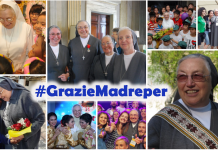

Recife (Brazil). From 22 February to 8 March 2026, the Superior General of the Institute of the Daughters of Mary Help of Christians, Mother Chiara Cazzuola, visited Mary Help of Christians Province (BRE), which is celebrating the centenary of the Daughters of Mary Help of Christians’ presence in Northeast Brazil. During this visit, she visited the communities in Pernambuco, Bahia, and Ceará.
On 22 February , she was welcomed with great joy in Recife by the Provincial, Sister Maria Américo Rolim, and the Provincial Councilors, the Sisters, the youth, and members of the Salesian Family. On the morning of the first day, she attended the Eucharistic Celebration in the “Church of the Frontiers” and then visited the “Dom Hélder Câmara Memorial,” a landmark in a journey of spirituality, memory, and commitment to the evangelizing mission in the Northeast.
She then went to Petrolina (PE), where she was warmly welcomed by the FMA, representatives of the Educating Community and the Salesian Family, to the sound of north-eastern music, performed by the orchestra of the CEMAM (Mary Help of Christians Center for Minors), directed by the Daughters of Mary Help of Christians.
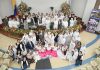
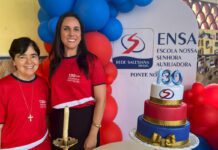
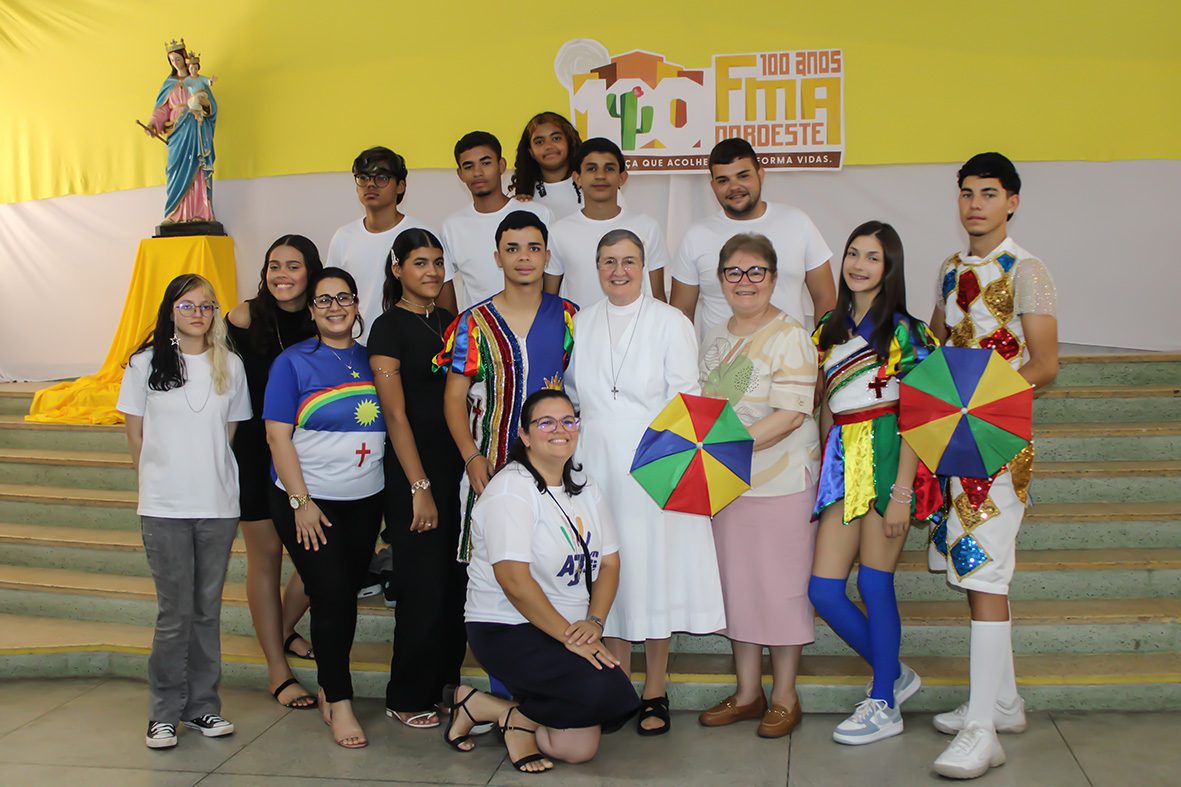
The passage to Petrolina was marked by the celebration of the 100th anniversary of the arrival of the first FMA in the city, with the founding of the School of Mary Help of Christians, called the “Cathedral of Education” by the first Bishop, Fr. Antônio Maria Malan, a Salesian of Don Bosco. The event brought together the Sisters, the Educating Communities, benefactors, and friends from all the houses of the Province.
Among the many celebratory activities, a significant one was the planting of the jequitibá, a plant typical of this region, by Mother, the children of the preschool, and the Sisters from various communities in the Northeast, who contributed by bringing soil from their native lands. These lands united in the planting of the jequitibá—a symbol of resilience and longevity—a sign of hope and continuity in the educational mission that begins its second Centenary.
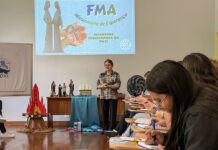
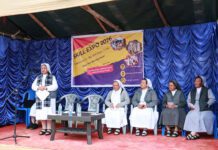
Mother actively participated in every aspect of the intense program of Centenary celebrations, including the formative events for the Sisters, the Provincial Council, the Animators, and the young people of the region. She encouraged dialogue, listening, and sharing the challenges and hopes of the FMA communities and the educational-pastoral mission in the Province’s various mission fields.
She became acquainted with the CEMAM social work and the Saint John Bosco Community in Juazeiro (BA), where she gained a glimpse into the reality of the mission, challenging yet rewarding, among the local population. There, she visited one of the 27 rural communities accompanied by the Sisters, clearly perceiving the protagonism of lay people and young people in the evangelizing mission.
The program also included moments of conviviality with the Sisters and various groups of the Salesian Family, such as a fraternal gathering that took place on a boat sailing on the San Francesco River, offering the opportunity to visit one of the region’s wineries.
Upon returning to Recife (PE), Mother met with the lay collaborators of the Province and Mother Rosetta Marchese Community, one of the houses of the elderly Sisters of the Province. A significant moment was the meeting with the young people of the ODIP (Work for the Defense of Poor Children) and the schools of Gravatá and Recife. She also met with the temporary Professed Sisters and spoke to them, drawing inspiration from Letter 43, written by Mother Mazzarello to Sister Laura Rodríguez on 9 July 1880. It was a time filled with listening, reflection, and sharing.
The visit also included a time of fellowship and celebration with the Salesians of Don Bosco and those in formation at the Basilica of Mary Help of Christians in Jaboatão dos Guararapes (PE), strengthening the bonds of communion between the two branches of the Salesian Family. Mother emphasized, “It’s not that one excludes the other… If we read carefully, both in the Biographical Memoirs and in the Cronistoria, we see the hand of God in these foundations, where the charism is expressed in both masculine and feminine ways. One group does not exclude the other; on the contrary, they are united and complement each other.”
The final stop on the visit was Fortaleza (CE), where she met with the Sisters of Maria Teresa Ambrogio Community. There, she spent time dialoguing and listening to the Sisters, and spoke to the lay collaborators who work in this home, which houses a significant number of elderly and sick FMA. Mother Chiara also visited the Don Bosco Youth Center, where she met with children, adolescents, and educators.
Of particular note were the moments spent with the Salesian Family and a large meeting with young people from seven educational units (FMA and SDB) at the Colégio Juvenal de Carvalho.
The visit concluded with a Eucharistic Celebration marked by a strong sense of gratitude, during which the jubilees of religious profession of five FMA and the 85th anniversary of the foundation of the Province of Mary Help of Christians of the Northeast were celebrated. The Sisters, families, educators, young people, and collaborators participated in a spirit of thanksgiving for the faithfulness of the Sisters and for the history of the Province built over the decades.
Throughout the visit, Mother Chiara encouraged the communities to continue living the Salesian Charism with fidelity, courage, and hope, reminding the young people in particular that the witness of the consecrated Sisters is a sign that “it is possible to be faithful.”
The Superior General’s presence in the Northeast was experienced as a time of grace, closeness, and renewal of consecrated life and mission, strengthening the bonds of communion and reaffirming the commitment of the Daughters of Mary Help of Christians to the education and evangelization of the new generations.
Photos: Flickr FMA