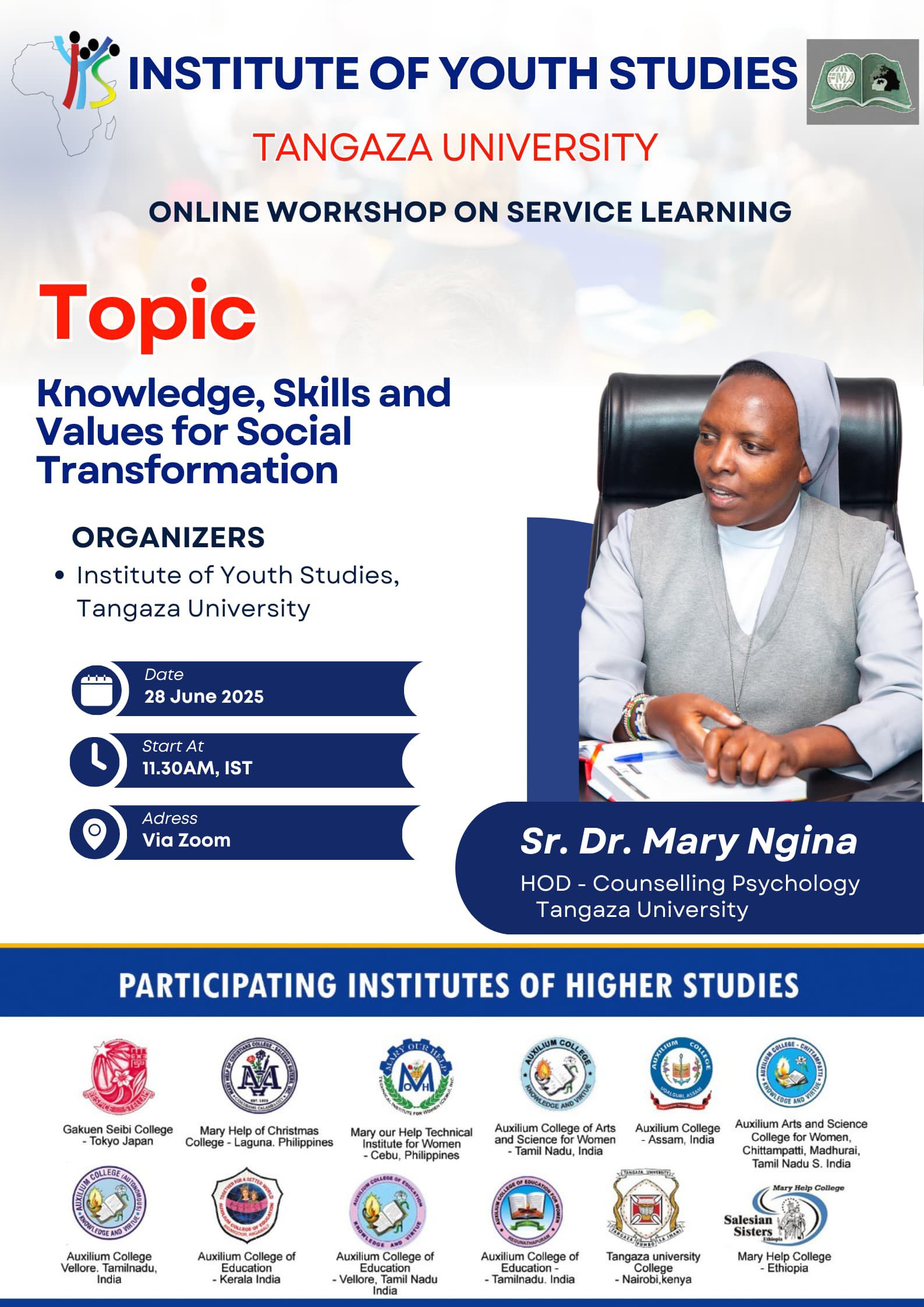

Asia and Africa. On 28 June 2025 the Salesian Institutions of Higher Education (ISS-FMA) of Asia and Africa held a webinar session on the topic “Service Learning: Knowledge, Skills and Values for Social Transformation”, coordinated by the Institute of Youth Studies at Tanganza University in Nairobi, Kenya.
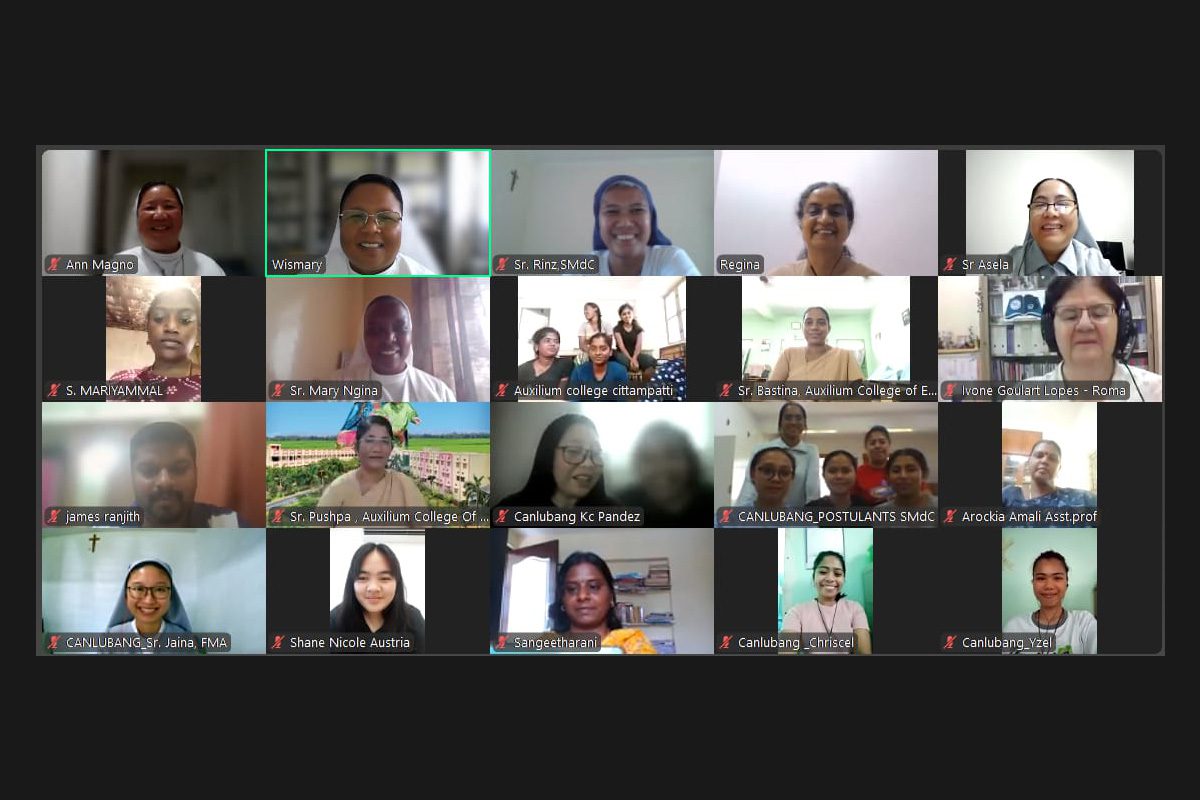
The main speaker was Sr. Mary Ngina, FMA, in Counseling Psychology at Tangaza University, while the moderator was Sr. Regina Rathinasamy, the coordinator of the ISS-FMA Asia and Africa. The webinar brought together many FMA heading the institutions of higher learning as well as students from those institutions. In attendance too was Sr. Ivone Goulart and Sr. Wismary Kharbihkhiew, both from the office of Youth Pastoral in Rome.
In her presentation, Sr. Mary gave the background and relevance of Service Learning basing her argument from the Catholic Social Teachings since it helps us put our faith into action. She highlighted some key principles that are realized through Service Learning like human dignity, preferential option for the poor and solidarity among others. She emphasized that Service Learning is not just giving to the community, but walking with, learning from, and working alongside those who face injustice in the community.
In her definition, she said that Service learning is a teaching and learning strategy that combines community service with academic instruction and reflection which is designed to enrich learning, teach civic responsibility, and strengthen communities. For students, this means making a difference while they learn. She articulated that this is done by taking what students learn in their courses — business, education, or social work, — and applying it in real-world settings to solve real-world problems.
Sr. Mary further highlighted the key elements of Service Learning:
- Integrates learning objectives with service projects.
- Benefits both students and the community.
- Promotes skills like critical thinking, teamwork, and empathy.
Service Learning prepares learners to be not only skilled professionals but also thoughtful citizens and compassionate leaders. And most importantly, it reminds them that their education is not just for personal gain, but for the common good. Hence, Service Learning is not about “fixing” communities — it’s about walking with them, learning from them, and being part of positive change. Small actions through Service Learning can lead to big change. Students can make a real impact while learning valuable skills. Service learning also helps them grow as students and persons.
Sr. Mary concluded her presentation by challenging the students to ask themselves: What can I give? What can I learn? And how can I grow — for the sake of others?