



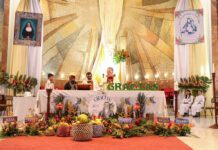
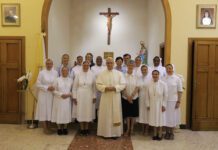
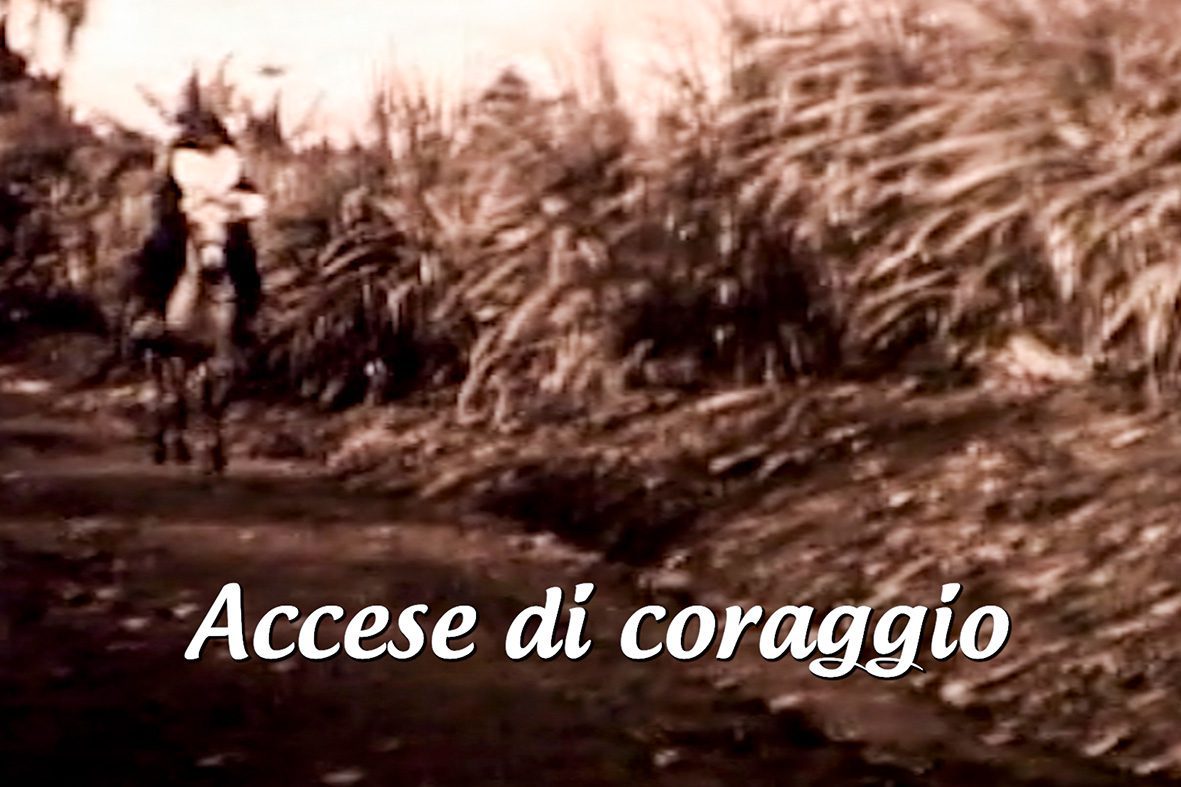
Rome (Italy). On 12 April 2026, the third meeting of the online Pilgrimage of the Missionary Spirituality Project (PEM) took place, organized by the Missions Sector of the Institute of the Daughters of Mary Help of Christians in collaboration with the PEM Team, focusing on the sites in the Americas where the first FMA arrived in 1877.
The journey, comprising eight stages, is situated within the three-year preparatory path leading up to the 150th anniversary of the First Missionary Expedition (2024–2027), under the theme, “Now is the time to rekindle the fire—150th Anniversary of FMA Missions,” with the objective of “celebrating with a grateful heart the missionary ardor of the Institute, in order to rekindle in the context of the present day, the prophetic impetus of our charism as a gift to the Church and to humanity” (Circular No. 1038).
The first stage took place at Villa Colón – Las Piedras in Uruguay, the second at Almagro – La Boca, while April 12th highlighted the ardent courage of the first Daughters of Mary Help of Christians. Missionaries who cross borders and traverse the desert, striving to fulfill Don Bosco’s dream: to carry the Gospel to the ends of the earth. They were loving mothers in the Patagonian desert, courageous and dedicated to the most disadvantaged and forgotten.
The first group of missionaries, comprising Sister Angela Vallese, Sister Angela Cassulo, Sister Giovanna Borgna, and Sister Caterina Fino, arrived in Patagonia on 16 January 1880. They did not travel alone, as the expedition included four Salesians led by their director, Fr. Giuseppe Fagnano, and Monsignor Antonio Espinosa, Vicar of the Archdiocese of Buenos Aires. The reality the young Sisters encountered was not easy, yet they faced its challenges with courage and sacrifice. In a letter addressed to Don Bosco in October 1880, Sister Angela Vallese wrote the following regarding María Auxiliadora boarding school in Carmen de Patagones:
Regarding María Auxiliadora College in Carmen de Patagones, we read in Don Bosco’s writings from October 1880:
“(…) We are sewing dresses and other garments for our poor indigenous women. It seems the Lord is preparing a great deal of work for us, something we ardently desire, so that we may save many souls currently languishing in the darkness of ignorance. (…) If only you could see how many indigenous women there are, and the state of physical and moral destitution in which they live! They inspire deep compassion, and we grieve that we cannot help them all, for we are few in number and very poor ourselves. This boarding school in Carmen de Patagones currently houses 30 resident girls, 2 day students, and a young dark-skinned girl of 15 who assists us with the domestic chores. Were we to possess the means to support them, we could welcome, educate, and save so many more. Every Sunday, we go to the parish church to teach catechism to the Christian girls of the town, girls who, regrettably, are few in number and largely uninstructed in matters of faith. Once a month, they approach the sacraments, doing so with profound devotion. This practice yields great spiritual fruit, not only for the girls themselves but also for the adults, and serves to kindle faith among the indigenous people, prompting them to reflect and to cherish our holy religion.”
Sister Ruth del Pilar Mora, General Councilor for Missions, in her opening greeting, urged all participants at the Pilgrimage to reflect on courage: “Courage accompanies every man and woman who embraces God’s call and chooses to live as a missionary disciple. But where does courage originate? It stems from the certainty that God goes before us, that He is already present wherever we are sent, and from the promise of Jesus that runs through the entire history of the Church, ‘I am with you always, until the end of the world’.
It is this certainty that sustained the first missionary sisters when they left behind their homeland, their language, and their certainties to cross the ocean bound for America. They did not know what they would find, but they knew Who was accompanying them. Mother Mazzarello expressed this in simple, direct, and deeply maternal words: “Take heart; the Lord and Our Lady will help you.” In these words, lies the entirety of her spirituality.”
Sr. Ruth concluded, “Mother Mazzarello teaches us that missionary courage consists not in doing great things, but in saying “yes” every day, even when we feel fragile, weary, or inadequate. It is the courage to educate, to accompany, to begin anew, and to remain faithful to the mission entrusted to us. It is a courage lived out in daily relationships, in educating communities, in listening to young people, and in the capacity to overcome difficulties together. Missionary courage means moving forward in the Lord, transforming fear into trust, weariness into an offering, and uncertainty into openness.”
The event—animated by the Sisters of the Missions Sector, members of the Global Missio Team, and Sisters from the Commission for the 150th Anniversary of the First Missionary Expedition and the PEM Team—was attended by various Educating Communities from every Continent. These communities felt a vibrant desire to be a “Church that goes forth”, one that operates within its local context with courage and passion, remaining faithful to the Charism in order to transform the lives of young people and of all those they encounter every day.

La preparazione al 150^ della I spedizione Missionaria FMA proposta e animata prima di tutto dalla Madre con le sorelle Consigliere generali e le collaboratri dei loro Ambiti, con altre sorelle che hanno contribuito all’elaborazione della programmazione delle iniziative dei 3 anni, continua ad attrarre il nostro impegno a collaborare, ad alimentare lo zelo di attrarre, a nostra volta, chi il Signore ci affida per condurle a Lui DA MIHI ANIMAS, e per questo c’è da volere lasciare tutto il resto.
Allora CORAGGIO: Compassione-Karuna, Carita’, Agape, per portare Speranza.
GRAZIE!