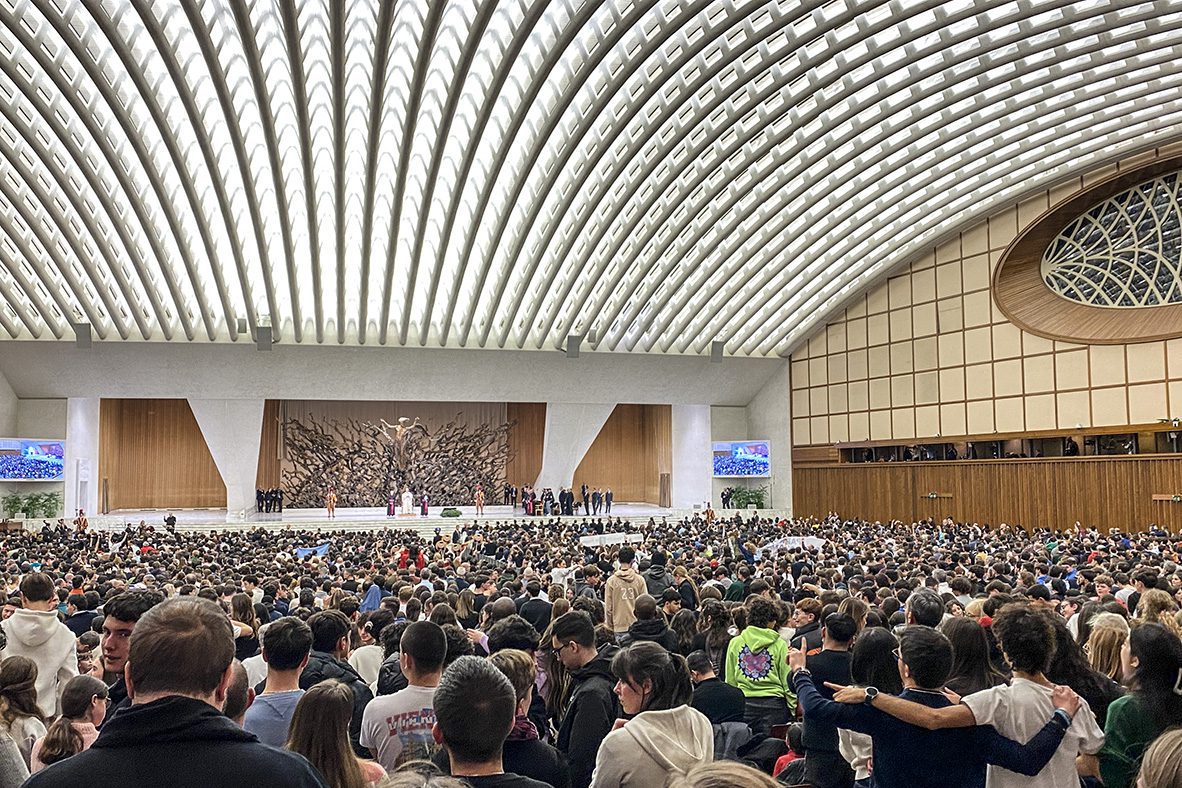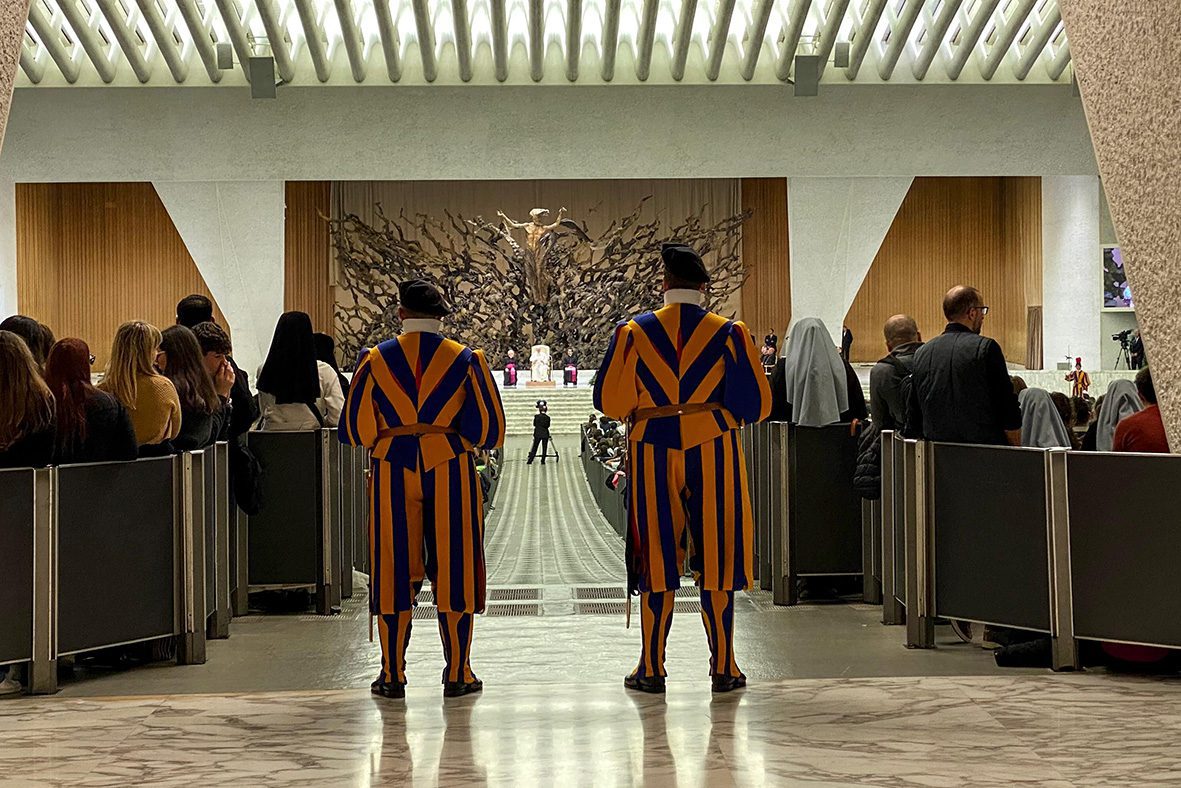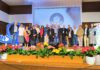

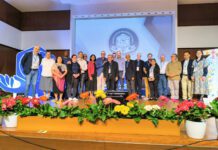
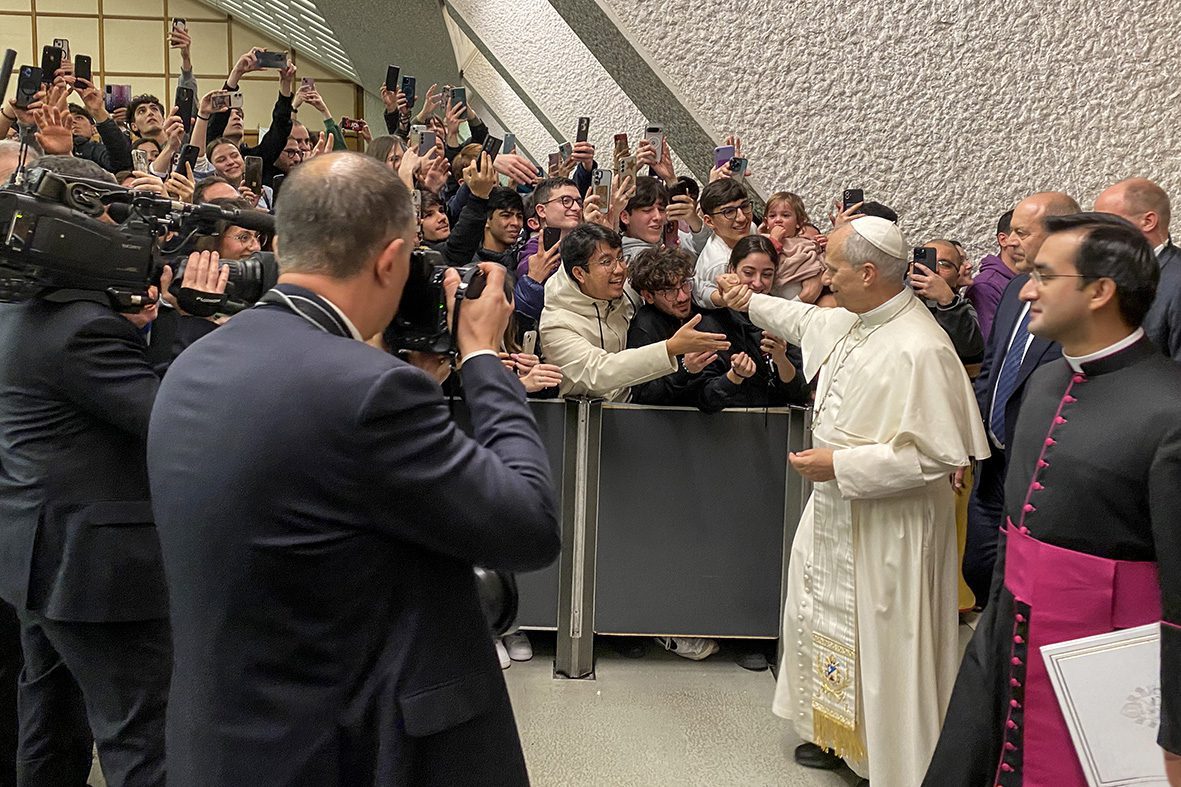
Rome (Italy). On 10 January 2026, in Paul VI Hall that could not hold more than 7,000 people, Pope Leo IV met with the youth groups of the Diocese of Rome: from catechism groups to parishes, from movements and associations to Catholic sports clubs, to students, university students, and young people away from home. Present also were some Daughters of Mary Help of Christians and young people from the Salesian parishes.
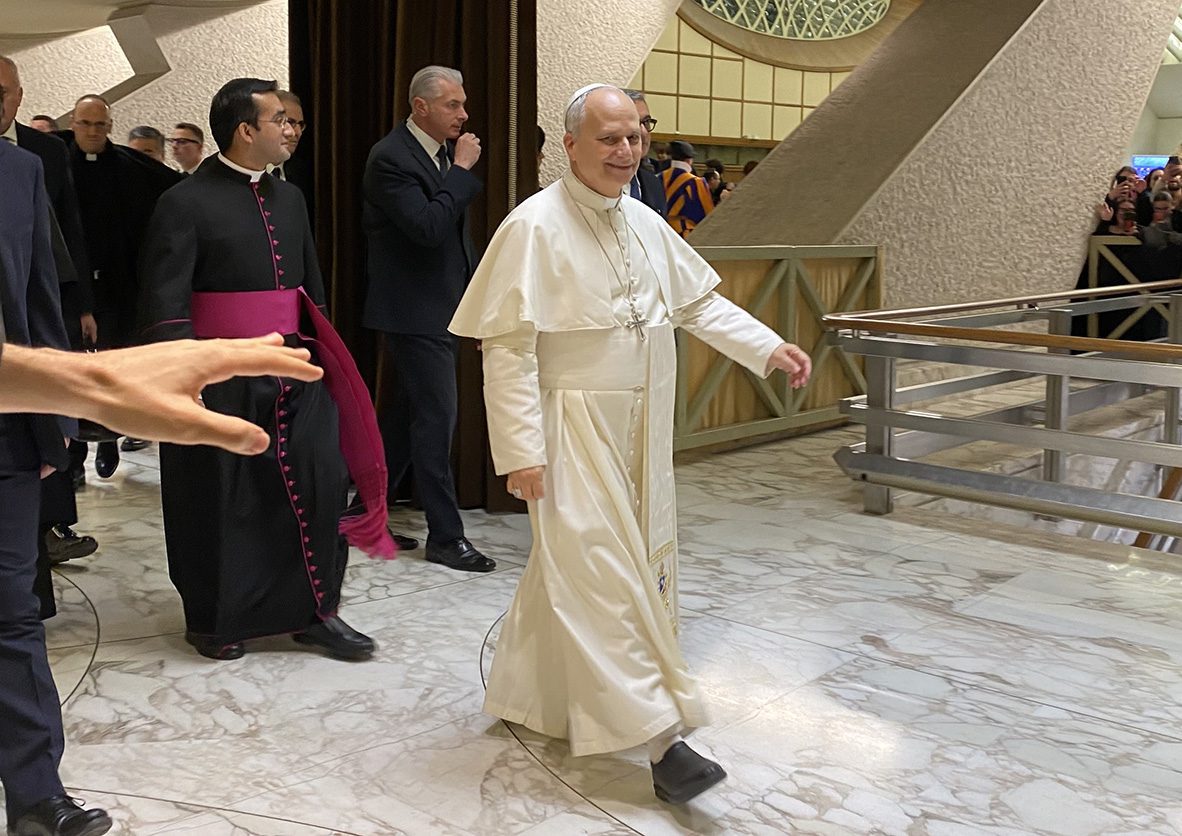
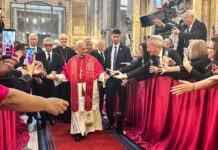
Pope Leo’s arrival in the Sala Nervi was extended by passing through the external square and St. Peter’s Square, to greet and truly welcome everyone who had remained outside, in front of the giant screens.
Accompanying them and greeting the Holy Father was Cardinal Vicar Baldo Reina, who spoke of a meeting desired by the young people themselves in the aftermath of their Jubilee in Tor Vergata, in which they welcomed into the parishes and through volunteering many peers from all over the world who were thus able to meet “a beautiful face of the Church, a Church that smiles, that prays, that welcomes, who lives a beautiful and profound solidarity.”
At Tor Vergata the Pope had urged young people to have the courage to be saints: “We are here today because by meeting you we wish to be confirmed in this desire and purpose of holiness,” the Cardinal motivated. Before showing a video about the Jubilee, he also remembered young people experiencing suffering, who had taken the wrong path, experiencing physical and mental distress, as well as the young people who died in the fire in Cras Montana, Switzerland, on New Year’s Eve.
“Dear Pope Leo, we love you; you are not alone.” These are the first words addressed to the Holy Father by Matteo, a young man from the Youth Ministry, on behalf of his peers, recounting his discomfort and loneliness, but also the joy of meeting again after the Jubilee.
“We feel alone, yet we are here. Being here today is a miracle. It’s a miracle to see friends I haven’t seen in a long time, to see priests, Sisters, consecrated persons, Bishops, Cardinals loving each other, in a united Church. It’s a miracle to see young people praying, hugs given and received. It’s a miracle that warms my life and my heart. Dear Pope Leo, today we are here to say yes to peace, yes to love, yes to the hand extended to those who feel alone, yes to Jesus.”
Matteo expresses his joy and gratitude for having had the grace to contribute to organizing the Jubilee. “It was a beautiful year. This year, here in Rome, I’ve seen people donate everything: time, money, love. I’ve seen people change, people come back to believe. I saw those who had nothing share what little they had. I’ve seen people give their lives, so everyone could feel at home. I felt Rome, the Church, and God as a home.”
Before asking Pope Leo for a hug, he formulates his question as follows: “What does the Pope, our Bishop, want from us and for us?”
Michela and Francesca, sisters who grew up in the Parish of Santa Giulia, also bring their own experience. “Outside the parish the world presents itself with other values dominated by performance. The individual is driven to be constantly efficient, measuring his or her value in terms of results, success, and visibility, the latter amplified by social media.”
Hence their questions: “How much do you believe that the personal choice to live authentic and supportive evangelical relationships can become a seed capable of transforming society and countering the logics of conflict that dominate the world? How can we ensure that the luminous strength of the Gospel that illuminates our relationships transcends the boundaries of our personal friendships experienced inside and outside the parish and changes the entire world?”
Finally, Francesco, a university student, talks about his generation, which lives the fear of abandonment, which has all the possibilities, but struggles to choose, which prefers inaction to error, which lives perfectionism, competition and rivalry. “Those who make mistakes are lost. We find ourselves not having a goal, not knowing which path to take among all those in front of us, experiencing strong anguish” – especially in the university world towards evaluations. “What concrete things can we do to break these chains that oppress us, to save ourselves from this weakness that disturbs our innermost essence and return to inflame the world? How can we stop procrastinating and get back to living for real?” This is his question.
With a paternal smile, Pope Leo once again expresses the joy of sharing this search, this desire of young people to find answers and with such simplicity repeats the question of one of his nieces, heard shortly before on the phone, “Uncle, how do you do with so many problems of the world, with so many worries? Don’t you feel alone? How do you carry it all forward?”
The Pope says, “The answer in great part is you! Because we are not alone!”
“We are not alone!” is the main message that emerges from the heartfelt discourse with which one approaches young people. “When this grayness dulls the colors of life, we see that one can be isolated even among many people. Indeed, this is precisely how loneliness shows its worst face. One is not listened to because one is immersed in the din of opinions; one looks at nothing, because one is dazzled by fragmentary images. A life of unrelated links or affectionless likes, disappoints us, because we are made for the truth; when it is missing, we suffer. We are made for the good, but the masks of throwaway pleasure betray our desire.”
Precisely in this desire, in this thirst for truth, he invites us to find answers. “We are unique creatures among all, because we carry within us the image of God, which is the relationship of life, love, and salvation. Then, when you feel alone, remember that God never leaves you. His company becomes the strength to take the first step towards those who are alone, yet He stands right by you.”
His words are not disenchanting, but of encouragement to find within oneself the resources to change the world. “Don’t expect the world to welcome you with open arms. Advertising, which has to sell something to consume, has a higher audience than testimony, which wants to build sincere friendships. Thus, act with joy and tenacity, knowing that to change society we must first change ourselves. (…) In this way, we can change the world; we can build a world of peace!”
What does the Pope want for young people? “In my prayers I ask for each one a good and true life, according to God’s will. In short, I hope for everyone a holy life”, which is also a “healthy” life.
Pope Leo concludes by further encouraging to cultivate friendship with Jesus, “our North Star” and to pray, “the most concrete act that Christians do for the good of those around them, of themselves, and of the whole world,” because “to inflame the world you need an ardent heart!”
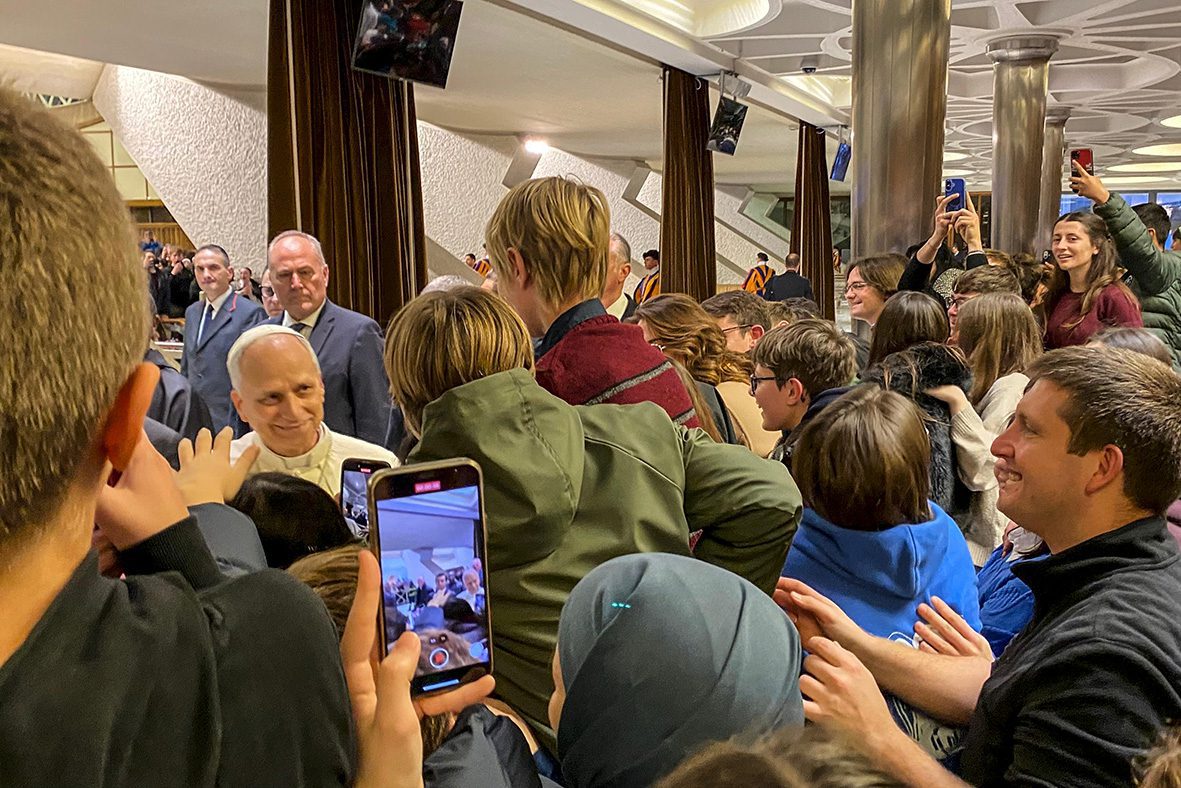
After a chant conducted by Monsignor Marco Frisina, an Our Father prayed together, and the blessing, the Holy Father wishes everyone “a safe journey” and remains with the calm and loving kindness of a father, to greet young people with disabilities in wheelchairs, children, and those he meets on his way, in a celebration of songs, banners, and smartphones raised in the air to immortalize the moment.