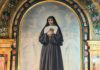


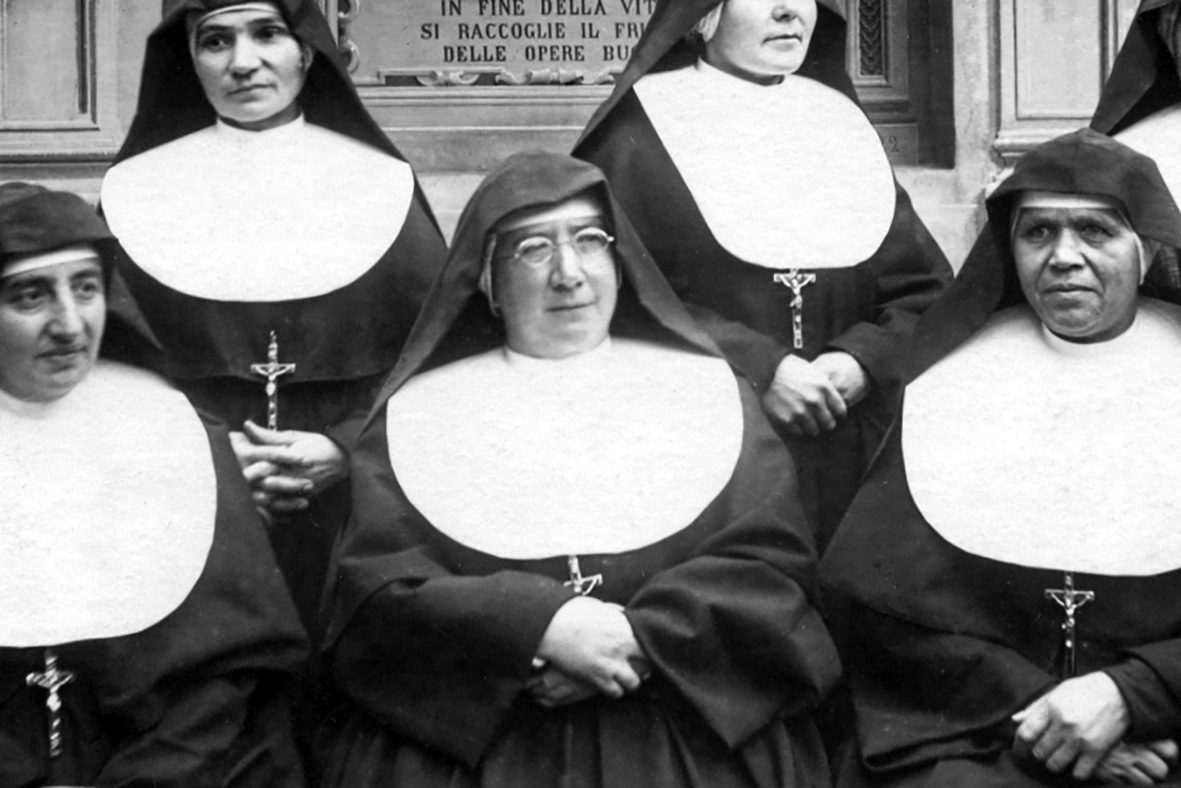
Rome (Italy). The 30th August 2025, marks the 74th anniversary of the dies natalis of the Venerable Sister Laura Meozzi (1873 – 1951), pioneer of the presence of the Daughters of Mary Help of Christians in Poland.
Born in Florence on 5 January 1873, from a noble and wealthy family, she soon moved to Rome where she studied with the Dorothea Sisters, and later attended some medical courses. Laura prays a lot. Thanks to the advice of her spiritual director, the Salesian Federico Bedeschi, the same one who accompanied Sister Teresa Valsè Pantellini in her vocational search, Laura discovers that God calls her among the Sisters of Don Bosco. Having become a Daughter of Mary Help of Christians in 1898, she worked as a teacher in Liguria, in Bordighera, Varazze, Genoa, and then in Sicily: Alì Marina, Catania, Nunziata. “Be mothers first, then teachers” she reminded the Sisters, revealing her particular characteristic.
In 1922 Mother Catherine Daghero sends her to transplant the female Salesian Charism in Poland. Despite extreme poverty, she opened homes for orphaned and abandoned children, then schools and workshops for girls. Meanwhile, Postulants and Novices arrive. Even refugees, persecuted people, the sick, migrants find comfort and concrete help in her and in the Sisters.
In the years 1938-1945, she faces with heroic courage the restrictions and persecutions that the Second World War brought to Poland and to religious congregations in particular: houses closed, Sisters dispersed, contacts difficult. Dressed as a peasant, she hides in Sakiszki’s house, but continues to accompany the Sisters with maternal goodness through clandestine letters with a Mornese flavor.
After the War, Mother Laura, in collaboration with the primate of Poland, Card. Augusto Hlond, S.D.B. (1881 – 1948), declared Venerable in 2018, is tirelessly committed to the opening of new houses and works, facing the new challenges that communism imposes. In 1946, she settled in Pogrzebień, animating a work that restores hope to women and children. Her strength declined and on 30 August 1951, Mother Laura died in Pogrzebień.
Her figure is still remembered today for the strong sense of motherhood that she radiated to anyone who needed it. In the “Positio super virtutibus” there are hundreds of testimonies and facts that document this. Fr. Józef Nęcek, Salesian Director and Provincial, recalls that “her most evident characteristic was goodness towards everyone. She loved the Sisters very much, as daughters entrusted to her by God.”
In accompanying young people and Sisters, in caring for orphans and those who need help, she shows herself loving, but also proactive, helping people to take on responsibilities and carry them forward with creativity and love. Sister Zofia Sowińska experiences this personally. Mother Laura wrote to her in a letter from 1932, “I always have you in mind because I also see that you are getting worse in health and the headache is certainly motivated by something inside… I understand though… that to feel better and be calmer you should be regular in eating and sleeping and persuade yourself that we live among creatures that give what they can and that, if today they make mistakes, tomorrow we will make mistakes, and which we will never correct by worrying and treating ourselves badly. Work on yourself my dear Zofia, work for the love of God and your soul which costs the blood of Blessed Jesus.” Sister Zofia is committed to correcting her impetuous temperament, following her advice.
In 1934, Mother Laura appoints this same Sister as Animator in Laurów. Aware of the difficulties she would face, she drew a timetable for her to help prevent fatigue and irritability. Sister Jadwiga Chodkowska declares, “Mother Laura was very good and understanding … Never a word that could sadden the soul; but after every conversation with her one went out full of enthusiasm, joyful, almost transformed. Sufferings and sacrifices became light and each offered them to God with all good will. Mother Laura’s goodness was truly exceptional. She loved all the Sisters in such a way that everyone thought she was privileged. […] With her maternal love that she revealed to us in her gaze and words, she animated us to endure all the hardships, so that each of us was ready for sacrifice.”
Recalling her entry into the Institute, Sister Marta Habatula recounts, “Mother Laura welcomed me with a great maternal heart like her daughter and showed me such goodness that she immediately aroused in my heart a filial confidence towards her. I saw all the Postulants and Sisters happy, because they were sure of being loved by the mother superior; indeed, each believed herself to be the one privileged.”
She is echoed by Sister Julia Janus who knew Mother Laura from 1922. “She was a true mother, full of goodness towards everyone. She loved all the Sisters, and students very much; she was always lovable, understanding, patient. She never let the slightest impatience slip away; she was always calm and balanced. If she had to make an observation, she made it with such goodness that the person reprimanded felt no grudge, on the contrary, one regretted having failed and tried to do better. Mother Laura knew how to create a climate of peace, harmony, and unity in the environment. The Sisters and students reciprocated her great love. I have never seen a superior so loved as Mother Laura.”
Maternal charity is a virtue that shines in many Daughters of Mary Help of Christians, more or less known. On the occasion of the 150th anniversary of the founding of the Institute, Mother Chiara Cazzuola wrote, “Every daughter carries within herself the traits of her mother. To us, Mary grants us to be her daughters and desires us as her helpers for all the people entrusted to us.” In a context marked by wars and violence, this commitment seems increasingly current and prophetic, truly revolutionary, beyond all evidence.